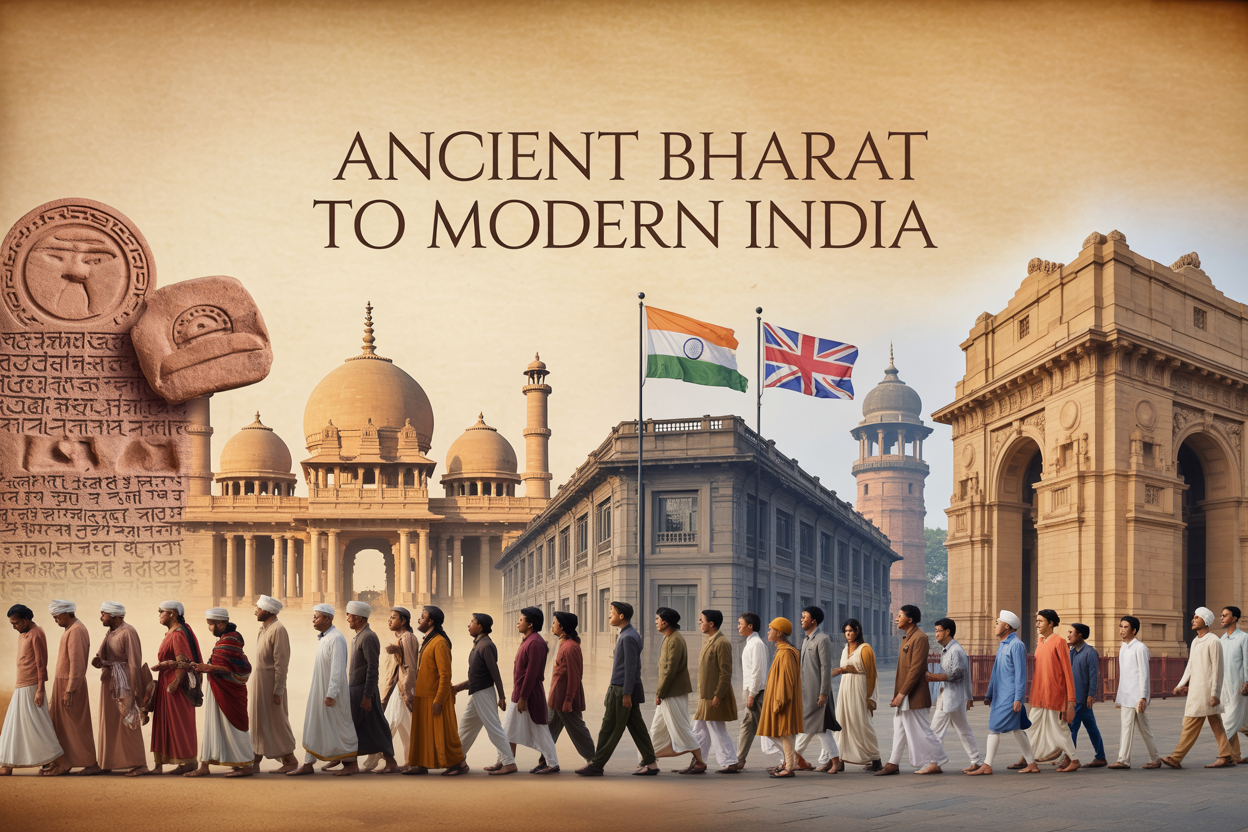
India’s transformation from Ancient Bharat to the modern nation we know today spans over 5,000 years of remarkable history. This comprehensive guide is perfect for history enthusiasts, students, and anyone curious about how one of the world’s oldest civilizations evolved into today’s global powerhouse.
You’ll discover how Ancient Bharat history began with the Indus Valley Civilization and grew through classical Indian empires like the Mauryas and Guptas. We’ll explore how medieval India Islamic invasions created a unique Indian cultural synthesis history, blending Hindu, Buddhist, and Islamic traditions into something entirely new. Finally, you’ll learn about the British colonial India transformation and the epic India independence movement that led to modern India formation.
This journey through the Bharat to India transition reveals how invasions, cultural exchanges, and political upheavals shaped Indian civilization origins. From ancient kingdoms to British rule to independence, every era contributed to how India became modern nation we see today – a story of resilience, adaptation, and cultural fusion that created one of the world’s most diverse democracies.
The Origins of Ancient Bharat: Understanding India’s Foundational Civilization
Indus Valley Civilization and Early Urban Centers
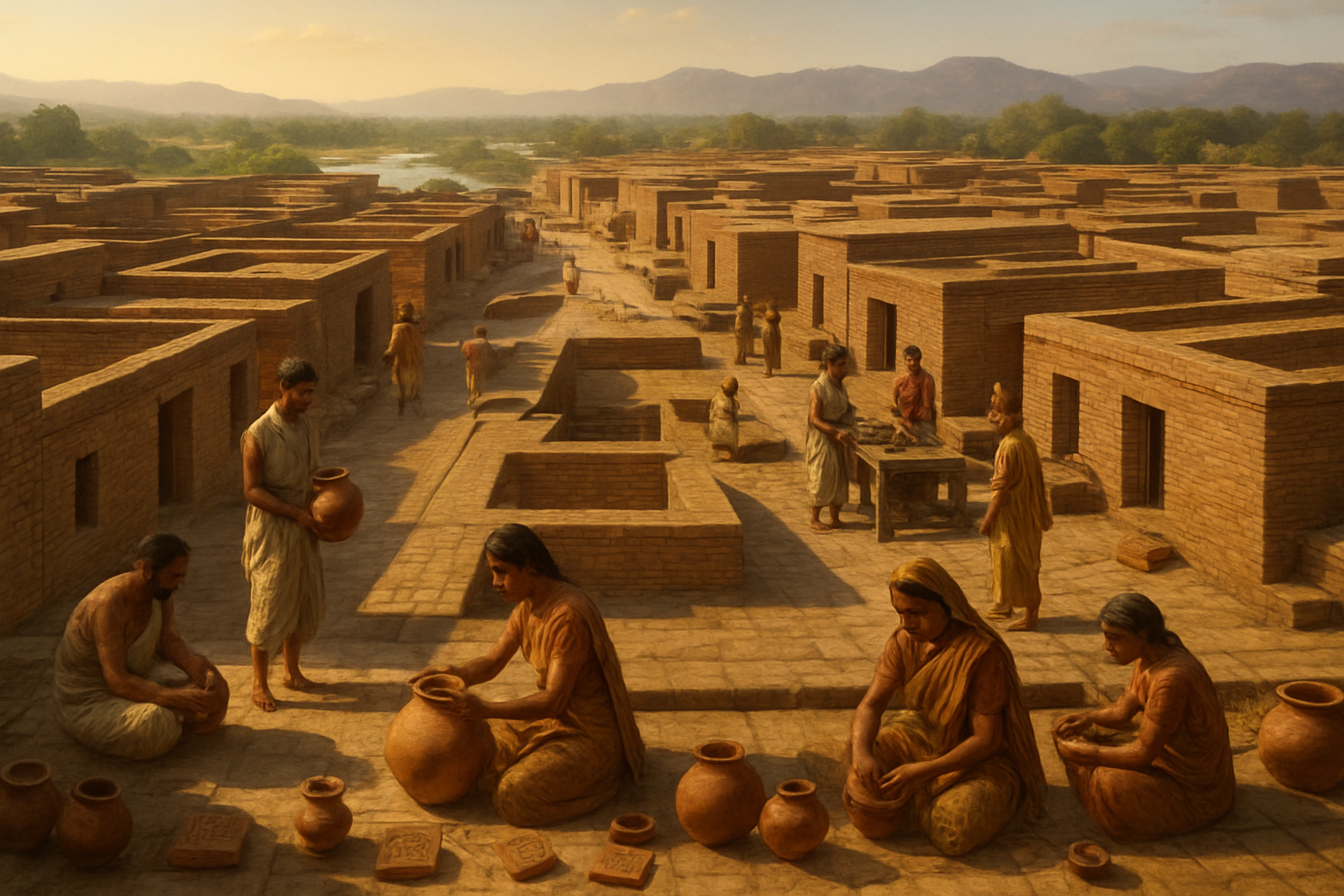
The story of Ancient Bharat history begins around 3300 BCE with the remarkable Indus Valley Civilization, one of the world’s earliest urban civilizations. This sophisticated society flourished across the northwestern regions of the Indian subcontinent, spanning present-day Pakistan and northwest India. The civilization’s major cities, Harappa and Mohenjo-daro, showcased advanced urban planning that would make modern city planners envious.
These ancient cities featured:
- Grid-pattern streets with sophisticated drainage systems
- Multi-story brick buildings with private wells and bathrooms
- Standardized weights and measures for trade
- Advanced water management including reservoirs and dockyard facilities
Archaeological evidence reveals that Indus Valley inhabitants engaged in extensive trade networks, reaching as far as Mesopotamia. Their undeciphered script, found on thousands of seals, hints at a complex administrative system. The civilization mysteriously declined around 1900 BCE, possibly due to climate change or shifting river patterns, but its legacy of urban planning and craftsmanship influenced subsequent cultures across the subcontinent.
Vedic Period and Cultural Foundations
The Vedic period (1500-500 BCE) marks a pivotal transformation in Indian civilization origins, introducing the cultural and spiritual foundations that would define Bharat for millennia. The arrival of Indo-Aryan tribes brought significant changes to the social and religious landscape of the subcontinent.
The Vedic society was primarily:
- Pastoral and agricultural with cattle as symbols of wealth
- Organized into tribes led by chiefs called rajas
- Structured around fire sacrifices and ritual practices
- Gradually developing caste distinctions based on occupation and birth
During this period, the four Vedas were composed – Rigveda, Samaveda, Yajurveda, and Atharvaveda. These sacred texts contained hymns, prayers, and ritualistic instructions that became the cornerstone of Hindu religious practice. The concept of dharma (righteous duty) and the cyclical nature of time emerged as central philosophical ideas.
The later Vedic period saw the rise of larger kingdoms and more complex social structures. Iron technology spread across the Gangetic plains, enabling better agriculture and supporting larger populations. Urban centers began emerging again, setting the stage for the great empires that would follow.
Sanskrit Literature and Philosophical Traditions
Sanskrit literature represents one of humanity’s greatest intellectual achievements, preserving the philosophical and cultural DNA of Ancient Bharat. The language itself became the vehicle for transmitting knowledge across generations, earning its name meaning “perfected” or “refined.”
The epic literature includes:
| Text | Estimated Period | Significance |
|---|---|---|
| Ramayana | 500-100 BCE | Ideal governance and personal conduct |
| Mahabharata | 400 BCE-400 CE | Complex moral dilemmas and statecraft |
| Puranas | 300-1500 CE | Mythological and historical narratives |
The Upanishads, composed between 800-200 BCE, introduced revolutionary philosophical concepts that continue influencing world thought today. These texts explored the nature of reality, consciousness, and the relationship between individual souls (atman) and universal consciousness (brahman).
Major philosophical schools developed during this period:
- Advaita Vedanta – Non-dualistic philosophy
- Samkhya – Dualistic worldview of consciousness and matter
- Yoga – Practical methods for spiritual development
- Buddhism and Jainism – Alternative spiritual paths emphasizing ethics and liberation
These traditions established India as a major center of philosophical inquiry, influencing Greek philosophers and later Islamic and European thinkers.
Trade Networks and Economic Systems
Ancient Bharat’s prosperity stemmed from its position at the crossroads of major trade routes connecting Asia, Africa, and Europe. The subcontinent’s diverse geography produced valuable commodities that were highly sought after in ancient markets worldwide.
Key Trade Goods:
- Spices (black pepper, cardamom, cinnamon)
- Textiles (cotton, silk, and dyed fabrics)
- Precious stones (diamonds, pearls, semi-precious gems)
- Metals (iron, steel, gold, silver)
- Medicinal herbs and perfumes
The economic systems varied across regions but generally featured:
- Guild-based craft production with specialized artisan communities
- Village-level agricultural economies with surplus production for trade
- Monetary systems using punch-marked coins and later standardized currency
- Royal patronage supporting trade and craftsmanship
Maritime trade flourished along both coasts, with ports like Bharuch, Muziris, and Puhar serving as major commercial hubs. Indian merchants established trading colonies in Southeast Asia, spreading Indian cultural influence alongside commercial interests.
The economic foundations laid during this period created the wealth that would support great empires, monumental architecture, and cultural achievements. These trade networks also facilitated cultural exchange, bringing new ideas, technologies, and artistic influences that enriched Bharat’s civilization while maintaining its distinctive character.
Classical Empires That Shaped Bharat’s Identity
Mauryan Empire and Ashoka’s Influence
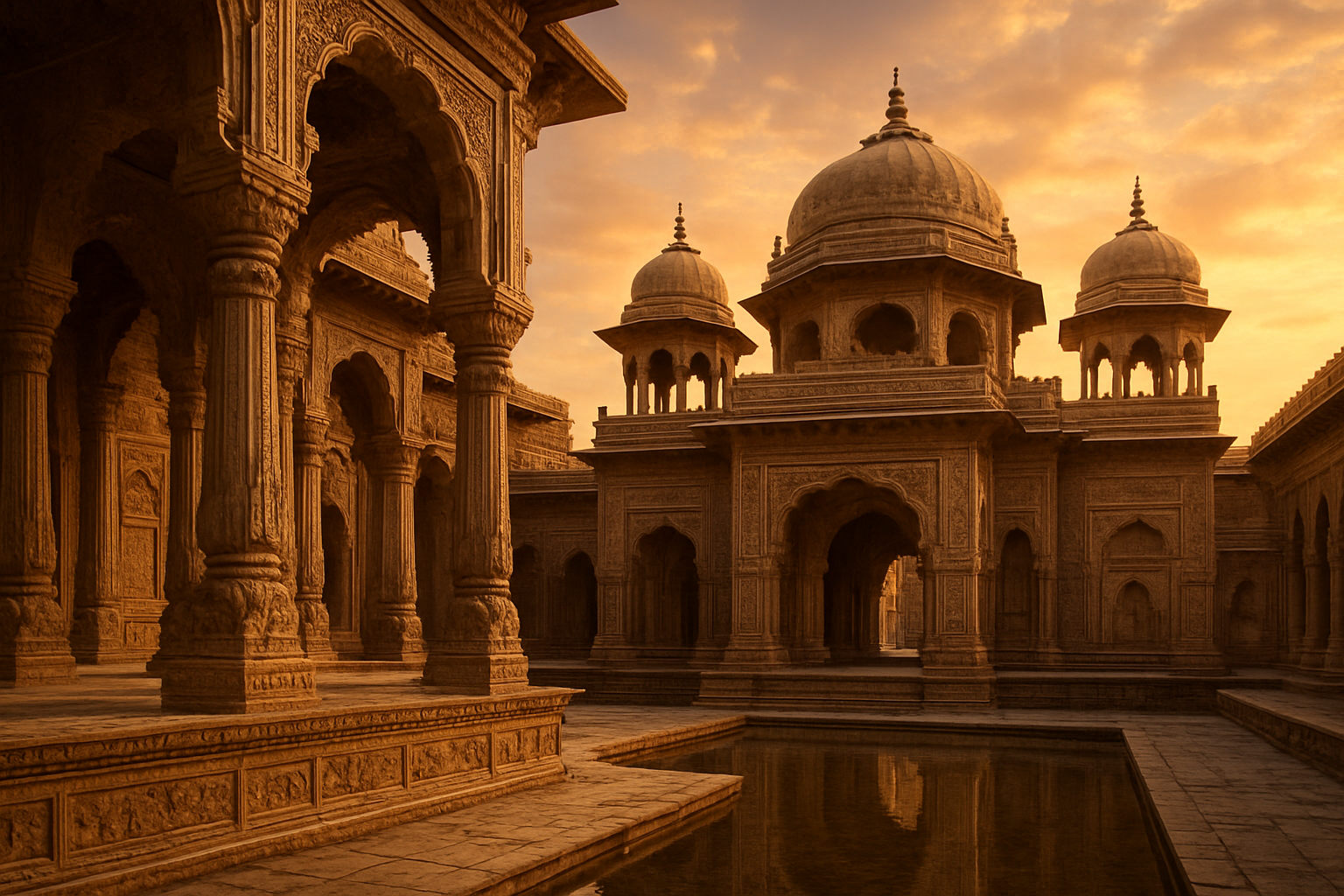
The Mauryan Empire stands as one of the most remarkable achievements in ancient Bharat history, stretching across nearly the entire subcontinent by the 3rd century BCE. Founded by Chandragupta Maurya around 321 BCE, this empire transformed how people thought about governance and unity across diverse territories.
Chandragupta’s rise to power marked a turning point in classical Indian empires. With strategic guidance from his advisor Chanakya (also known as Kautilya), he established an administrative system that would influence Indian governance for centuries. The empire’s capital at Pataliputra became a center of learning and political innovation.
Emperor Ashoka, Chandragupta’s grandson, elevated the empire to unprecedented heights both in territorial expansion and moral leadership. After witnessing the devastating Kalinga War around 261 BCE, Ashoka underwent a profound transformation that would reshape his empire’s character. His conversion to Buddhism and subsequent promotion of non-violence, tolerance, and ethical governance created a unique model of leadership.
Ashoka’s edicts, carved on rocks and pillars across his empire, represent one of history’s earliest examples of mass communication by a ruler. These inscriptions promoted:
- Religious tolerance and respect for all faiths
- Protection of animals and environmental conservation
- Social welfare programs including hospitals and roads
- Justice and fair treatment for all subjects
The Mauryan administrative system featured a sophisticated network of officials, spies, and local governors who maintained order across vast distances. This bureaucratic structure influenced later empires and demonstrated that diverse populations could be governed effectively under a unified system while respecting local customs and traditions.
Gupta Golden Age and Scientific Achievements
The Gupta period (approximately 320-550 CE) represents what many historians call the golden age of ancient Indian civilization. Under rulers like Chandragupta I, Samudragupta, and Chandragupta II, this era saw extraordinary advances in science, mathematics, literature, and arts that influenced global knowledge.
Mathematics flourished during this period with groundbreaking discoveries that shaped human understanding. Aryabhata, the renowned mathematician and astronomer, calculated the value of pi and explained lunar eclipses and the Earth’s rotation. The concept of zero as both a placeholder and a number emerged during this time, revolutionizing mathematical calculations worldwide.
Scientific achievements of the Gupta era include:
| Field | Key Developments |
|---|---|
| Mathematics | Decimal system, concept of zero, algebraic principles |
| Astronomy | Accurate calculation of Earth’s circumference, planetary movements |
| Medicine | Advanced surgical techniques, classification of diseases |
| Metallurgy | Superior iron and steel production, rust-resistant iron pillars |
Literature reached new heights with Kalidasa’s timeless works like “Shakuntalam” and “Meghaduta,” which continue to inspire readers today. Sanskrit literature flourished, preserving and expanding upon earlier Vedic traditions while incorporating new philosophical ideas.
The Gupta approach to governance combined strong central authority with local autonomy, allowing regional cultures to thrive while maintaining overall unity. This balance became a hallmark of successful Indian administration, influencing how later empires managed their diverse populations.
Trade networks expanded dramatically during this period, connecting India with Central Asia, Southeast Asia, and the Mediterranean world. Indian merchants, scholars, and monks carried knowledge, goods, and ideas across vast distances, establishing India as a major center of global civilization.
Regional Kingdoms and Cultural Diversity
While large empires dominated much of ancient Bharat history, regional kingdoms played equally important roles in shaping the subcontinent’s rich cultural diversity. These smaller states often served as laboratories for political innovation, artistic expression, and social development.
The Chola dynasty in South India exemplifies how regional powers could achieve remarkable influence. Their naval expeditions reached Southeast Asia, establishing trade routes and cultural connections that lasted for centuries. The Cholas developed sophisticated temple architecture and bronze sculpture techniques that remain unmatched today.
Regional kingdoms contributed to India’s cultural synthesis through:
- Language Development: Different regions cultivated their own literary traditions while maintaining Sanskrit as a connecting language
- Architectural Styles: Each region developed unique building techniques adapted to local climate and materials
- Religious Practices: Local deities and customs merged with broader Hindu and Buddhist traditions
- Economic Specialization: Different regions became known for specific crafts, textiles, or agricultural products
The Rajput kingdoms of western India demonstrated how military traditions could coexist with refined courtly culture. Their fortress architecture and warrior codes influenced Indian concepts of honor and duty for generations.
In the Deccan, dynasties like the Satavahanas and later the Vijayanagara Empire created unique administrative systems that balanced central authority with local governance. These experiments in federalism would later influence modern India’s constitutional structure.
Eastern kingdoms like the Palas promoted Buddhist learning centers that attracted students from across Asia. Nalanda University, supported by these rulers, became one of the world’s first truly international educational institutions.
This regional diversity never fragmented Indian civilization completely. Instead, it created a rich tapestry where different communities maintained their distinct identities while participating in broader cultural and economic networks. Pilgrimage routes, trade connections, and scholarly exchanges kept these diverse regions connected, creating the foundation for modern India’s unity in diversity principle.
Medieval Transformations: Islamic Invasions and Cultural Synthesis
Delhi Sultanate’s Administrative Changes
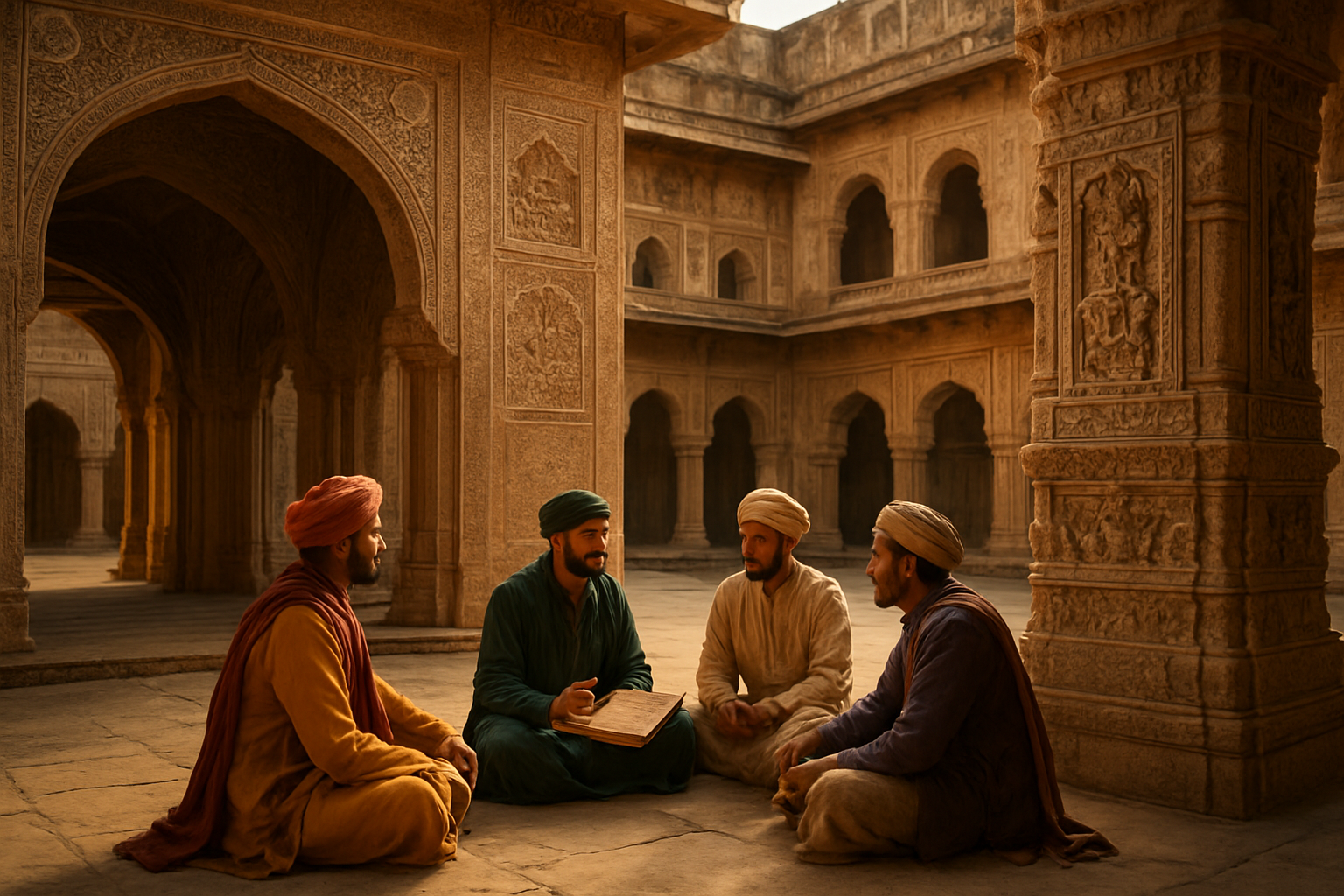
The arrival of Muslim rulers in medieval India Islamic invasions brought sweeping administrative reforms that forever changed the governance landscape. The Delhi Sultanate, established in 1206 CE, introduced centralized authority that replaced the decentralized feudal systems of earlier Hindu kingdoms. Turkish and Afghan rulers implemented the iqta system, where land grants were given to military commanders in exchange for administrative duties and military service.
These new rulers divided the empire into provinces called iqtas, each governed by appointed officials rather than hereditary nobles. The Sultan held absolute power, supported by a sophisticated bureaucracy that included positions like the wazir (chief minister), diwan-i-arz (military department head), and qazi (chief judge). Persian became the court language, creating a new administrative culture that blended Islamic legal principles with local customs.
Tax collection systems underwent major changes. The kharaj (land tax) became the primary revenue source, collected through appointed officials rather than local chieftains. This centralized approach increased state revenues but also created new challenges in managing diverse populations across vast territories.
Mughal Empire’s Political Consolidation
The Mughal Empire, beginning with Babur in 1526, perfected the art of political consolidation through innovative administrative strategies. Akbar’s reign (1556-1605) marked the pinnacle of this transformation, creating a unified system that governed diverse populations across the subcontinent.
The mansabdari system became the backbone of Mughal administration. This merit-based hierarchy assigned ranks (mansabs) to officials based on their responsibilities rather than birth. Officials received salaries in cash or land assignments, creating loyalty to the emperor rather than local power centers. The empire was divided into subahs (provinces), each governed by appointed subahdars who reported directly to Delhi.
Akbar’s policy of sulh-i-kul (universal tolerance) allowed Hindu nobles to hold high positions, creating a truly inclusive administration. Notable Hindu officials like Raja Todar Mal revolutionized revenue collection through detailed land surveys and standardized measurements. This integration strategy helped the Mughals maintain control over a predominantly Hindu population while respecting local traditions.
Hindu-Muslim Cultural Integration
Medieval India witnessed unprecedented cultural synthesis as Hindu and Muslim communities interacted through trade, marriage, and shared governance. This period saw the emergence of distinct Indo-Islamic art forms that combined Islamic geometric patterns with Hindu sculptural traditions.
Music flourished through this cultural exchange. Hindustani classical music evolved as Persian and Central Asian musical traditions merged with ancient Indian ragas. Great musicians like Tansen at Akbar’s court created compositions that reflected this beautiful fusion. Dance forms also adapted, with Kathak incorporating Persian storytelling techniques while retaining Hindu mythological themes.
Language transformation occurred naturally through daily interactions. Urdu emerged as a common tongue, blending Persian vocabulary with local Hindi grammar and syntax. This linguistic evolution facilitated communication between diverse communities and created a shared cultural space.
Religious practices showed remarkable flexibility. Sufi saints adopted meditation techniques similar to Hindu and Buddhist traditions, while Hindu devotional movements incorporated Islamic concepts of divine unity. Festivals became community celebrations where people of different faiths participated together, creating lasting bonds across religious boundaries.
Economic and Architectural Developments
The medieval period brought revolutionary changes to Indian economic structures and architectural expressions. Trade networks expanded dramatically as Muslim rulers established connections with Central Asia, the Middle East, and maritime routes through Arab merchants.
New crops and agricultural techniques arrived from different regions. Persian wheel irrigation systems increased productivity, while new crops like tobacco and improved varieties of cotton boosted agricultural output. Urban centers flourished as administrative capitals required skilled craftsmen, leading to the growth of specialized guilds.
Architectural innovation reached extraordinary heights during this era. The Indo-Islamic style combined Islamic architectural principles with local building traditions. The pointed arch, dome, and minaret became standard features, but Indian craftsmen adapted these elements using local materials and decorative techniques.
| Architectural Innovation | Description | Notable Examples |
|---|---|---|
| Indo-Islamic Fusion | Geometric patterns with Hindu motifs | Qutub Minar complex |
| Mughal Gardens | Persian charbagh with Indian plants | Shalimar Gardens |
| Tomb Architecture | Central Asian domes with Indian craftsmanship | Humayun’s Tomb |
| Palace Design | Islamic courtyards with Hindu jharokhas | Red Fort Delhi |
The Taj Mahal represents the ultimate achievement of this architectural synthesis, where Persian design concepts were executed by Indian craftsmen using local marble and incorporating subtle Hindu design elements.
Regional Resistance and Adaptation
Medieval India’s transformation wasn’t uniform across all regions. Various kingdoms and communities developed different strategies for dealing with Islamic rule, creating a complex mosaic of resistance, adaptation, and accommodation.
Rajputana witnessed both fierce resistance and strategic alliances. Rajput kingdoms like Mewar under Rana Sanga fought prolonged battles against Mughal expansion, while others like Amber formed matrimonial alliances with Mughal emperors. These different approaches reflected practical considerations about survival and prosperity rather than purely religious motivations.
The Deccan plateau became a hotbed of regional assertion. The Bahmani Sultanate split into five independent kingdoms, each developing distinct administrative and cultural characteristics. Later, the Maratha confederacy under leaders like Shivaji created new forms of guerrilla warfare and administrative systems that challenged Mughal authority.
South India maintained greater independence from northern Islamic powers. The Vijayanagara Empire continued Hindu traditions while selectively adopting useful innovations from Islamic kingdoms. This selective adaptation allowed southern regions to modernize their military and administrative systems without completely abandoning traditional practices.
Coastal regions developed unique patterns of cultural exchange through maritime trade. Portuguese, Dutch, and later British trading posts created new economic opportunities while local rulers maintained political autonomy through careful diplomatic maneuvering.
These varied regional responses created the diverse cultural landscape that characterizes modern India, where different regions retained distinct identities while participating in broader subcontinental developments.
European Colonial Encounter: The British Transformation
East India Company’s Commercial Infiltration
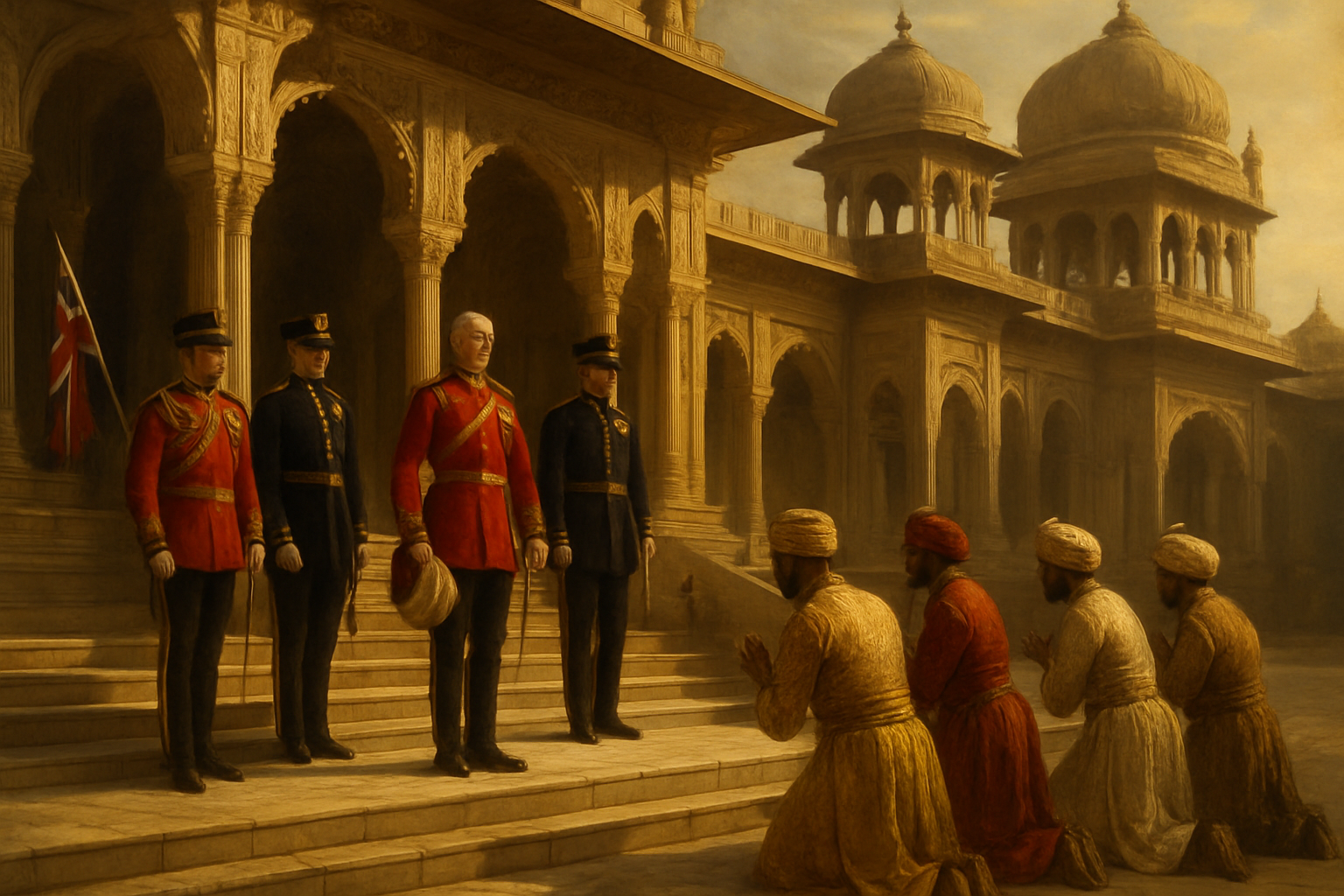
The East India Company arrived in Ancient Bharat as merchants seeking profitable trade routes, but their commercial ambitions soon transformed into territorial control. Starting with trading posts in Surat, Madras, Bombay, and Calcutta, the Company gradually expanded its influence through strategic alliances with local rulers and military victories.
The Battle of Plassey in 1757 marked a turning point when Robert Clive defeated Siraj-ud-Daulah, the Nawab of Bengal. This victory gave the Company control over Bengal’s vast resources and established a pattern of political interference disguised as commercial activity. The Company’s private army, comprised of both European and Indian soldiers (sepoys), enabled them to enforce their will across different regions.
Local rulers found themselves caught between competing European powers and internal conflicts. The Company exploited these divisions, offering military support in exchange for trading privileges and territorial concessions. The Doctrine of Lapse, introduced later, allowed the British to annex princely states whose rulers died without male heirs, further expanding their territorial control.
Revenue collection became a primary focus as the Company transformed from traders to administrators. The Permanent Settlement of Bengal in 1793 created a new landlord class (zamindars) responsible for collecting taxes, fundamentally altering traditional land ownership patterns that had existed for centuries.
British Crown Rule and Administrative Overhaul
The Indian Rebellion of 1857 shocked the British establishment and led to the Government of India Act 1858, which transferred control from the East India Company to the British Crown. This marked the beginning of the British Raj, bringing systematic administrative changes that reshaped Ancient Bharat’s governance structure.
The British established a centralized administrative system with the Viceroy at the top, supported by a civil service that gradually included educated Indians in lower positions. The Indian Civil Service became the backbone of colonial administration, creating a new class of English-educated Indians who served as intermediaries between rulers and the ruled.
Legal reforms introduced English common law alongside existing personal laws, creating a complex judicial system. The Indian Penal Code of 1860 standardized criminal law across different regions, while civil matters often remained under traditional religious laws for different communities.
Provincial boundaries were redrawn for administrative convenience, sometimes cutting across traditional cultural and linguistic lines. The Bengal Partition of 1905 exemplified how colonial administrators prioritized control over cultural unity, sparking widespread protests and eventually leading to the reversal of the decision.
Communication infrastructure expanded dramatically with the construction of railways, telegraph lines, and postal services. While these developments served British military and commercial interests, they inadvertently created the physical connectivity that would later facilitate the independence movement.
Economic Exploitation and Industrial Impact
British colonial policies systematically drained wealth from Ancient Bharat through various mechanisms that historians later termed “economic colonialism.” The Company and later the Crown government extracted enormous revenues that financed British industrial development while impoverishing local economies.
Traditional industries faced deliberate destruction as British manufacturers sought to eliminate competition. The thriving textile industry of Bengal, which had supplied fine cloth to global markets for centuries, was systematically dismantled. High tariffs on Indian goods entering Britain, combined with duty-free British manufactured goods flooding Indian markets, created an impossible competitive environment.
The revenue system forced farmers to grow cash crops for export rather than food crops for local consumption. Indigo, cotton, and opium cultivation generated profits for British traders but left farmers vulnerable to famines when monsoons failed. The recurring famines of the late 19th century, killing millions, demonstrated the devastating impact of prioritizing export agriculture over food security.
Railway construction, while impressive in scope, primarily served to extract raw materials from the interior to ports for export to Britain. The railway network was designed to facilitate this extraction rather than promote internal trade and development. Indian taxpayers bore the cost of construction while British companies received guaranteed returns on their investments.
Deindustrialization transformed Ancient Bharat from a manufacturing hub to a supplier of raw materials and consumer of British manufactured goods. This economic restructuring created the foundation for the poverty and underdevelopment that newly independent India would inherit.
Educational Reforms and Social Changes
Lord Macaulay’s 1835 Minute on Education fundamentally altered Ancient Bharat’s educational landscape by promoting English-medium education over traditional learning systems. This decision created a new educated class fluent in Western ideas and literature, though it also disrupted centuries-old knowledge transmission methods.
The establishment of universities in Calcutta, Bombay, and Madras in 1857 marked the beginning of modern higher education. These institutions produced graduates who could serve in the colonial administration but also exposed students to European political philosophy, including ideas about democracy, nationalism, and individual rights that would later fuel the independence movement.
Traditional learning centers like gurukulas and madrasas lost government support and social prominence as English education became the pathway to employment and social mobility. Sanskrit, Arabic, and Persian scholarship declined while English became the language of advancement and prestige.
Social reform movements emerged partly in response to British criticism of Indian customs and partly from exposure to Western liberal ideas. Reformers like Raja Ram Mohan Roy and Ishwar Chandra Vidyasagar championed causes such as widow remarriage, women’s education, and the abolition of sati. These movements created internal debates about tradition and modernity that continue to shape Indian society.
The colonial government’s approach to different religious communities often followed a divide-and-rule strategy, recognizing separate personal laws and creating distinct electoral constituencies. This policy contributed to growing communal consciousness that would later complicate the independence movement and partition discussions.
Print technology and newspapers in vernacular languages spread new ideas beyond the English-educated elite, creating broader awareness of political developments and social issues. This communication revolution enabled the formation of a shared national consciousness across Ancient Bharat’s diverse regions and communities.
The Independence Movement: From Resistance to Freedom
Early Nationalist Organizations and Leaders
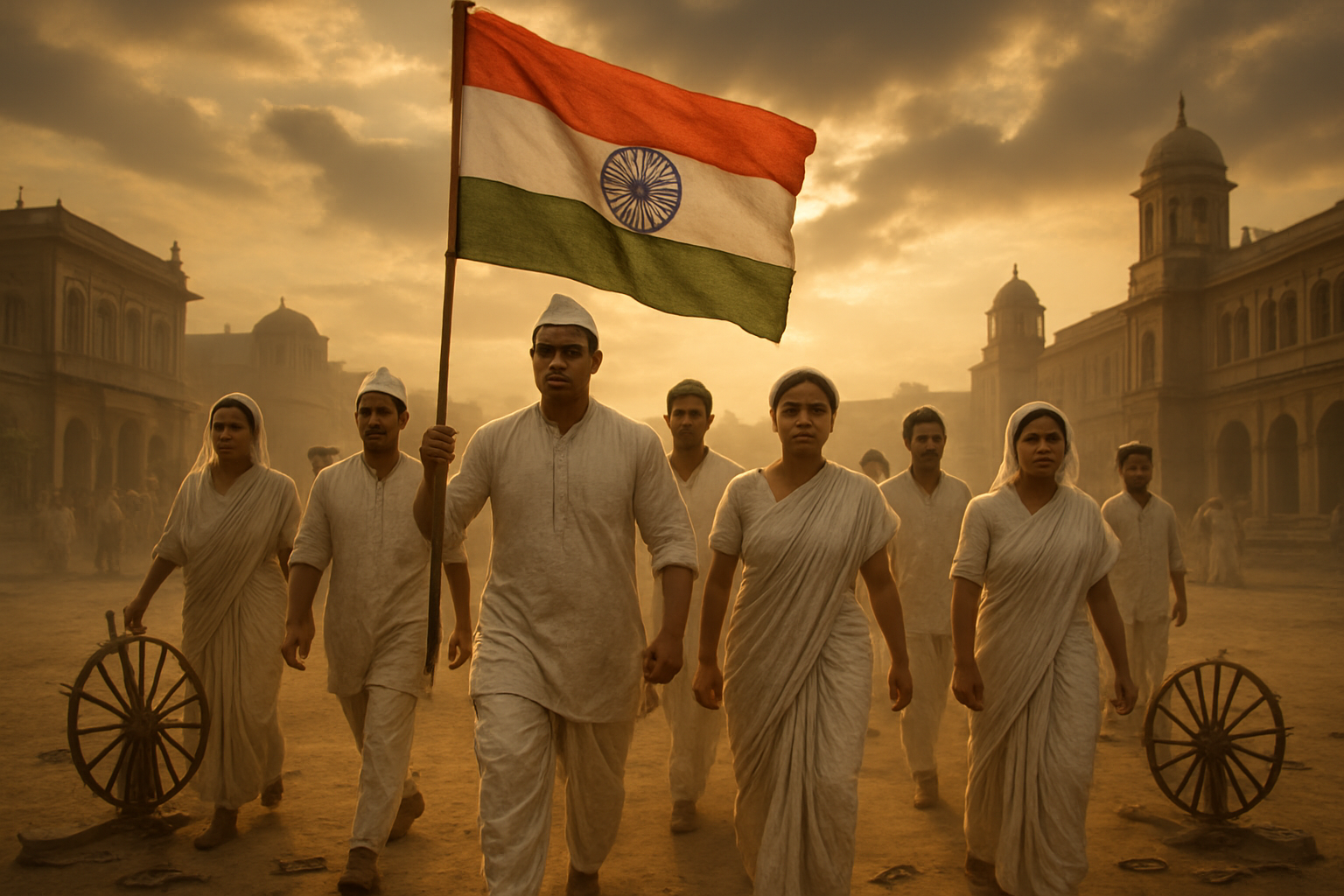
The seeds of the India independence movement were planted in the late 19th century when educated Indians began organizing against British colonial rule. The Indian National Congress, formed in 1885, became the primary vehicle for political awakening across Ancient Bharat. Early leaders like Dadabhai Naoroji, Gopal Krishna Gokhale, and Bal Gangadhar Tilak laid the groundwork for what would become a massive freedom struggle.
These pioneer organizations focused on constitutional methods and gradual reform. The Congress initially sought greater representation in government and civil services for Indians. However, the partition of Bengal in 1905 marked a turning point, sparking widespread protests and the emergence of more radical approaches.
Revolutionary groups emerged alongside moderate politics. Leaders like Aurobindo Ghose and Lala Lajpat Rai advocated for complete independence rather than incremental change. The formation of the All-India Muslim League in 1906 added another dimension to the political landscape, representing Muslim interests in the growing nationalist movement.
Regional leaders played crucial roles in mobilizing local populations. Lokmanya Tilak’s Ganeshotsav celebrations in Maharashtra and Bipin Chandra Pal’s work in Bengal demonstrated how cultural nationalism could unite people across different regions of British colonial India.
Gandhi’s Mass Movement Strategy
Mahatma Gandhi revolutionized the India independence movement by introducing mass civil disobedience and non-violent resistance. His return from South Africa in 1915 brought new methods that would transform Ancient Bharat’s struggle for freedom into a people’s movement.
The Non-Cooperation Movement (1920-1922) marked Gandhi’s first major campaign, encouraging Indians to boycott British institutions, schools, and goods. This strategy reached ordinary villagers and workers, expanding the movement beyond urban educated elites. The Khilafat Movement’s alliance showed how Gandhi could unite different communities around common causes.
Gandhi’s Salt March in 1930 became an iconic symbol of resistance. The 240-mile walk from Sabarmati Ashram to Dandi demonstrated how simple acts of defiance could capture global attention and expose British colonial rule’s injustices. The Civil Disobedience Movement that followed brought millions into the freedom struggle.
The Quit India Movement in 1942 represented the climax of Gandhi’s mass mobilization strategy. Despite widespread arrests and repression, the movement proved that British colonial India transformation was inevitable. Gandhi’s emphasis on non-violence and self-reliance created a moral foundation that distinguished India’s freedom struggle from other anti-colonial movements worldwide.
Partition Politics and Religious Tensions
Religious tensions escalated dramatically during the final phase of the India independence movement. The two-nation theory, promoted by the Muslim League under Muhammad Ali Jinnah’s leadership, argued that Hindus and Muslims constituted separate nations requiring separate states.
The Cabinet Mission Plan of 1946 attempted to preserve unity while granting autonomy to different regions. However, disagreements over power-sharing and representation led to the breakdown of negotiations. The Direct Action Day called by the Muslim League in August 1946 resulted in horrific communal violence in Calcutta and other cities.
British colonial India transformation took a tragic turn as partition became inevitable. Lord Mountbatten’s announcement in June 1947 set August 15, 1947, as the date for independence, giving only ten weeks to divide the subcontinent. The hurried partition process created massive refugee movements and unprecedented violence.
The partition of Ancient Bharat into India and Pakistan resulted in one of history’s largest population migrations. Nearly 14 million people crossed borders, while an estimated one to two million died in communal violence. Despite this tragedy, Modern India formation proceeded under Jawaharlal Nehru’s leadership, who became the first Prime Minister of independent India.
The partition’s legacy continues to influence South Asian politics today, showing how colonial divide-and-rule policies created lasting divisions in what had been a largely unified civilization for millennia.
Modern India’s Formation: Building a New Nation
Constitutional Framework and Democratic Institutions
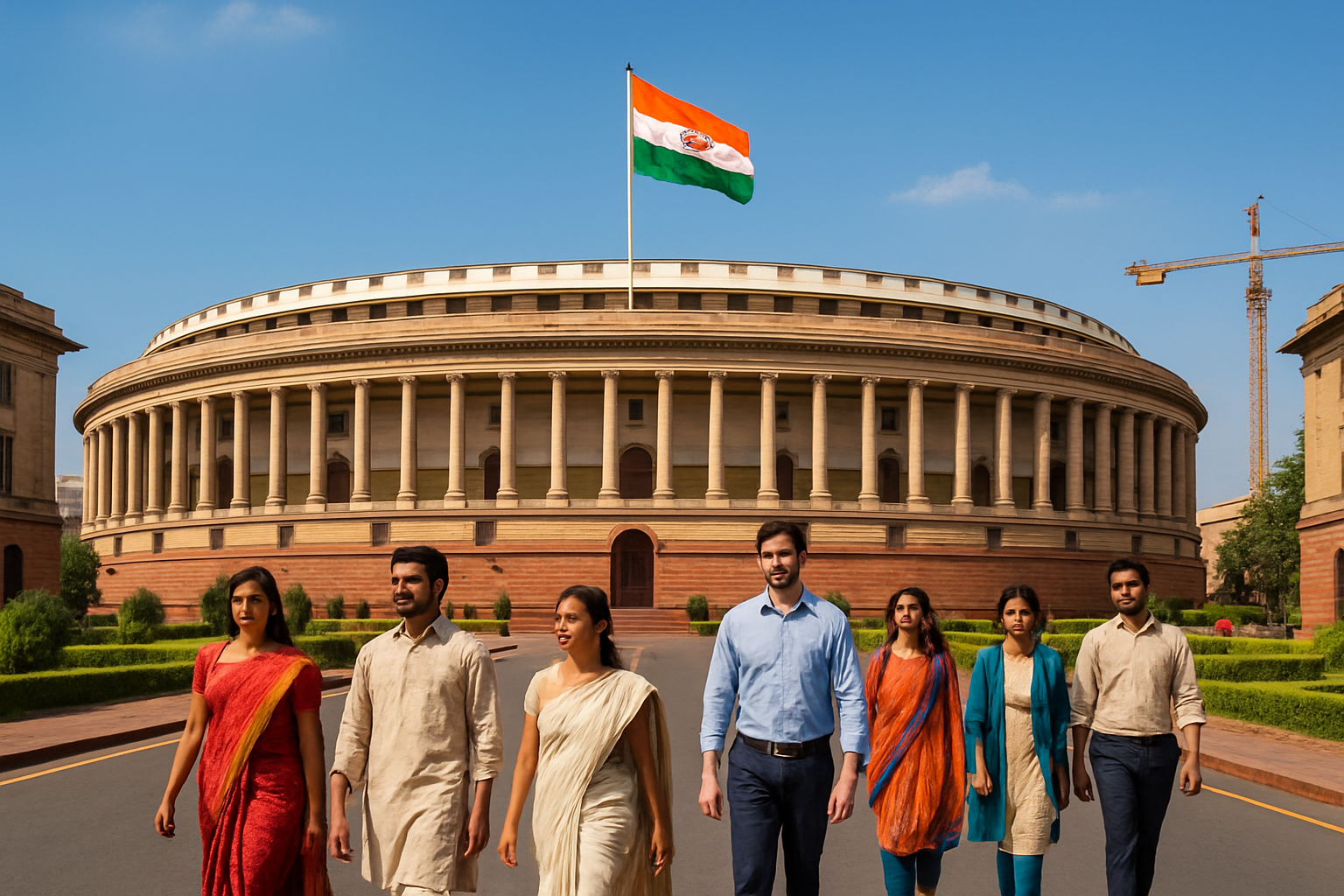
The architects of modern India formation faced the monumental task of creating a democratic framework that could unite a nation of incredible diversity. Drawing inspiration from global constitutional traditions while respecting India’s unique cultural fabric, the Constituent Assembly spent nearly three years crafting what would become one of the world’s most comprehensive constitutions.
Dr. B.R. Ambedkar, the principal architect, ensured the Constitution balanced federal and unitary features to accommodate regional aspirations while maintaining national unity. The document established fundamental rights that protected individual freedoms while incorporating directive principles to guide future policy-making. This framework created a parliamentary system with an independent judiciary, ensuring checks and balances that would prevent authoritarian rule.
The electoral system adopted universal adult suffrage from day one – a bold decision considering the massive illiteracy rates. The Election Commission emerged as an independent body, conducting what many called the “world’s largest democratic exercise.” Regional parties found representation through the federal structure, while national parties provided stability at the center.
Economic Planning and Industrial Development
Post-independence economic planning marked a dramatic shift from colonial extraction to nation-building. Nehru’s vision of scientific socialism led to the adoption of Five-Year Plans, modeled after Soviet planning but adapted to Indian conditions. The focus on heavy industries and infrastructure development aimed to achieve self-reliance in critical sectors.
The establishment of public sector enterprises like Steel Authority of India Limited (SAIL) and Bharat Heavy Electricals Limited (BHEL) created the industrial backbone. Major projects included the Bhakra Nangal Dam, atomic energy programs, and the Indian Institutes of Technology (IITs). These initiatives transformed an agrarian economy into a diversified industrial base.
| Sector | Key Achievements | Timeline |
|---|---|---|
| Steel Production | From 1.5 million tons (1950) to 7 million tons (1970) | 1950-1970 |
| Power Generation | Increased from 2,300 MW to 19,000 MW | 1947-1970 |
| Railway Expansion | Extended network by 15,000 km | 1947-1965 |
The Green Revolution of the 1960s revolutionized agriculture through high-yielding varieties, fertilizers, and irrigation. Punjab and Haryana became the epicenters of this transformation, achieving food self-sufficiency and ending dependence on imports.
Social Reforms and Educational Expansion
Modern India’s commitment to social justice found expression in comprehensive reform programs targeting centuries-old inequalities. The Constitution outlawed untouchability and provided reservations for Scheduled Castes and Tribes in education and employment. These affirmative action policies, though controversial, helped millions access opportunities previously denied.
Educational expansion became central to nation-building efforts. Primary education received significant investment, with enrollment increasing from 19 million in 1950 to 73 million by 1970. The establishment of premier institutions like IITs, Indian Institutes of Management (IIMs), and All India Institute of Medical Sciences (AIIMS) created centers of excellence.
Higher education witnessed remarkable growth:
- Universities increased from 27 to 132 between 1947-1970
- Technical institutions multiplied from 38 to 158
- Medical colleges expanded from 30 to 79
Women’s education received special attention, though progress remained uneven across regions. The abolition of child marriage and polygamy, along with inheritance rights, gradually improved women’s status in society.
Foreign Policy and International Relations
India’s foreign policy philosophy, shaped by Nehru’s vision of non-alignment, positioned the newly independent nation as a leader among developing countries. The Non-Aligned Movement, co-founded with Egypt’s Nasser and Yugoslavia’s Tito, offered an alternative to Cold War bipolar politics.
The Panchsheel principles of peaceful coexistence guided relations with neighbors, though tensions with Pakistan over Kashmir and conflicts with China tested these ideals. The 1962 Sino-Indian War exposed military weaknesses but strengthened resolve for defense modernization.
India played active roles in international forums:
- Founding member of the United Nations
- Leadership in Commonwealth nations
- Participation in Bandung Conference (1955)
- Support for decolonization movements globally
Nuclear policy reflected India’s strategic autonomy. The peaceful nuclear explosion in 1974 demonstrated technological capability while maintaining commitment to civilian applications. Relations with major powers balanced pragmatic needs with ideological principles, establishing India as an independent voice in global affairs.
The diplomatic approach emphasized cultural soft power, promoting Indian philosophy, arts, and traditions worldwide. This cultural diplomacy complemented political initiatives, creating goodwill that benefited long-term strategic interests.
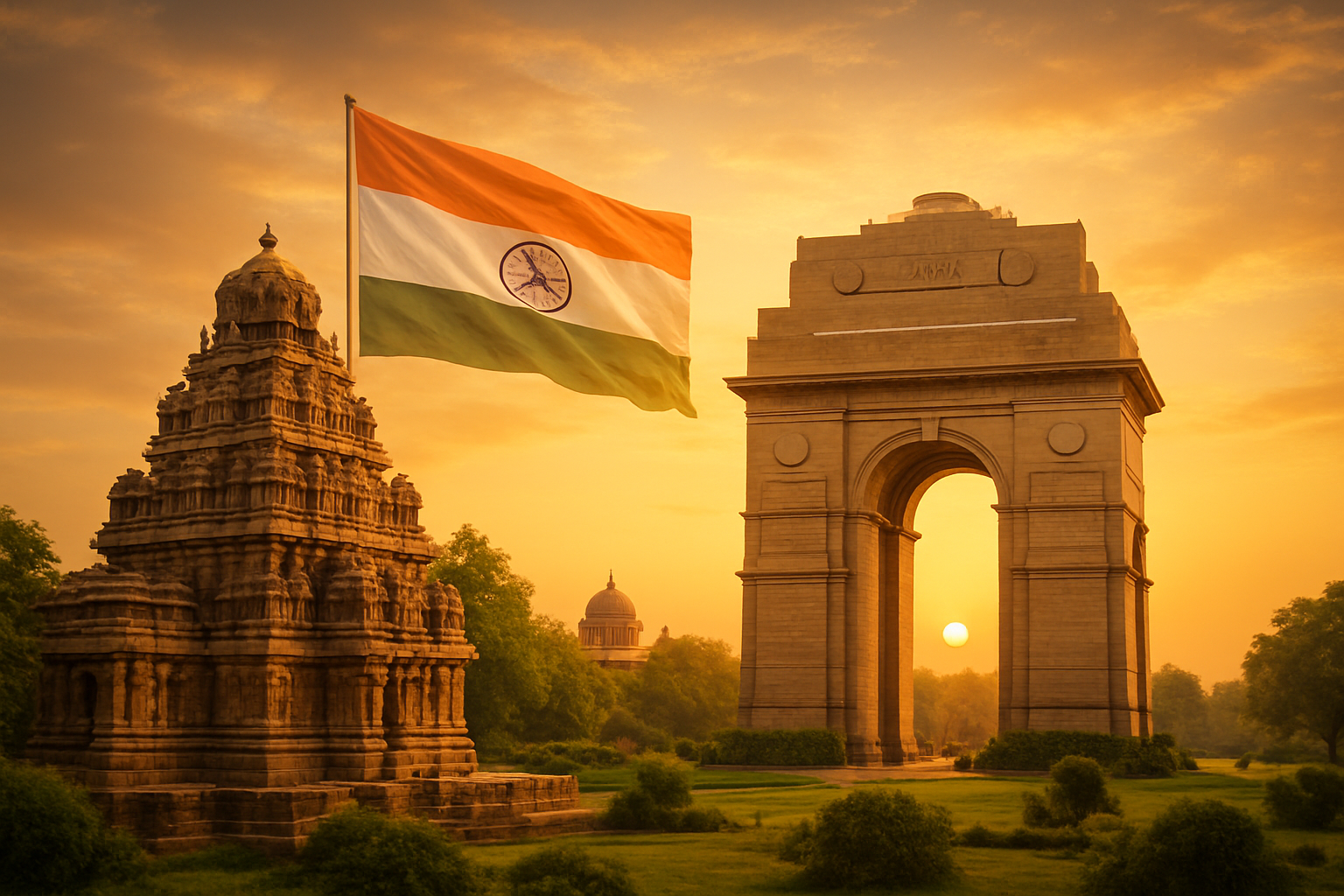 The journey from Ancient Bharat to Modern India spans thousands of years of remarkable human achievement, cultural evolution, and political transformation. From the foundational Indus Valley Civilization through mighty empires like the Mauryas and Guptas, to the complex medieval period of Islamic rule and cultural blending, this land has continuously reinvented itself while preserving its core identity. The British colonial period, though challenging, sparked the independence movement that gave birth to the democratic nation we know today.
This incredible transformation shows us that India’s strength lies not in clinging to any single era, but in its ability to adapt and grow while honoring its diverse heritage. Every phase—from ancient kingdoms to modern democracy—has contributed unique elements to India’s rich tapestry. Understanding this complete story helps us appreciate both the struggles and triumphs that created one of the world’s most fascinating civilizations. The real magic of India isn’t in its past alone, but in how it continues to write new chapters while staying connected to its roots.