
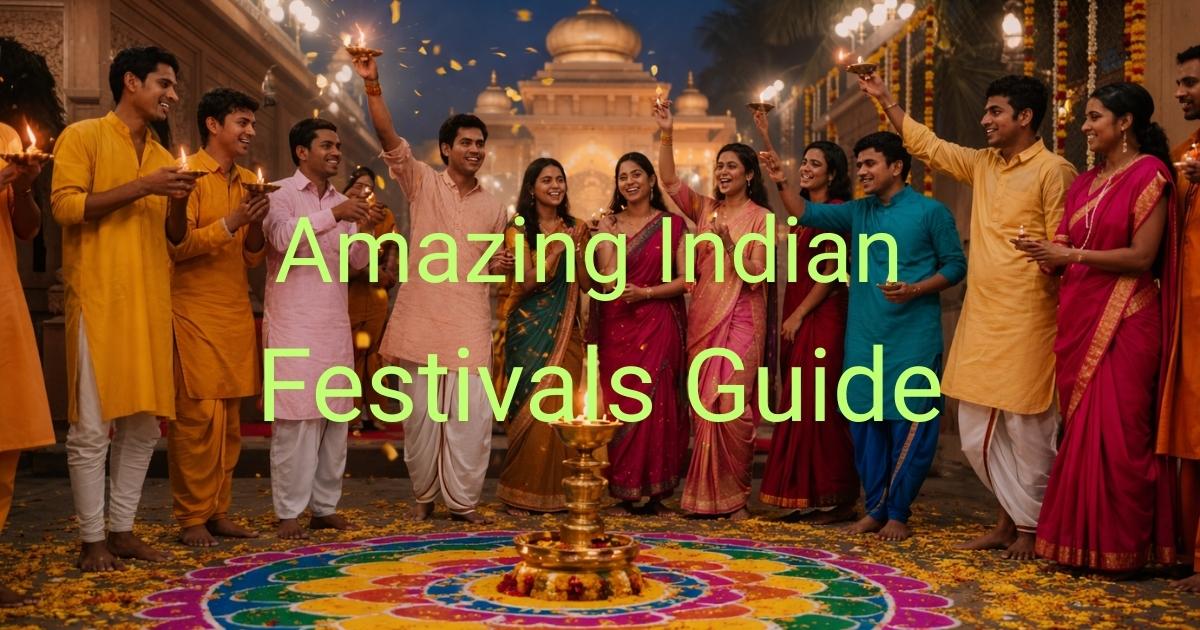
India’s festival calendar bursts with color, spirituality, and centuries-old traditions that bring communities together year-round. This Indian festivals guide helps travelers, cultural enthusiasts, and anyone curious about Hindu festivals understand what makes these traditional Indian celebrations so special.
From the sparkling lights of Diwali traditions to the rainbow powder clouds of Holi festival, each celebration tells a unique story. We’ll explore the spiritual significance Indian festivals hold for millions of people and dive into the regional Indian festivals that showcase India’s incredible diversity.
You’ll discover how to participate respectfully in festival customs India has preserved for generations. We’ll also share the secrets behind authentic Indian festival food – those mouth-watering sweets, savory treats, and special dishes that make each celebration unforgettable. Get ready to experience the magic of India’s most beloved festivals and understand why they continue to captivate people around the world.
Discover the Spiritual Significance Behind India’s Most Celebrated Festivals
Understanding the Ancient Roots and Mythological Stories
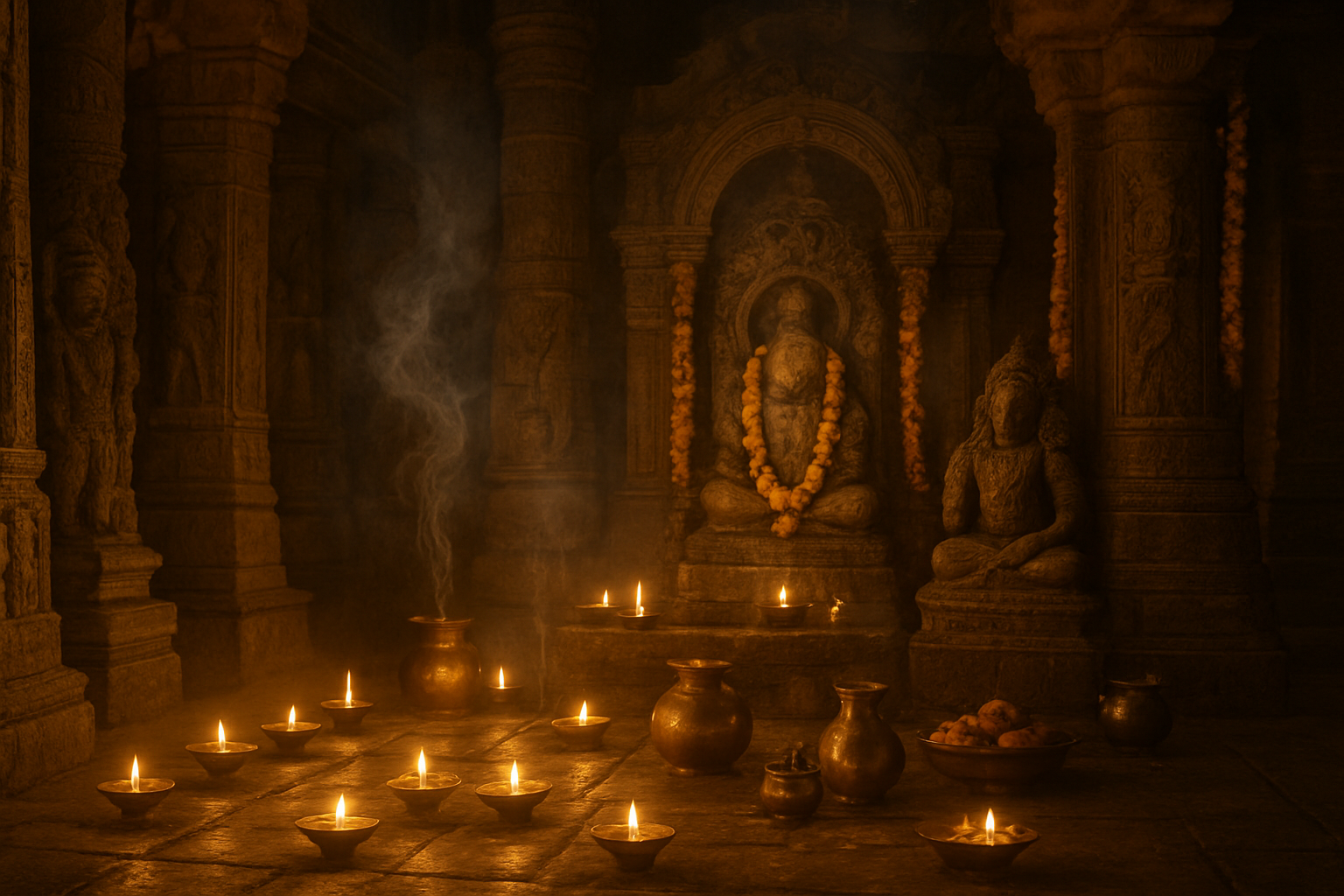
Indian festivals draw their power from ancient mythological tales that have shaped the spiritual landscape of the subcontinent for thousands of years. These stories aren’t just entertaining narratives – they carry deep symbolic meanings that continue to guide people’s lives today.
Take Diwali, the festival of lights, which celebrates Lord Rama’s victorious return to Ayodhya after defeating the demon king Ravana. This tale represents the eternal battle between good and evil, darkness and light. When millions of oil lamps flicker across India during Diwali traditions, they symbolize the inner light that dispels ignorance and brings wisdom.
Holi festival springs from the legend of Prahlada and his devotion to Lord Vishnu, despite his demon father Hiranyakashipu’s attempts to kill him. When Holika, Prahlada’s aunt, tried to burn him alive but was consumed by flames herself, it showed that divine protection shields the faithful. The vibrant colors thrown during Holi represent joy, renewal, and the triumph of devotion over evil.
The stories behind these Hindu festivals often blend historical events with spiritual teachings. Dussehra commemorates both Lord Rama’s victory over Ravana and Goddess Durga’s triumph over the buffalo demon Mahishasura. These dual narratives show how the same festival can carry multiple layers of meaning, speaking to different aspects of human experience.
Krishna Janmashtami celebrates the birth of Lord Krishna, whose life story encompasses playfulness, divine love, and profound spiritual wisdom. The midnight celebrations reflect his birth time, while the ritual of breaking earthen pots filled with curd mirrors young Krishna’s mischievous butter-stealing adventures. Each element connects worshippers to both the human and divine aspects of Krishna’s character.
How Festivals Connect Communities to Their Cultural Heritage
Traditional Indian celebrations serve as living bridges connecting modern communities to their ancestral wisdom and cultural identity. Through festivals, families pass down values, customs, and spiritual practices that might otherwise fade away in our rapidly changing world.
During Ganesh Chaturthi, entire neighborhoods come together to install and worship elaborate Ganesha idols. This collective effort strengthens social bonds while teaching younger generations about devotion, community service, and environmental consciousness. The shared preparation, daily prayers, and final immersion ceremony create lasting memories and cultural knowledge.
Regional Indian festivals showcase the incredible diversity within Indian culture while maintaining common spiritual threads. Kerala’s Onam celebrates the mythical King Mahabali’s annual visit, bringing families together for elaborate feasts served on banana leaves. Tamil Nadu’s Pongal honors the sun god and celebrates the harvest, with families creating intricate rangoli patterns and sharing freshly cooked rice dishes.
These celebrations preserve traditional arts that might otherwise disappear. Navratri keeps alive various folk dances like Garba and Dandiya, while festivals across different states maintain unique musical traditions, handicrafts, and storytelling methods. Children learn these arts naturally through festival participation, ensuring cultural continuity.
The spiritual significance of Indian festivals also reinforces moral values and life philosophies. Karva Chauth emphasizes marital devotion, Raksha Bandhan celebrates sibling bonds, and Guru Purnima honors the teacher-student relationship. These observances strengthen family ties and social structures that form the backbone of Indian society.
The Role of Festivals in Marking Seasonal Changes and Agricultural Cycles
Indian festival traditions have always been intimately connected to nature’s rhythms and agricultural patterns. This connection reflects the ancient understanding that human life prospers when aligned with natural cycles and cosmic energies.
Makar Sankranti marks the sun’s northward journey and the beginning of longer days, celebrated across India with kite flying and sesame-based sweets. This timing coincides with the winter harvest, making it both a spiritual observance and agricultural celebration. Farmers offer the first grains to deities, expressing gratitude for nature’s abundance.
The monsoon season brings Teej festivals, particularly important in northwestern India. These celebrations welcome the life-giving rains essential for crops and acknowledge the feminine principle in nature. Women dress in green and yellow, colors representing new growth and prosperity, while praying for good harvests and family welfare.
Autumn festivals like Durga Puja and Dussehra coincide with the post-monsoon harvest period. The timing isn’t coincidental – these celebrations emerged when agricultural communities had leisure time after gathering crops and before winter preparations began. The abundance of the harvest season allowed for elaborate festivities and community gatherings.
Holi festival arrives with spring, celebrating new growth and renewal. The burning of Holika bonfires symbolically clears away winter’s stagnation, while the colorful powder throwing represents spring’s vibrant energy. This timing perfectly captures nature’s transition from dormancy to explosive growth.
Baisakhi in Punjab celebrates the spring harvest and marks the Sikh New Year. The festival recognizes farmers’ hard work while honoring the earth’s fertility. Similar harvest festivals occur across different regions – Onam in Kerala, Pongal in Tamil Nadu, and Poila Boishakh in Bengal – each reflecting local agricultural patterns while maintaining universal themes of gratitude and renewal.
Experience the Vibrant Colors and Rituals of Major Hindu Festivals
Diwali’s spectacular light displays and prosperity traditions
The festival of lights transforms entire communities into glittering wonderlands, where every home becomes a beacon of hope and celebration. Diwali’s most striking feature is the elaborate display of diyas (oil lamps), electric lights, and colorful rangoli patterns that adorn doorsteps and courtyards. Families spend weeks preparing their homes, creating intricate designs using colored powders, flower petals, and rice to welcome prosperity and good fortune.
The five-day celebration begins with Dhanteras, when people purchase gold, silver, or new utensils to invite wealth into their homes. The main Diwali night sees millions of lamps illuminated simultaneously across India, creating a breathtaking spectacle visible even from space. Traditional Indian celebrations during this time include elaborate prayers to Goddess Lakshmi, the deity of wealth and prosperity.
Fireworks light up the night sky as families exchange sweets, gifts, and blessings. The financial aspect of Diwali extends beyond mere symbolism – many businesses consider this the most auspicious time to make major purchases or start new ventures. Markets buzz with activity as people shop for everything from jewelry to home decorations, making it one of the most economically significant Hindu festivals.
Holi’s joyful color celebrations and spring renewal ceremonies
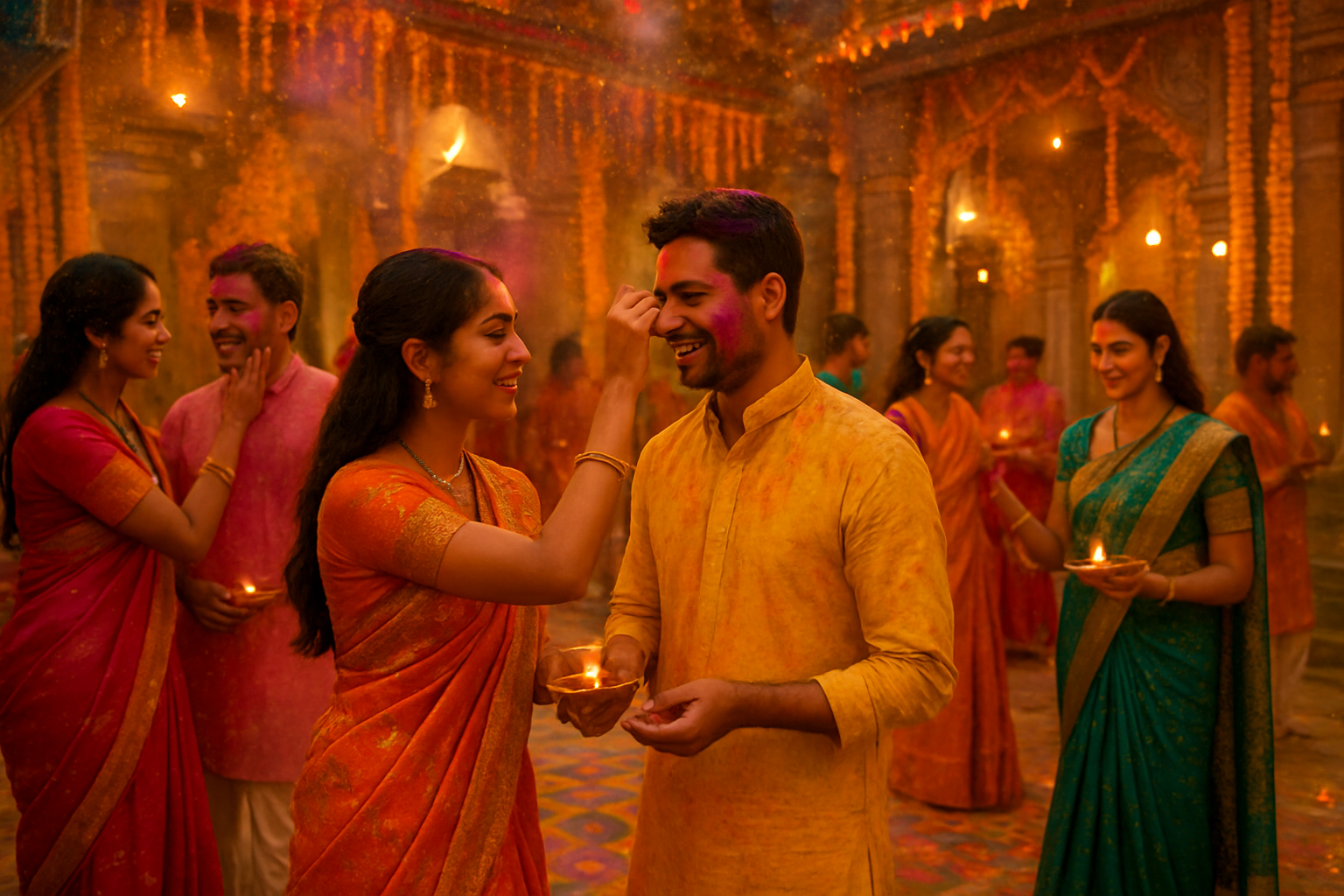
Holi bursts forth as nature’s own celebration of renewal, marking the end of winter and the arrival of spring. This vibrant festival transforms ordinary streets into rainbow-colored battlefields where social boundaries dissolve in clouds of gulal (colored powder) and spray guns filled with tinted water. The tradition stems from various mythological stories, most notably the tale of Prahlad and the demoness Holika, symbolizing the triumph of devotion over evil.
The festival begins with Holika Dahan, where communities gather around bonfires to burn effigies representing negative forces. The following day unleashes pure joy as people of all ages engage in playful color fights. Traditional preparations include making natural colors from flowers, herbs, and spices – turmeric for yellow, beetroot for red, and spinach for green.
Regional variations add unique flavors to Holi celebrations. In Mathura and Vrindavan, the festival extends for weeks with elaborate processions and temple ceremonies honoring Lord Krishna. Braj Holi features lathmar traditions where women playfully chase men with sticks, while Bengali communities celebrate Dol Jatra with cultural programs and traditional sweets. The festival food includes gujiya, thandai, and various regional delicacies that complement the festive atmosphere.
Navratri’s nine nights of dance and divine feminine worship
Navratri celebrates the divine feminine energy through nine nights of devotional dance, music, and spiritual practices dedicated to various forms of Goddess Durga. Each night honors a different aspect of the goddess, from Shailaputri to Siddhidatri, creating a journey through the complete spectrum of feminine power and grace.
The festival showcases India’s incredible regional diversity through different dance forms. Gujarat comes alive with Garba and Dandiya Raas, where participants dance in circles around a lamp representing divine light. The rhythmic steps and colorful traditional attire create mesmerizing patterns that can involve thousands of dancers in large venues.
In West Bengal, Navratri culminates in Durga Puja, featuring elaborate pandals (temporary structures) housing magnificent clay sculptures of the goddess. These artistic installations often recreate famous landmarks or depict social themes. Karnataka and Tamil Nadu celebrate with Golu displays – intricate arrangements of dolls depicting mythological scenes and everyday life.
The spiritual significance includes fasting, meditation, and recitation of sacred texts. Many devotees observe partial or complete fasts, consuming only fruits, milk, and special festival food. The festival customs India follows during Navratri often include wearing specific colors each day, from yellow for Kushmanda to purple for Kalaratri, creating a visual representation of the goddess’s various forms.
Dussehra’s victory celebrations and good over evil symbolism
Dussehra marks the climactic moment when good triumphs over evil, celebrated through dramatic reenactments and towering effigies that light up the autumn sky. The festival commemorates two major victories: Lord Rama’s defeat of the ten-headed demon king Ravana, and Goddess Durga’s victory over the buffalo demon Mahishasura. These stories resonate across generations, teaching moral lessons through spectacular visual storytelling.
The most iconic tradition involves creating massive effigies of Ravana, his brother Kumbhakarna, and son Meghnad, filled with fireworks and set ablaze amid cheering crowds. The Ramlila performances leading up to Dussehra bring ancient epics to life through elaborate theatrical presentations that can span several weeks. These performances vary significantly across regions, with Delhi’s Ramlila being a UNESCO-recognized cultural heritage.
Regional celebrations showcase India’s cultural diversity. In Mysore, the festival features royal processions with decorated elephants, traditional music, and the famous Mysore Palace illumination. Kullu in Himachal Pradesh hosts a unique celebration where hundreds of village deities are brought together in colorful processions. Bengal celebrates Durga Puja with artistic pandals and cultural programs, while South Indian states focus on Golu displays and traditional music concerts.
The spiritual significance of Indian festivals like Dussehra extends beyond the celebrations themselves. The festival represents the eternal struggle between dharma (righteousness) and adharma (unrighteousness), encouraging people to overcome their inner demons – anger, greed, and ego. This makes Dussehra not just a historical commemoration but a personal spiritual journey for millions of devotees.
Explore Regional Festival Treasures Across Different Indian States
South India’s Harvest Festivals Like Pongal and Onam
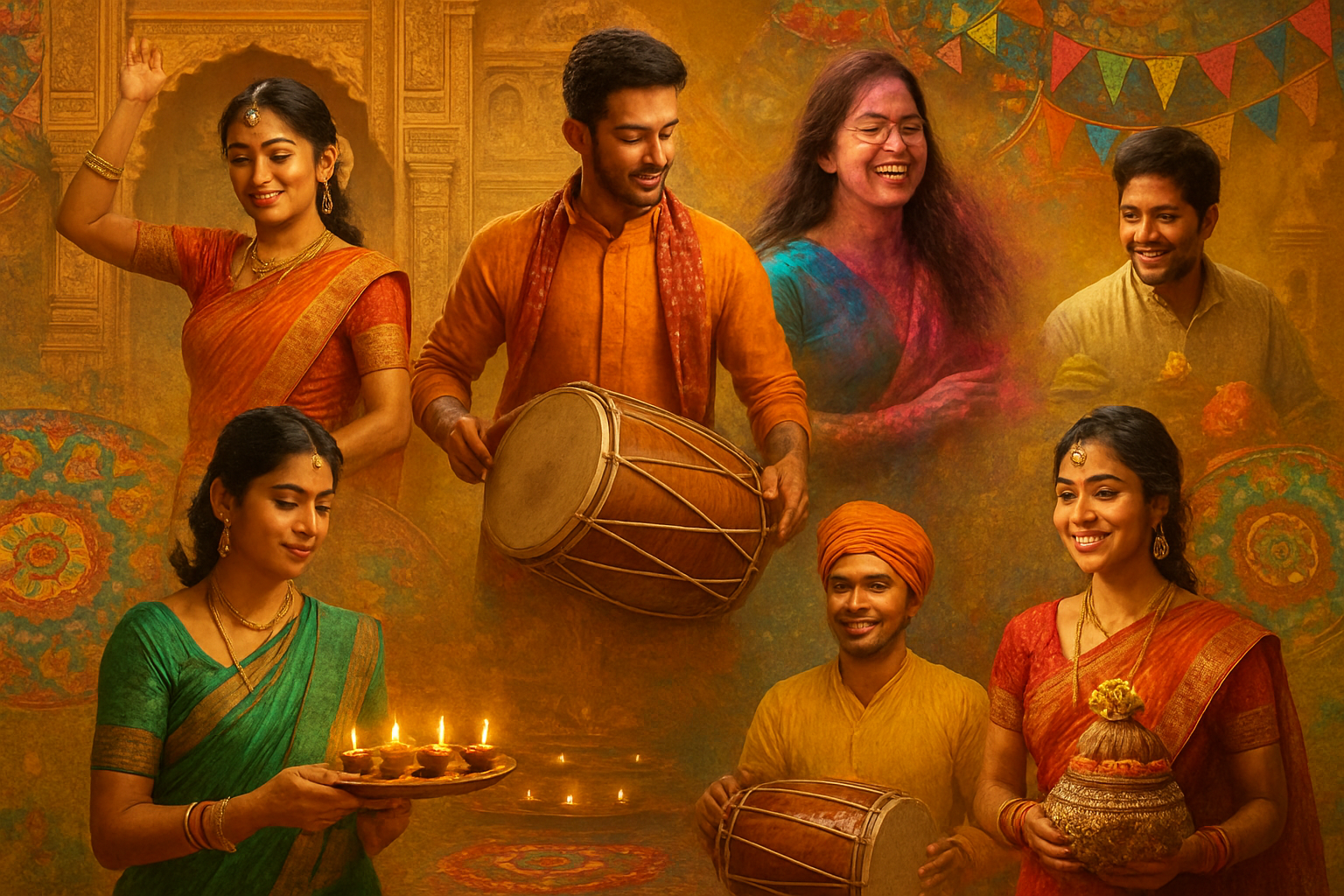
Tamil Nadu’s Pongal celebration transforms the entire state into a canvas of gratitude and abundance every January. This four-day harvest festival revolves around honoring the sun god, cattle, and nature’s bounty. The festival gets its name from the traditional dish “Pongal” – a sweet rice preparation cooked in earthen pots until it overflows, symbolizing prosperity. Families gather in courtyards, decorating their homes with intricate kolam patterns using rice flour and vibrant colors.
Kerala’s Onam stands as one of India’s most visually stunning regional Indian festivals, celebrating the mythical return of King Mahabali. The ten-day festival showcases Kerala’s rich cultural heritage through elaborate flower carpets called “Pookalam,” traditional boat races, and the famous Kathakali dance performances. Women dress in elegant white and gold saris, while the grand Onasadya feast features over 20 traditional dishes served on banana leaves.
Both festivals share deep agricultural roots, with communities coming together to celebrate successful harvests through music, dance, and elaborate feasts that strengthen social bonds across generations.
Bengal’s Artistic Durga Puja and Cultural Extravaganza
Bengal’s Durga Puja transcends religious boundaries to become the region’s most anticipated cultural celebration. The festival transforms Kolkata and surrounding areas into an open-air art gallery, where skilled artisans create breathtaking pandals (temporary structures) housing beautifully crafted Durga idols. Each neighborhood competes to create the most innovative themes, often addressing contemporary social issues through artistic expression.
The five-day celebration brings together people from all backgrounds, creating a unique carnival atmosphere where traditional drumbeats of dhak mix with modern celebrations. Street food vendors line the routes between pandals, offering local delicacies like phuchka, kathi rolls, and mishti doi. The festival culminates with the emotional visarjan ceremony, where devotees bid farewell to the goddess as her idols are immersed in rivers.
Cultural programs featuring classical Bengali dance, music, and theater performances add depth to the celebrations, making Durga Puja a complete sensory experience that preserves and promotes Bengali artistic traditions.
Punjab’s Vibrant Baisakhi and Sikh New Year Celebrations
Punjab’s Baisakhi celebration combines agricultural thanksgiving with profound religious significance, marking both the harvest of winter crops and the formation of the Khalsa in 1699. Golden wheat fields provide the perfect backdrop for this joyous festival, where farmers express gratitude for abundant harvests through energetic bhangra and giddha performances.
Gurdwaras across Punjab organize special prayers, community kitchens (langars), and processions featuring the holy Guru Granth Sahib. The infectious energy of dhol beats accompanies colorful processions through villages and cities, with participants wearing bright turbans and traditional Punjabi attire.
The festival showcases Punjab’s warrior spirit and agricultural prosperity through folk performances, where dancers wearing vibrant costumes tell stories of heroism and harvest through synchronized movements. Community meals bring together people from different backgrounds, reinforcing the Sikh principles of equality and service.
Rajasthan’s Desert Festivals and Royal Heritage Displays
Rajasthan’s desert festivals transport visitors into a world of royal grandeur and cultural magnificence. The Jaisalmer Desert Festival showcases the state’s rich heritage through camel races, folk music performances, and traditional handicraft displays against the stunning backdrop of golden sand dunes.
Royal palaces and forts serve as venues for these elaborate celebrations, where local artists perform ancient Rajasthani folk dances like Ghoomar and Kalbelia. The haunting melodies of traditional instruments like the ravanhatha and kamaycha create an otherworldly atmosphere under star-filled desert skies.
These festivals feature unique competitions including longest mustache contests, turban tying demonstrations, and puppet shows that preserve centuries-old storytelling traditions. The celebrations highlight Rajasthan’s desert lifestyle, showcasing how communities have thrived in harsh environments while maintaining their distinct cultural identity through music, dance, and artistic expression.
Master the Art of Traditional Festival Preparations and Customs
Essential decorative elements like rangoli and torans
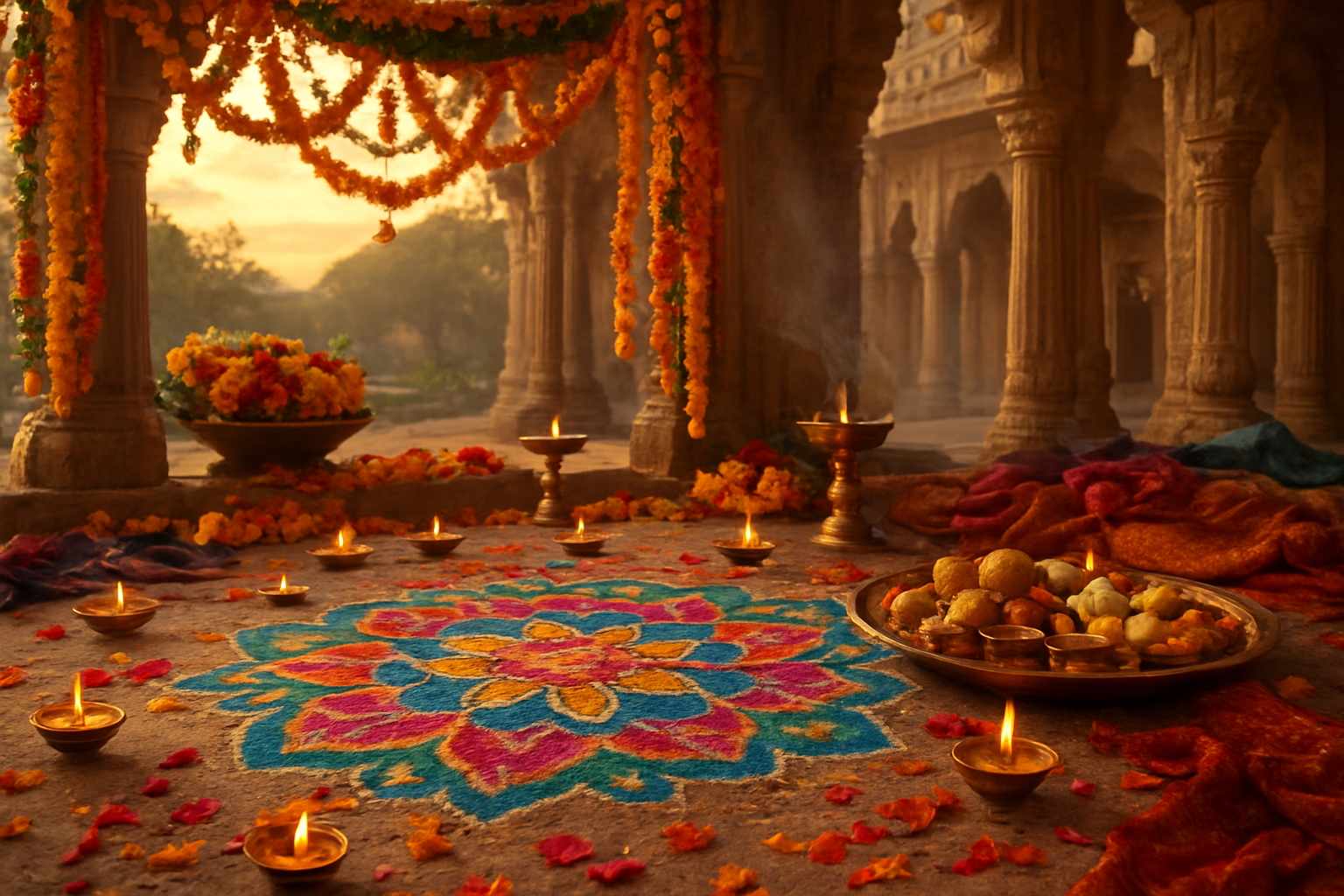
Rangoli creates the visual heartbeat of Indian festivals, transforming ordinary spaces into sacred artwork. These intricate floor patterns, made from rice flour, colored powders, flower petals, and sometimes even pulses, carry deep spiritual meaning while welcoming guests and deities into homes. During Diwali traditions, families spend hours crafting elaborate designs featuring lotus flowers, geometric patterns, and traditional motifs that symbolize prosperity and good fortune.
The art varies dramatically across regions. In South India, kolam patterns use white rice flour and feature mathematical precision with dots and loops. Bengali alpana designs incorporate fish, lotus, and paisley motifs during Durga Puja. Rajasthani mandana artwork combines bold colors with mirror work, creating stunning visual displays during festivals like Teej.
Creating successful rangoli requires specific materials and techniques:
- Base materials: Rice flour, chalk powder, or ready-made rangoli colors
- Natural elements: Rose petals, marigold flowers, turmeric, vermillion
- Tools: Bamboo sticks for precision, sieves for even distribution
- Design aids: Stencils, carbon paper for beginners, compass for geometric patterns
Torans serve as decorative doorway hangings that invite positive energy into homes during Hindu festivals. These garlands combine fresh flowers, mango leaves, and fabric strips in vibrant arrangements. Marigold and rose torans dominate festival decorations, while coconut and mango leaf combinations hold special significance for harvest celebrations.
Traditional toran-making involves specific patterns and materials for different occasions. Diwali calls for marigold and rose combinations with golden threads. Gudi Padwa features neem and mango leaves with bright cloth strips. Regional variations include Gujarati torans with intricate mirror work and Tamil Nadu’s thoranam using banana leaves and flowers.
Traditional clothing choices for different celebrations
Festival clothing reflects both regional identity and spiritual significance across Indian festivals. Each celebration demands specific colors, fabrics, and styles that honor ancient traditions while expressing cultural pride.
Diwali clothing emphasizes rich fabrics and golden hues. Women typically wear silk sarees in deep reds, oranges, and golds, often featuring intricate zari work. Men choose silk kurtas paired with dhotis or churidars in complementary colors. Children dress in miniature versions of adult attire, creating beautiful family coordination.
Holi festival clothing takes a completely different approach. Since the celebration involves throwing colored powders and water, participants wear older white or light-colored clothes they don’t mind staining. Cotton fabrics work best as they’re comfortable and easy to wash afterward.
Regional festival customs showcase incredible clothing diversity:
| Festival | Region | Traditional Attire |
|---|---|---|
| Durga Puja | Bengal | Red and white cotton sarees, dhoti-kurta |
| Onam | Kerala | White sarees with gold borders, mundu |
| Baisakhi | Punjab | Bright phulkari suits, colorful turbans |
| Navratri | Gujarat | Chaniya choli with mirror work |
| Karva Chauth | North India | Red/pink sarees, heavy jewelry |
Color symbolism plays a crucial role in festival clothing choices. Red represents power and purity, making it essential for weddings and religious ceremonies. Yellow signifies knowledge and learning, perfect for Basant Panchami. Green symbolizes new beginnings, popular during spring festivals. Saffron represents sacrifice and spiritual quest, common in religious gatherings.
Sacred ritual items and their spiritual meanings
Religious ceremonies during Indian festivals require specific sacred items that carry profound spiritual significance. Each object serves both practical and symbolic purposes, connecting participants with divine energies and ancient wisdom.
Diyas (oil lamps) form the cornerstone of festival lighting traditions. These small clay lamps filled with mustard oil or ghee represent the victory of light over darkness. During Diwali, families light hundreds of diyas around homes, creating stunning displays that guide prosperity into their lives. The flame symbolizes knowledge dispelling ignorance, while the oil represents the fuel of devotion needed for spiritual growth.
Incense sticks and dhoop create the aromatic atmosphere essential for spiritual practices. Different fragrances serve specific purposes during traditional Indian celebrations. Sandalwood promotes mental clarity and peace, jasmine attracts positive energy, and rose creates an atmosphere of love and devotion. The smoke carries prayers upward to the divine realm.
Kalash (sacred water vessel) represents the universe in Hindu tradition. This copper or brass pot filled with water, topped with coconut and mango leaves, appears in virtually every major ceremony. The pot symbolizes Mother Earth, the water represents life force, coconut signifies divine consciousness, and mango leaves represent the life-giving energy of nature.
Sacred threads and malas hold special importance in festival customs India. Rudraksha beads connect wearers with Lord Shiva’s energy, while tulsi beads invoke protection and purification. Red threads (mauli or kalava) tied during ceremonies provide spiritual protection and remind participants of their religious commitments.
Bell ringing creates specific sound vibrations that purify the environment and call divine attention to prayers. Different metals produce varying tonal qualities – brass bells generate clear, resonant sounds ideal for larger gatherings, while silver bells create softer tones suitable for personal meditation.
Flowers carry individual meanings in festival preparations. Marigolds represent the sun’s energy and protection, lotus flowers symbolize purity and spiritual awakening, jasmine signifies divine hope, and roses express love and devotion. The practice of offering specific flowers to different deities follows ancient guidelines that maximize spiritual benefits.
Understanding these traditional elements helps participants engage more meaningfully with festival celebrations, creating connections between physical actions and spiritual intentions that define authentic Indian festival experiences.
Savor Authentic Festival Foods That Define Each Celebration
Sweet Delicacies and Their Cultural Significance
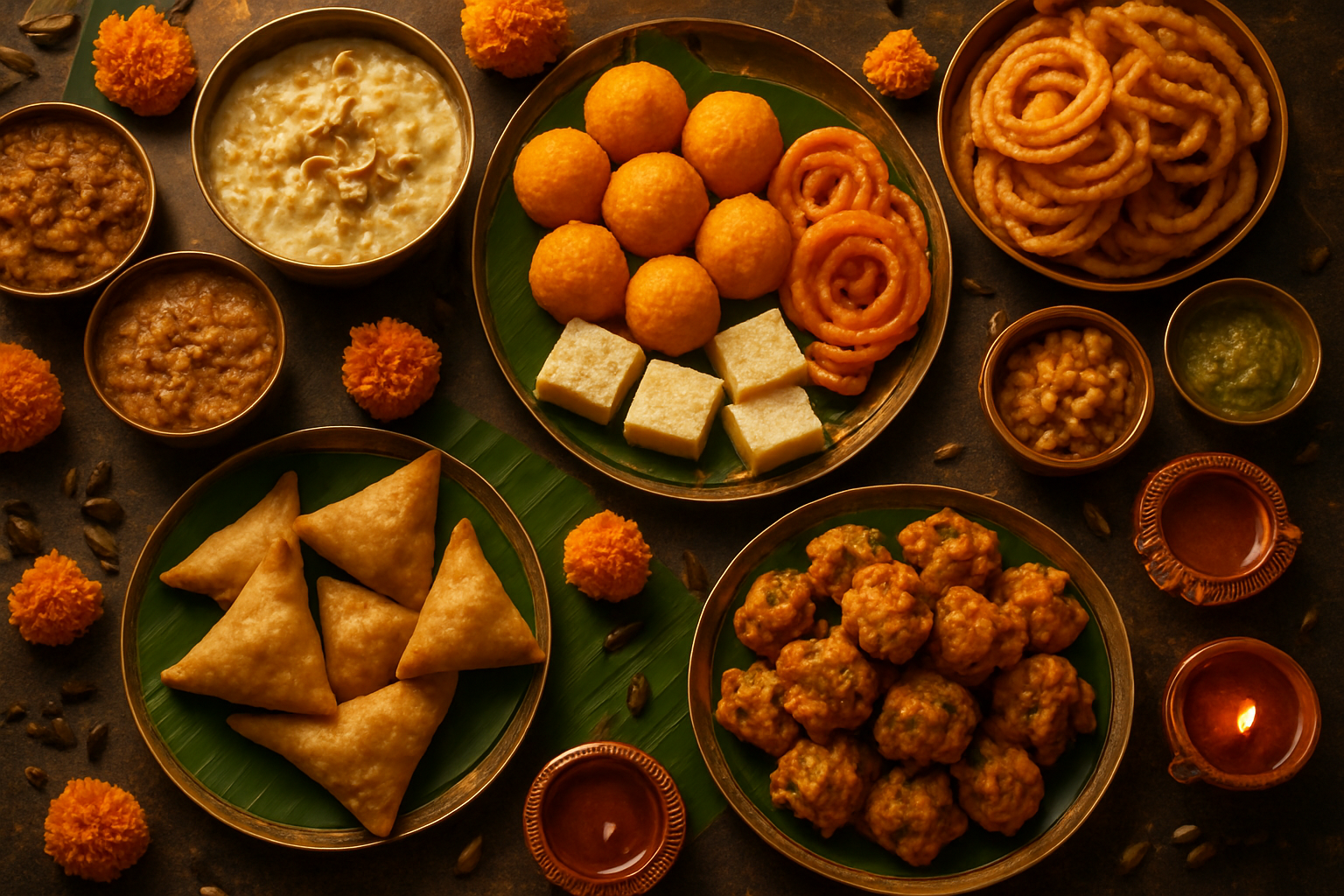
Sweet treats hold a sacred place in Indian festivals, representing the sweetness we wish to invite into our lives. During Diwali traditions, families prepare laddu, gulab jamun, and barfi as offerings to deities and gifts for loved ones. These desserts aren’t just sugar-loaded indulgences – they carry deep spiritual meaning. Laddu symbolizes completeness and prosperity, while the round shape represents the cycle of life and cosmic energy.
Modak, the beloved sweet of Lord Ganesha, takes center stage during Ganesh Chaturthi. This steamed dumpling filled with jaggery and coconut represents the rewards of spiritual devotion. The act of making modak becomes a meditation, with families gathering to shape each piece by hand while sharing stories and prayers.
Kheer and payasam serve as universal festival foods across different celebrations, symbolizing abundance and nourishment. The slow-cooking process mirrors the patience required for spiritual growth, while sharing this creamy rice pudding creates bonds within communities. Each region adds its own twist – Bengal prefers mishti doi during Durga Puja, while South India celebrates with coconut-rich ada pradhaman.
Regional Specialties Prepared During Specific Festivals
Every state brings unique flavors to Indian festival celebrations through distinctive regional dishes. West Bengal’s Durga Puja wouldn’t be complete without bhog – a traditional feast featuring khichuri, labra, and begun bhaja. These simple yet flavorful dishes reflect the goddess’s preference for humble offerings over elaborate displays.
Punjab’s Baisakhi showcases hearty makki di roti with sarson da saag, celebrating the harvest season with foods that sustained farmers through long working days. The robust flavors mirror the strength and resilience of agricultural communities, while sharing these meals reinforces cultural identity.
| Festival | Region | Signature Dish | Cultural Meaning |
|---|---|---|---|
| Onam | Kerala | Sadya on banana leaf | Unity and abundance |
| Pongal | Tamil Nadu | Sweet rice with jaggery | Gratitude to sun god |
| Bihu | Assam | Pitha and rice wine | Agricultural prosperity |
| Navratri | Gujarat | Farali dishes | Spiritual purification |
Maharashtra’s Ganpati festival brings ukadiche modak and puran poli to every household, while Rajasthan’s Teej celebrations feature ghewar and malpua. These regional specialties preserve local cooking traditions and connect generations through shared culinary memories.
Fasting Traditions and Their Nutritional Wisdom
Ancient Indian festival fasting practices reveal remarkable nutritional intelligence that modern science now validates. During Ekadashi or Navratri fasts, traditional foods like sabudana khichdi, kuttu ka atta rotis, and fruit-based preparations provide sustained energy while giving the digestive system much-needed rest.
Sabudana (tapioca pearls) offers quick carbohydrates for energy, while adding peanuts provides protein and healthy fats. Sendha namak (rock salt) maintains electrolyte balance without the processing chemicals found in regular salt. These combinations weren’t accidental – they represent generations of understanding about optimal nutrition during periods of restricted eating.
Water chestnut flour and amaranth create gluten-free alternatives that are naturally easier to digest. Sweet potato dishes provide complex carbohydrates and essential vitamins, while coconut-based preparations offer medium-chain fatty acids for sustained energy. Many festival foods contain ingredients like cardamom, ginger, and cinnamon that aid digestion and boost immunity.
Community Feasting Customs That Strengthen Bonds
Langar during Sikh festivals exemplifies how food becomes a powerful tool for building community connections. Everyone sits together on the floor, regardless of social status, sharing the same simple meal. This practice breaks down barriers and creates equality through shared nourishment.
Temple prasadam distribution creates another layer of community bonding during Hindu festivals. The blessed food carries spiritual significance while ensuring no one goes hungry during celebrations. Volunteers from all backgrounds come together to prepare, serve, and clean up, strengthening social fabric through collective service.
Neighborhood potluck traditions during Holi festival encourage families to share their specialties with others. Children run between houses collecting different treats, while adults exchange recipes and cooking tips. These informal food exchanges create lasting relationships and preserve culinary knowledge across generations.
Community kitchens during major festivals like Durg Puja or Ganesh Chaturthi transform entire neighborhoods into extended families. Cooking responsibilities are shared, costs are distributed, and everyone contributes according to their ability. The resulting feast tastes better because it’s seasoned with cooperation, friendship, and mutual support.
India’s festivals offer an incredible window into the country’s rich cultural tapestry, where ancient traditions come alive through colorful celebrations, meaningful rituals, and mouth-watering food. From the spiritual depths of Diwali’s light ceremonies to the joyful chaos of Holi’s color throwing, each festival tells a unique story that connects communities across generations. The regional variations make these celebrations even more special – what you experience during Durga Puja in Bengal feels completely different from Onam festivities in Kerala, yet both carry that same sense of unity and devotion.
Ready to dive into these amazing celebrations? Start by picking one festival that speaks to you and learn about its customs, try cooking a traditional dish, or simply join a local celebration in your area. These festivals aren’t just about the spectacle – they’re about bringing people together, sharing stories, and creating memories that last a lifetime. The beauty of Indian festivals lies in their ability to welcome everyone, so don’t hesitate to jump in and experience the magic yourself.






Nice Thank you 👍