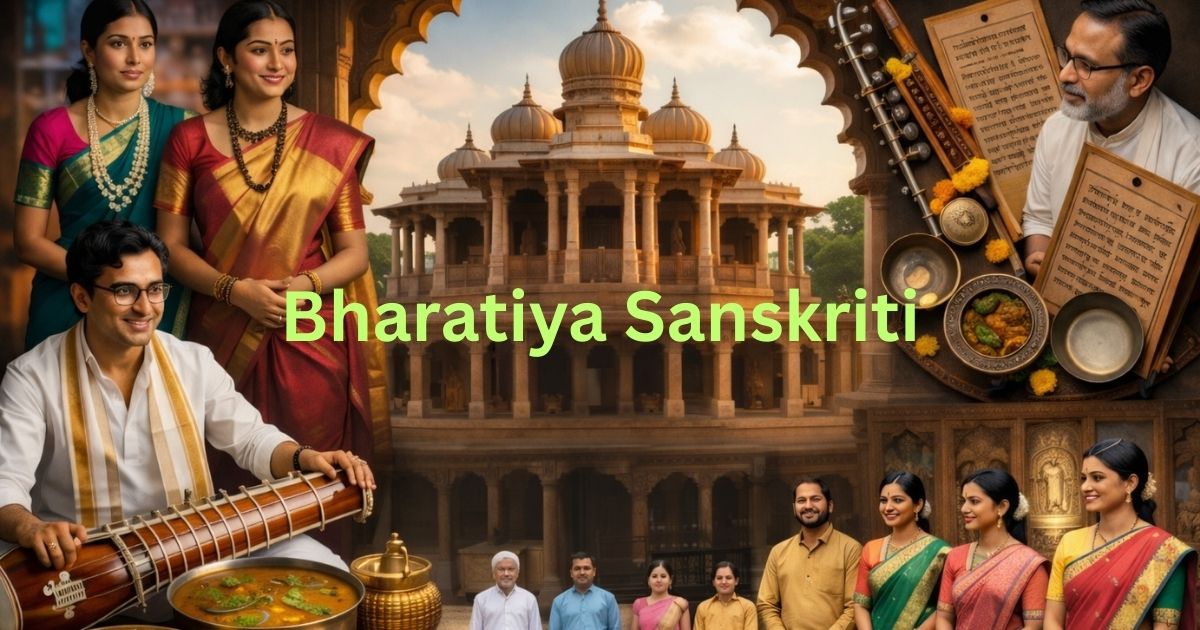
Bharatiya Sanskriti represents one of the world’s oldest and most vibrant cultural traditions, spanning thousands of years of wisdom, art, and spiritual practices. This comprehensive guide is perfect for anyone curious about Indian culture – from students and researchers to travelers planning their first visit to India, or simply anyone fascinated by this rich cultural heritage.
Indian heritage offers an incredible journey through sacred philosophies that have shaped millions of lives, from ancient Vedic wisdom to modern spiritual practices that continue to influence global wellness trends. You’ll discover how Hindu traditions and Indian customs create the foundation for daily life, festivals, and community celebrations that bring people together across generations.
We’ll explore the stunning world of traditional Indian arts, from classical dance forms like Bharatanatyam to intricate crafts that showcase India’s creative genius. You’ll also learn about Indian family values and social structures that emphasize respect, harmony, and collective well-being. Finally, we’ll dive into Indian food culture – the spices, cooking methods, and regional specialties that make Indian cuisine beloved worldwide.
Get ready to uncover the fascinating layers of Indian philosophy, customs, and traditions that make Bharatiya Sanskriti a living, breathing testament to human creativity and spiritual growth.
Discover the Rich Tapestry of Indian Cultural Heritage
Unveil Ancient Traditions That Shape Modern India
Bharatiya Sanskriti represents one of the world’s oldest continuous civilizations, with roots stretching back over 5,000 years. This ancient cultural foundation continues to influence every aspect of modern Indian life, from daily routines to major life decisions. The Vedic period laid the groundwork for many traditions still practiced today, including the concept of dharma (righteous living), the importance of family bonds, and respect for nature and all living beings.
Ancient Sanskrit texts like the Vedas, Upanishads, and epics such as the Ramayana and Mahabharata provide timeless wisdom that guides contemporary Indian thought. These texts don’t just sit on dusty shelves – they actively shape how millions of people approach relationships, work, and personal growth. The concept of karma, for instance, influences how Indians view their actions and consequences, encouraging ethical behavior and personal responsibility.
Traditional Indian education systems emphasized holistic development through the gurukula system, where students lived with their teachers and learned not just academic subjects but also life skills, values, and spiritual wisdom. While modern education has evolved, many families still prioritize character building alongside academic achievement, reflecting these ancient educational philosophies.
The joint family system, though changing in urban areas, remains a cornerstone of Indian society. This tradition emphasizes collective responsibility, mutual support, and respect for elders. Even in nuclear families today, the extended family network plays a crucial role in decision-making, child-rearing, and emotional support.
Indian architecture tells the story of cultural continuity through structures like temples, palaces, and traditional homes. The vastu shastra principles that guided ancient construction continue to influence modern building design, with many Indians consulting vastu experts before constructing homes or offices. These principles blend spiritual beliefs with practical considerations about direction, natural light, and energy flow.
Experience the Diversity of Regional Customs
India’s incredible diversity manifests through distinct regional cultures, each with unique languages, customs, and traditions. This diversity isn’t just surface-deep – it reflects thousands of years of local adaptation, migration patterns, and cultural exchanges that have created a rich mosaic of practices across the subcontinent.
The northern states showcase Indo-Aryan cultural influences with their emphasis on classical music traditions like Hindustani music, elaborate wedding ceremonies, and philosophical discussions rooted in Sanskrit literature. Punjabi culture brings vibrant bhangra dances, hearty cuisine, and strong community bonds. Rajasthani traditions feature colorful turbans, folk dances like ghoomar, and magnificent palace architecture that reflects the warrior heritage of the region.
Southern Indian culture, heavily influenced by Dravidian traditions, presents a different yet equally rich tapestry. Tamil Nadu preserves ancient temple architecture, classical Bharatanatyam dance, and Carnatic music traditions. Kerala’s unique matrilineal customs, boat races, and Ayurvedic practices show how local geography and history shaped distinct cultural expressions. Andhra Pradesh and Telangana showcase their own classical dance forms like Kuchipudi and distinctive culinary traditions.
Eastern India brings another dimension with Bengali cultural renaissance traditions, Durga Puja celebrations that transform entire neighborhoods into art galleries, and intellectual traditions that produced numerous Nobel laureates and literary giants. Odisha’s Jagannath temple traditions and classical Odissi dance represent yet another unique regional expression.
Western India balances business acumen with cultural preservation. Gujarat’s entrepreneurial spirit coexists with traditional folk dances like Garba during Navratri. Maharashtra’s blend of Marathi theater, film industry influence, and festivals like Ganesh Chaturthi shows how urban development can enhance rather than diminish cultural practices.
The northeastern states offer tribal cultures that maintain their own distinct identities while contributing to India’s overall cultural richness. These communities preserve unique weaving traditions, musical instruments, and social structures that provide alternative models of community organization and environmental stewardship.
Each region’s clothing traditions tell stories of climate adaptation, available materials, and aesthetic preferences. From Kashmiri pashminas to Kanjivaram silks, from Bandhani tie-dyes to Ikat weaves, textile traditions carry forward centuries of artistic innovation and cultural identity.
Regional languages serve as repositories of local wisdom, humor, and worldviews. While Hindi serves as a common language, regional languages like Bengali, Tamil, Gujarati, and others preserve unique literary traditions, philosophical concepts, and ways of understanding the world that can’t be fully translated.
Master the Art of Traditional Indian Festivities
Indian festivals represent much more than celebrations – they’re sophisticated cultural technologies that strengthen community bonds, mark seasonal transitions, and transmit values across generations. These festivities blend religious significance with social functions, creating shared experiences that unite diverse populations under common cultural umbrellas.
Diwali, the festival of lights, illustrates how Indian festivals operate on multiple levels. Beyond its religious significance celebrating the victory of light over darkness, Diwali serves as an economic catalyst with increased consumer spending, a social occasion for family reunions, and an environmental marker of the post-monsoon season. Families clean and decorate their homes, exchange gifts, and share meals, reinforcing social bonds while celebrating prosperity and hope.
Holi demonstrates how festivals can break down social barriers through shared celebration. The throwing of colored powder creates a temporary equality where social hierarchies dissolve in playful interaction. This festival teaches important lessons about renewal, forgiveness, and joy while marking the arrival of spring.
Regional festivals showcase local cultural expressions while maintaining broader Indian themes. Durga Puja in Bengal transforms neighborhoods into temporary art installations, combining religious devotion with community organization and artistic expression. Ganesh Chaturthi in Maharashtra involves entire communities in creating, celebrating, and ceremonially immersing elaborate statues, teaching lessons about environmental cycles and collective effort.
Harvest festivals like Pongal in Tamil Nadu, Baisakhi in Punjab, and Onam in Kerala connect communities with agricultural rhythms and environmental awareness. These celebrations honor the relationship between human society and natural cycles, expressing gratitude for abundance while reinforcing sustainable practices.
Wedding celebrations represent perhaps the most elaborate festival expressions, often lasting several days and involving extended communities. Different regions have developed distinct wedding traditions that reflect local customs while maintaining common themes of family union, social responsibility, and spiritual blessing. From Punjabi sangams to Bengali ceremonies, from Rajasthani baraat processions to South Indian temple weddings, each tradition creates unique experiences while serving similar social functions.
Festival preparations involve intricate planning that teaches organizational skills, artistic expression, and community cooperation. Making rangoli patterns, preparing special foods, decorating spaces, and coordinating group activities all contribute to cultural education that happens naturally through participation.
The timing of festivals often aligns with astronomical events, seasonal changes, and agricultural cycles, maintaining ancient connections between human society and natural rhythms. This integration helps preserve environmental awareness and seasonal sensitivity that modern urban life sometimes obscures.
Connect with Time-Honored Family Values
Indian family values form the bedrock of social organization, providing stability, support systems, and cultural transmission mechanisms that have sustained communities through millennia of change. These values emphasize collective welfare while nurturing individual growth within family contexts.
Respect for elders stands as a fundamental principle that shapes family dynamics and social interactions. This respect isn’t merely ceremonial – it represents recognition of accumulated wisdom, life experience, and the debt younger generations owe to those who raised and nurtured them. Elder consultation in major decisions ensures that experience guides choice while maintaining family continuity.
The concept of seva (selfless service) within families creates networks of mutual support that extend beyond immediate nuclear units. Children learn early to contribute to family welfare through age-appropriate responsibilities, while adults balance personal ambitions with family obligations. This creates resilient support systems where individual success contributes to collective prosperity.
Marriage in Indian culture represents not just the union of two individuals but the joining of families and communities. The elaborate process of matchmaking, family meetings, and celebration rituals ensures that relationships have community support and guidance. While arranged marriages are giving way to love marriages in many contexts, the principle of family involvement and approval remains important for most Indians.
Child-rearing practices emphasize character development alongside academic achievement. Traditional stories, moral teachings, and behavioral examples transmitted through family interactions provide ethical frameworks that guide decision-making throughout life. The gurukula principle extends into family life, where parents and relatives serve as teachers of life skills and values.
Economic cooperation within families creates security networks that help individuals take calculated risks and pursue opportunities. Joint family resources can support education, business ventures, and emergency needs, while successful members contribute back to family welfare. This system encourages entrepreneurship while providing safety nets.
Gender roles within traditional families are evolving while maintaining complementary partnership principles. Women’s education and career participation have increased dramatically, while men increasingly participate in domestic responsibilities. Many families now blend traditional respect for different contributions with modern gender equality principles.
Ancestral reverence connects families with historical continuity through regular rituals, storytelling, and genealogical awareness. These practices maintain family identity across generations while teaching lessons about legacy, responsibility, and the temporary nature of individual existence within larger family narratives.
Hospitality traditions make homes centers of community interaction where guests receive warm welcome regardless of social status. The principle “Atithi Devo Bhava” (guest is god) creates social bonds that extend family concepts to include community members, business partners, and even strangers.
Conflict resolution within families emphasizes restoration over punishment, seeking solutions that maintain relationships while addressing problems. Elder mediation, family councils, and emphasis on forgiveness help families navigate disputes while preserving unity.
These family values adapt to modern contexts while maintaining core principles. Urban families might live separately but maintain close communication and regular visits. Professional success is celebrated as family achievement, while personal struggles receive family support. Technology enables extended families to stay connected across distances, maintaining emotional bonds even when physical proximity isn’t possible.
Explore Sacred Philosophies and Spiritual Practices
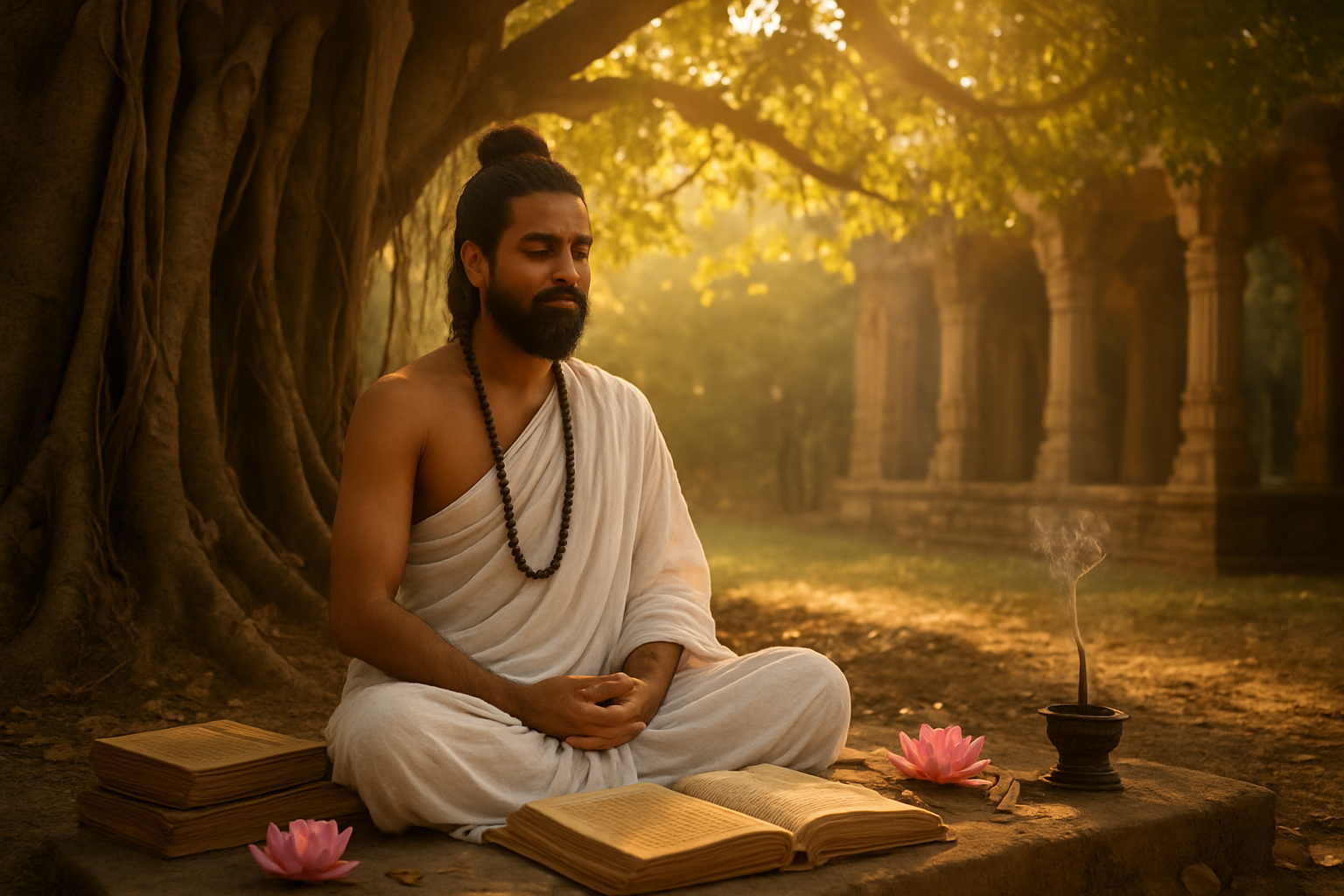
Transform Your Life Through Ancient Yogic Wisdom
Yoga represents far more than physical postures practiced in modern studios. Within Bharatiya Sanskriti, yoga serves as a comprehensive system for achieving spiritual liberation and self-realization. The ancient Sanskrit word “yoga” derives from “yuj,” meaning to unite or join, reflecting the practice’s ultimate goal of unifying individual consciousness with universal consciousness.
The foundational text, Patanjali’s Yoga Sutras, outlines the eight-limbed path (Ashtanga) that guides practitioners toward enlightenment. These limbs include ethical guidelines (Yamas and Niyamas), physical practices (Asanas), breath control (Pranayama), sense withdrawal (Pratyahara), concentration (Dharana), meditation (Dhyana), and absorption (Samadhi). Each element builds upon the previous, creating a holistic approach to spiritual development that has shaped Indian philosophy for millennia.
The ethical foundations of yoga provide practical wisdom for daily living. The five Yamas offer guidelines for ethical behavior: non-violence (Ahimsa), truthfulness (Satya), non-stealing (Asteya), celibacy or proper use of energy (Brahmacharya), and non-possessiveness (Aparigraha). These principles extend beyond personal conduct to influence how practitioners interact with their environment, family, and society.
Similarly, the five Niyamas establish personal observances that cultivate inner discipline. Cleanliness (Saucha) encompasses both physical and mental purification. Contentment (Santosha) teaches acceptance of present circumstances while maintaining equanimity. Disciplined practice (Tapas) builds willpower and determination. Self-study (Svadhyaya) encourages continuous learning through scripture study and self-reflection. Surrender to the divine (Ishvara Pranidhana) develops humility and spiritual connection.
Physical yoga practices serve as preparation for deeper spiritual work. Asanas strengthen the body while teaching practitioners to maintain steadiness and comfort in challenging positions. This physical training mirrors life’s difficulties, teaching resilience and grace under pressure. Regular practice develops body awareness, improves health, and creates the physical foundation necessary for extended meditation.
Pranayama techniques harness life force energy through conscious breathing. These practices range from simple breath awareness to complex rhythmic patterns that influence mental states and spiritual awakening. Ancient yogis understood breath as the bridge between body and mind, using specific techniques to calm anxiety, increase energy, or deepen concentration. Modern practitioners discover these same benefits, finding pranayama particularly valuable for managing stress and enhancing mental clarity.
Yoga philosophy recognizes different temperaments and offers various paths to suit individual inclinations. Karma Yoga, the path of selfless action, teaches practitioners to perform duties without attachment to results. This approach transforms ordinary activities into spiritual practice, making every action an offering to the divine. Bhakti Yoga, the path of devotion, channels emotions toward spiritual growth through love and surrender to chosen deities or spiritual ideals. Jnana Yoga, the path of knowledge, uses intellectual inquiry and discrimination to understand reality’s true nature.
Raja Yoga, often called the royal path, combines elements from all approaches while emphasizing meditation and direct spiritual experience. This systematic approach attracts those who prefer structured practices and philosophical study. Each path offers valid routes to the same destination, allowing practitioners to choose methods that resonate with their personality and circumstances.
Contemporary science validates many yogic principles, documenting benefits for physical health, mental well-being, and cognitive function. Research confirms yoga’s effectiveness for reducing stress, improving flexibility and strength, managing chronic pain, and enhancing emotional regulation. These findings support what Indian culture has understood for thousands of years: yoga provides comprehensive tools for human flourishing.
Understand the Power of Meditation in Daily Living
Meditation forms the heart of Indian spiritual practices, offering direct pathways to inner peace and self-knowledge. Unlike popular misconceptions that portray meditation as emptying the mind, traditional Indian philosophy views meditation as focused awareness that reveals consciousness’s true nature. This practice has sustained countless generations of seekers, providing practical tools for navigating life’s challenges while maintaining spiritual connection.
The Sanskrit term “dhyana” encompasses various meditative approaches, each designed to suit different temperaments and goals. Concentration practices (Dharana) build mental stability by focusing attention on single objects like mantras, breath, or visual symbols. These foundational exercises strengthen attention span and reduce mental scattered-ness, creating the stability necessary for deeper exploration.
Mindfulness meditation, rooted in Buddhist traditions that flourished in India, develops moment-to-moment awareness of thoughts, sensations, and emotions without judgment. This approach teaches practitioners to observe mental patterns objectively, reducing reactivity and increasing emotional intelligence. Regular mindfulness practice enhances decision-making abilities and improves relationships by developing empathy and communication skills.
Mantra meditation uses sacred sounds or phrases to focus the mind while connecting with spiritual energies. Traditional mantras like “Om” or “So Hum” carry vibrational frequencies that influence consciousness states. Practitioners repeat these sounds mentally or audibly, allowing their resonance to quiet mental chatter and induce peaceful awareness. Many find mantra meditation particularly accessible, as it provides a concrete focus point for restless minds.
Visualization meditation employs mental imagery to cultivate specific qualities or connect with divine energies. Practitioners might visualize deities, natural scenes, or symbolic representations while maintaining concentrated attention. These practices develop creative imagination while accessing subconscious resources for healing and transformation. Advanced practitioners report profound spiritual experiences through sustained visualization work.
Walking meditation integrates contemplative awareness with physical movement, making practice accessible for those who struggle with seated meditation. Practitioners maintain mindful attention while walking slowly, often in natural settings. This approach connects spiritual practice with daily activities, demonstrating how awareness can permeate all life experiences.
The benefits of regular meditation extend far beyond spiritual goals, influencing every aspect of daily existence. Scientific research documents meditation’s positive effects on brain structure and function, showing increased gray matter in regions associated with learning, memory, and emotional regulation. These neurological changes translate into practical improvements in focus, creativity, and stress management.
Meditation practice enhances emotional resilience by creating space between stimulus and response. Regular practitioners develop the ability to observe difficult emotions without being overwhelmed, choosing conscious responses rather than automatic reactions. This skill proves invaluable in professional settings, family relationships, and personal challenges.
Sleep quality improves significantly with consistent meditation practice. The relaxation response cultivated during meditation carries over into nighttime rest, helping practitioners fall asleep more easily and experience deeper sleep cycles. Many find that even short meditation sessions before bed create noticeable improvements in sleep patterns.
Physical health benefits include reduced blood pressure, improved immune function, and decreased chronic pain. Meditation activates the parasympathetic nervous system, promoting healing and recovery while reducing stress hormones that contribute to illness. Healthcare professionals increasingly recommend meditation as complementary treatment for various conditions.
Establishing a sustainable meditation practice requires understanding common obstacles and practical solutions. Beginning practitioners often struggle with restless minds, physical discomfort, or unrealistic expectations. Traditional teachings emphasize patience and consistency over perfection, encouraging students to maintain regular practice regardless of perceived success or failure.
Creating appropriate environments supports meditation development. Quiet spaces with minimal distractions allow deeper concentration, though advanced practitioners can meditate anywhere. Regular timing helps establish habit patterns, making practice feel natural rather than forced. Many find early morning sessions particularly beneficial, as the mind tends to be clearer before daily activities begin.
Working with qualified teachers accelerates progress while avoiding common pitfalls. Experienced instructors provide personalized guidance, helping students choose appropriate techniques and navigate challenges. Traditional Indian philosophy emphasizes the guru-student relationship as essential for spiritual development, recognizing that direct transmission of wisdom often surpasses book learning.
Embrace the Universal Messages of Indian Scriptures
Indian scriptures contain timeless wisdom that transcends religious boundaries, offering practical guidance for ethical living and spiritual development. These ancient texts, composed over thousands of years, reflect humanity’s deepest insights into consciousness, morality, and the nature of existence. Their teachings remain remarkably relevant to contemporary challenges, providing frameworks for personal growth and social harmony.
The Vedas, considered the oldest scriptures in continuous use, establish foundational principles for Indian philosophy and spiritual practice. These four collections (Rigveda, Samaveda, Yajurveda, and Atharveda) contain hymns, rituals, and philosophical insights that have shaped Bharatiya Sanskriti for millennia. The Upanishads, philosophical portions of the Vedas, explore consciousness and reality through profound dialogues between teachers and students.
Central Upanishadic teachings include the concept of Atman (individual soul) and Brahman (universal consciousness), suggesting that individual identity ultimately merges with cosmic awareness. This understanding transforms how practitioners relate to themselves and others, fostering compassion and reducing ego-based suffering. The famous declaration “Tat tvam asi” (That thou art) points to this fundamental unity underlying apparent diversity.
The Bhagavad Gita, perhaps the most influential text in Indian culture, presents dharma (righteous duty) through Krishna’s teachings to the warrior Arjuna. Faced with moral conflict on the battlefield, Arjuna receives guidance that applies to anyone struggling with ethical decisions. Krishna’s counsel emphasizes performing necessary actions without attachment to results, maintaining equanimity in success and failure.
The Gita’s three paths to liberation offer practical approaches for different personalities. Karma Yoga (action) transforms work into worship through selfless service. Bhakti Yoga (devotion) channels emotions toward spiritual growth through love and surrender. Jnana Yoga (knowledge) uses discrimination and inquiry to realize truth. Most practitioners naturally combine elements from all three paths, creating balanced spiritual development.
Dharma, often translated as duty or righteousness, represents a complex concept encompassing cosmic order, natural law, and individual purpose. Sanskrit texts distinguish between universal dharma (principles applicable to all humans) and specific dharma (duties based on individual circumstances, abilities, and life stage). This nuanced understanding helps navigate competing obligations while maintaining ethical integrity.
The concept of Svadharma suggests that each person has unique responsibilities based on their nature, talents, and circumstances. Rather than imposing universal standards, this teaching encourages individuals to discover and fulfill their authentic purpose. This approach reduces comparison and competition while maximizing each person’s contribution to collective welfare.
Indian scriptures address the reality of suffering and provide systematic approaches for transcendence. The Four Noble Truths, articulated in Buddhist texts, identify suffering’s causes and outline paths to liberation. Hindu texts offer parallel insights through discussions of maya (illusion) and moksha (liberation), providing various methods for overcoming limitations and achieving freedom.
The law of karma explains how actions create consequences that shape future experiences. Understanding karma encourages personal responsibility while reducing victim mentality and blame. This principle operates on multiple levels, from immediate cause-and-effect relationships to complex patterns spanning lifetimes. Proper understanding of karma promotes ethical behavior while maintaining hope for positive change.
Reincarnation concepts provide frameworks for understanding life’s apparent inequalities while encouraging long-term perspectives on growth and development. Rather than promoting fatalism, these teachings emphasize that current circumstances result from past actions while future conditions depend on present choices. This understanding motivates ethical behavior and personal development.
The Ramayana and Mahabharata, epic narratives that entertain while teaching moral principles, demonstrate complex ethical dilemmas through compelling stories. These texts avoid simplistic moral categories, showing how good people sometimes make mistakes while apparently flawed characters display nobility. Such nuanced portrayals reflect life’s complexity while providing guidance for difficult decisions.
Rama’s character exemplifies dharmic leadership through personal sacrifice for collective welfare. His willingness to accept exile rather than challenge his father’s promise demonstrates duty prioritized over personal preference. Sita’s strength and purity inspire countless women while challenging gender stereotypes through her independent choices and moral courage.
The Mahabharata’s vast scope encompasses virtually every human situation and moral dilemma. Yudhishthira’s commitment to truth, despite personal costs, illustrates unwavering principles. Arjuna’s warrior skills combined with spiritual sensitivity show how worldly success can coexist with spiritual development. Even complex characters like Karna and Duryodhana display admirable qualities alongside their flaws.
Contemporary relevance of scriptural wisdom appears in numerous life applications. Business ethics draw from dharmic principles of honesty, service, and stakeholder responsibility. Environmental consciousness reflects Vedic understanding of interconnectedness and cosmic harmony. Social justice movements echo scriptural emphases on equality and compassion for the suffering.
Family relationships benefit from scriptural guidance on duty, respect, and mutual support. Parenting approaches gain depth through understanding of individual dharma and stages of life. Educational philosophy draws from guru-student relationships that emphasize character development alongside academic learning.
Personal development integrates scriptural psychology with modern insights about human potential. Ancient understanding of mind, emotions, and consciousness provides frameworks for therapy and self-improvement. Meditation techniques rooted in scriptural traditions offer practical tools for stress reduction and spiritual growth.
Reading and studying these texts requires appropriate approaches that honor their depth while making them accessible. Traditional methods emphasize contemplation and discussion rather than mere intellectual analysis. Finding qualified teachers who understand both ancient wisdom and contemporary applications enhances comprehension and practical application.
Translation challenges require awareness that Sanskrit concepts often lack direct English equivalents. Multiple translations provide different perspectives, while commentaries from realized teachers offer deeper insights. Regular study groups create supportive environments for exploring difficult concepts and sharing practical applications.
Master Traditional Arts and Creative Expressions
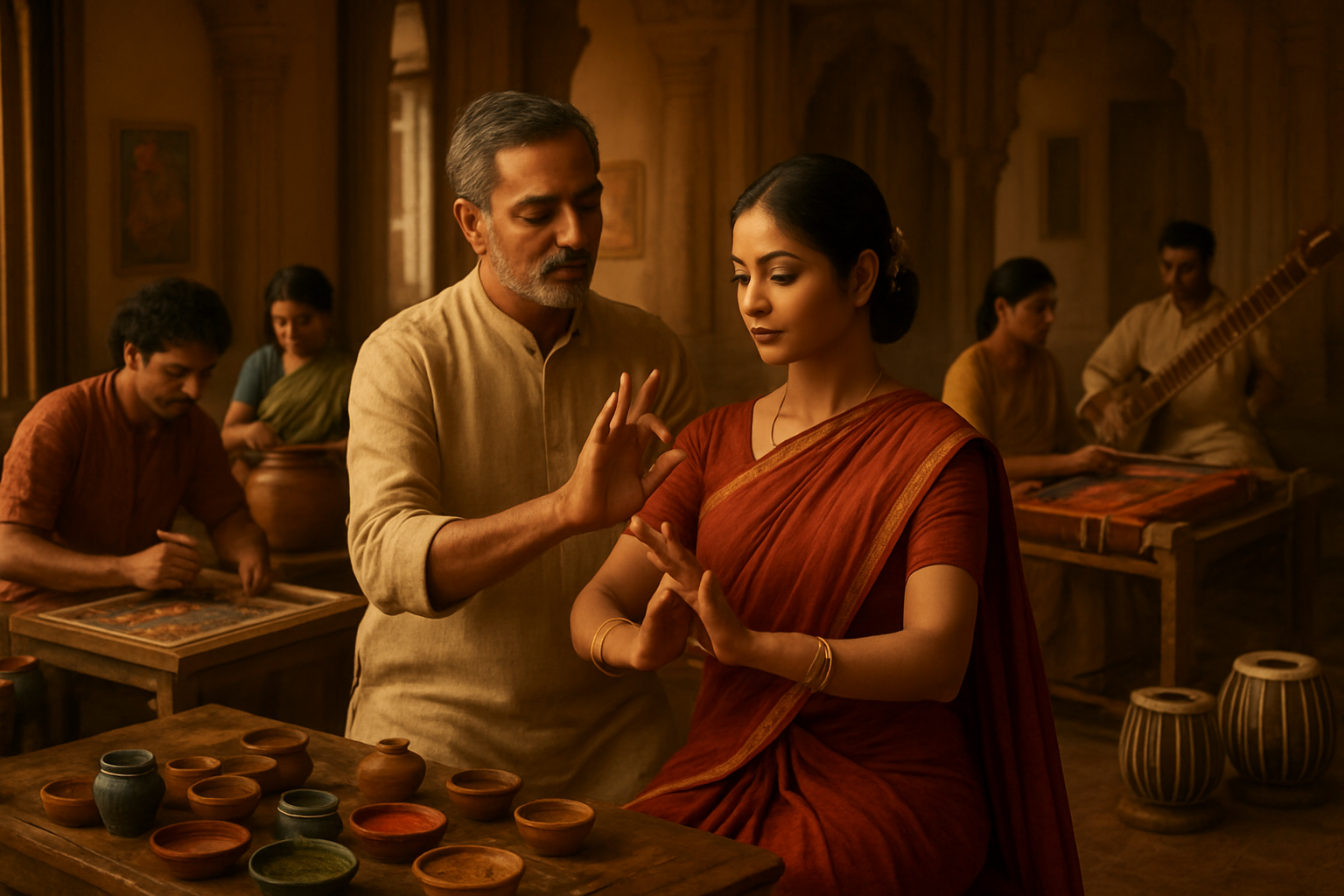
Learn Classical Dance Forms That Tell Stories
Indian classical dance forms represent one of the most sophisticated artistic traditions in the world, where every gesture carries meaning and every movement tells a story. These ancient art forms, deeply rooted in Bharatiya Sanskriti, transform the human body into a vessel for divine expression and storytelling.
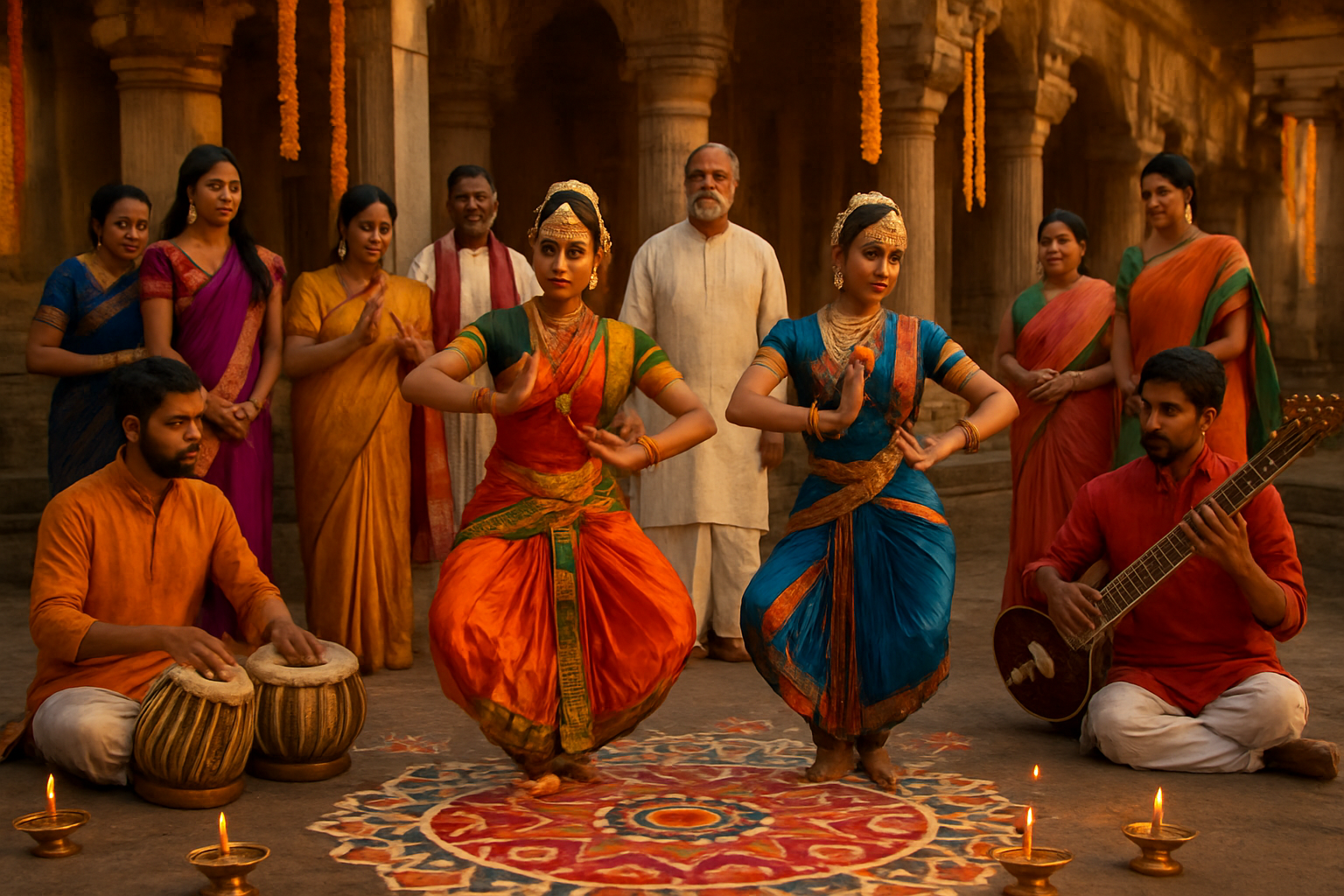
Bharatanatyam, originating from Tamil Nadu, stands as the queen of Indian classical dances. This sacred art form was traditionally performed in temples as a devotional offering to the gods. The dancer’s body becomes a living sculpture, with precise hand gestures called mudras, intricate footwork, and expressive facial movements that convey complex emotions and narratives from Hindu mythology. The costume itself tells a story – the pleated fan-like arrangement of the sari, the temple jewelry, and the elaborate makeup all contribute to the visual poetry of the performance.
Kathak, the classical dance of North India, carries the essence of storytelling in its very name, derived from ‘katha’ meaning story. Born in the temples and later flourishing in the Mughal courts, Kathak beautifully blends Hindu and Islamic cultural influences. The dancer spins with breathtaking precision, creating patterns that mirror the cosmic dance of creation. The ankle bells, or ghungroos, create rhythmic patterns that speak their own language, while the graceful hand movements paint stories in the air.
Odissi from Odisha captures the sensuous curves of temple sculptures in human form. Every pose in Odissi can be traced back to the stone carvings of Konark and Bhubaneswar temples. The tribhangi posture, where the body curves in three places, creates an S-shaped silhouette that’s both aesthetically pleasing and spiritually significant. The dance celebrates the love between Radha and Krishna, transforming human emotion into divine expression.
Manipuri dance from the northeastern state of Manipur brings a gentle, flowing quality that reflects the peaceful nature of the region. The costumes, particularly the barrel-shaped skirt called the kumil, create a unique visual effect as dancers glide across the floor. The Raas Leela performances, depicting Krishna’s divine play with the gopis, are particularly enchanting.
Kuchipudi from Andhra Pradesh combines dance with dramatic elements, often featuring elaborate storytelling sequences. Dancers frequently sing while performing, adding another layer of artistic expression. The dance form is known for its quick silver movements and the famous tarangam, where dancers perform on the edges of brass plates.
Kathakali from Kerala presents dance drama in its most theatrical form. The elaborate makeup, costume, and facial expressions create larger-than-life characters from epic tales. Each color and design in the makeup has specific meaning – green faces represent noble characters, red indicates evil, and black portrays demons or hunters.
Mohiniyattam, also from Kerala, embodies the feminine grace and elegance of the mythical enchantress Mohini. The dance moves like a gentle breeze, with flowing movements that mirror the swaying of coconut palms and the rhythm of backwater life.
Appreciate the Intricate Beauty of Indian Music
Indian music represents one of the world’s most sophisticated musical systems, offering a universe of melodic possibilities that can evoke every human emotion and spiritual state. The tradition divides into two main streams – Hindustani music of North India and Carnatic music of South India – each with its unique characteristics while sharing common philosophical foundations.
Hindustani classical music evolved through centuries of cultural synthesis, absorbing influences from Persian, Afghan, and Central Asian musical traditions while maintaining its Indian core. The system revolves around ragas, melodic frameworks that aren’t just scales but complete musical personalities. Each raga has its own mood, appropriate time of performance, and emotional character. Raga Yaman brings peace and devotion, traditionally performed in the evening, while Raga Bhairav carries the solemnity of dawn prayers.
The tabla, with its incredible range of sounds and rhythmic possibilities, forms the rhythmic foundation of Hindustani music. Master tabla players can make the drums speak, creating conversations between the treble-heavy dayan and the bass-rich bayan. The complex rhythmic cycles called talas provide the framework within which musicians improvise and create.
The sitar, with its sympathetic strings and distinctive tone, has become synonymous with Indian music worldwide. When a sitarist plucks the main strings, the sympathetic strings resonate in harmony, creating a rich, almost ethereal sound that seems to fill the entire space with music. The meend or sliding between notes allows for incredible expression of emotion.
Carnatic music from South India maintains a more structured approach while being equally sophisticated. The compositions, many created by the trinity of Carnatic music – Tyagaraja, Muthuswami Dikshitar, and Syama Sastri – are treasures of devotional poetry set to complex musical frameworks. Each composition is a complete artistic statement, combining literary beauty with musical complexity.
The veena, considered the queen of Indian instruments, produces sounds that are said to resemble the human voice at its most refined. The playing technique involves both plucking and sliding, creating music that seems to flow like a melodious conversation. The mridangam provides rhythmic accompaniment with sounds that range from deep, resonant bass to crisp, articulate treble.
Vocal music remains the foundation of all Indian classical music. The human voice, with its infinite capacity for expression, serves as the standard against which all instruments are measured. Indian vocalists train for decades to achieve the subtle control needed to execute complex ornamentations, microtonal variations, and the seamless gliding between notes that characterizes Indian music.
The concept of improvisation in Indian music goes far beyond mere spontaneity. Musicians spend years learning the grammar and vocabulary of their ragas before attempting to improvise. The result is music that’s simultaneously structured and free, traditional and innovative.
Discover Handcrafted Art Forms Passed Through Generations
Indian handicrafts represent thousands of years of artistic evolution, where skills pass from master to apprentice, father to son, creating an unbroken chain of creative excellence. These art forms embody the soul of Bharatiya Sanskriti, transforming everyday objects into works of extraordinary beauty.
Textile traditions across India showcase the incredible diversity of the subcontinent. The Banarasi silk weavers of Varanasi create fabrics that seem to capture moonbeams in silk threads. The intricate brocade work, featuring gold and silver threads woven into complex patterns, takes months to complete. Each saree tells a story through its motifs – peacocks symbolizing beauty, lotuses representing purity, and geometric patterns reflecting cosmic order.
Kalamkari art from Andhra Pradesh transforms plain cotton into painted narratives. Artists use natural dyes derived from roots, flowers, and minerals to create designs that have remained unchanged for centuries. The process involves twenty-three steps, each requiring patience and skill. The final result features mythological scenes painted with such precision that every character seems alive with emotion and movement.
Block printing from Rajasthan demonstrates how simple wooden blocks can create infinitely complex patterns. Master craftsmen carve intricate designs into wooden blocks, often working on a single block for weeks. The precision required to align multiple blocks perfectly, each carrying a different color, represents generations of accumulated expertise. The indigo blue of Bagru prints and the vibrant colors of Sanganeri designs have made Rajasthan’s textiles famous worldwide.
Madhubani paintings from Bihar showcase how women transformed their humble mud walls into galleries of folk art. Using natural pigments and simple brushes made from bamboo sticks, artists create intricate patterns filled with fish, birds, animals, and geometric designs. Each painting serves as both decoration and spiritual protection, with specific motifs believed to bring prosperity and ward off evil.
Metal craft traditions demonstrate the Indian artisan’s mastery over fire and metal. The bronze sculptures of Tamil Nadu, created using the lost-wax technique, capture divine forms with such perfection that they seem to breathe. The process, unchanged for over a thousand years, requires incredible skill to create hollow bronze figures that maintain perfect proportions and artistic beauty.
Bidriware from Karnataka represents the marriage of metal and art. Craftsmen create objects from zinc and copper alloy, then inlay them with silver in intricate patterns. The final black finish, achieved through a secret process involving soil and organic materials, makes the silver patterns gleam like stars against the night sky.
Pottery traditions vary dramatically across regions, each reflecting local culture and needs. The blue pottery of Jaipur, with its distinctive cobalt blue color, creates objects that seem too delicate for practical use yet remain surprisingly durable. The terracotta horses of Tamil Nadu, created for temple festivals, demonstrate how clay can be transformed into powerful artistic statements.
Jewelry making represents perhaps the most refined of all handicrafts. The kundan work of Rajasthan involves setting uncut diamonds and precious stones in gold with such precision that no metal shows between the stones. The process requires steady hands and exceptional eyesight, with master craftsmen spending entire days working on pieces smaller than a coin.
Experience the Visual Splendor of Indian Architecture
Indian architecture spans over five millennia, creating a visual language that speaks of divine aspirations, cultural synthesis, and artistic achievement. From the rock-cut caves of Ajanta to the marble magnificence of the Taj Mahal, Indian architecture tells the story of a civilization that consistently reached for the heavens while remaining rooted in earthly beauty.
Temple architecture represents the highest expression of Indian spiritual and artistic ideals. The Dravidian temples of South India rise like cosmic mountains, their gopurams (tower gateways) covered with thousands of carved figures that seem to dance in stone. The Meenakshi Temple in Madurai overwhelms visitors with its riot of colors and forms, every surface alive with mythological narratives carved with extraordinary detail.
The Brihadeeswara Temple in Thanjavur demonstrates the Chola dynasty’s architectural mastery. The central vimana rises over 200 feet, crowned by a massive dome carved from a single piece of granite. The engineering feat required to lift this 80-ton capstone to such heights using 11th-century technology remains a mystery that adds to the temple’s mystique.
North Indian temple architecture, exemplified by the temples of Khajuraho, achieves a different kind of perfection. The nagara style creates temples that seem to grow organically from the earth, their surfaces covered with sculptures that celebrate all aspects of human experience. The famous erotic sculptures represent only a small fraction of the artistic wealth, which includes depictions of daily life, spiritual practices, and cosmic symbolism.
The Sun Temple at Konark takes the form of a colossal chariot with twelve pairs of intricately carved wheels and seven horses. Every surface tells stories – the wheels serve as sundials, the horses represent the days of the week, and the overall structure symbolizes the passage of time and the cosmic journey of the sun god.
Mughal architecture introduced new elements while respecting Indian traditions. The Red Fort in Delhi showcases the Mughal love for geometric precision and decorative richness. The Diwan-i-Am and Diwan-i-Khas demonstrate how public and private spaces can be both functional and beautiful, with marble inlay work that transforms walls into jeweled surfaces.
The Taj Mahal represents the perfect synthesis of multiple architectural traditions. Persian, Islamic, and Indian elements merge seamlessly to create a monument that changes character with the light. The white marble surface reflects the sky’s moods, appearing pink at dawn, brilliant white at midday, and golden at sunset. The intricate inlay work, featuring verses from the Quran in beautiful calligraphy, creates patterns that seem to flow like water across the marble surface.
Indo-Islamic architecture created numerous regional variations. The Gol Gumbaz in Bijapur features one of the largest unsupported domes in the world, creating an acoustic marvel where whispers travel across the entire diameter. The Charminar in Hyderabad combines Islamic architectural principles with local decorative traditions, becoming an icon of the Deccan’s cultural synthesis.
Step wells, or baolis, represent a uniquely Indian architectural innovation. These structures descend deep into the earth, creating cool, meditative spaces around water sources. The Rani ki Vav in Gujarat transforms a utilitarian structure into an inverted temple, with each level featuring increasingly elaborate sculpture work as one descends toward the water.
Colonial architecture added another layer to India’s architectural heritage. The Victoria Terminus (now Chhatrapati Shivaji Terminus) in Mumbai demonstrates how Gothic Revival architecture adapted to Indian conditions and sensibilities. The building incorporates Indian motifs and decorative elements while maintaining its European structural framework.
Rajasthani palace architecture created fairy-tale structures that seem to emerge from desert mirages. The Lake Palace in Udaipur appears to float on water, its white marble walls reflecting in the lake’s surface. The City Palace complex demonstrates how royal architecture could be both imposing and intimate, with courtyards that provide respite from the desert heat while maintaining royal grandeur.
Contemporary Indian architecture continues this tradition of innovation while respecting historical precedents. Architects like B.V. Doshi and Charles Correa created buildings that respond to climate and culture while incorporating modern materials and techniques.
Understand Family Structure and Social Harmony
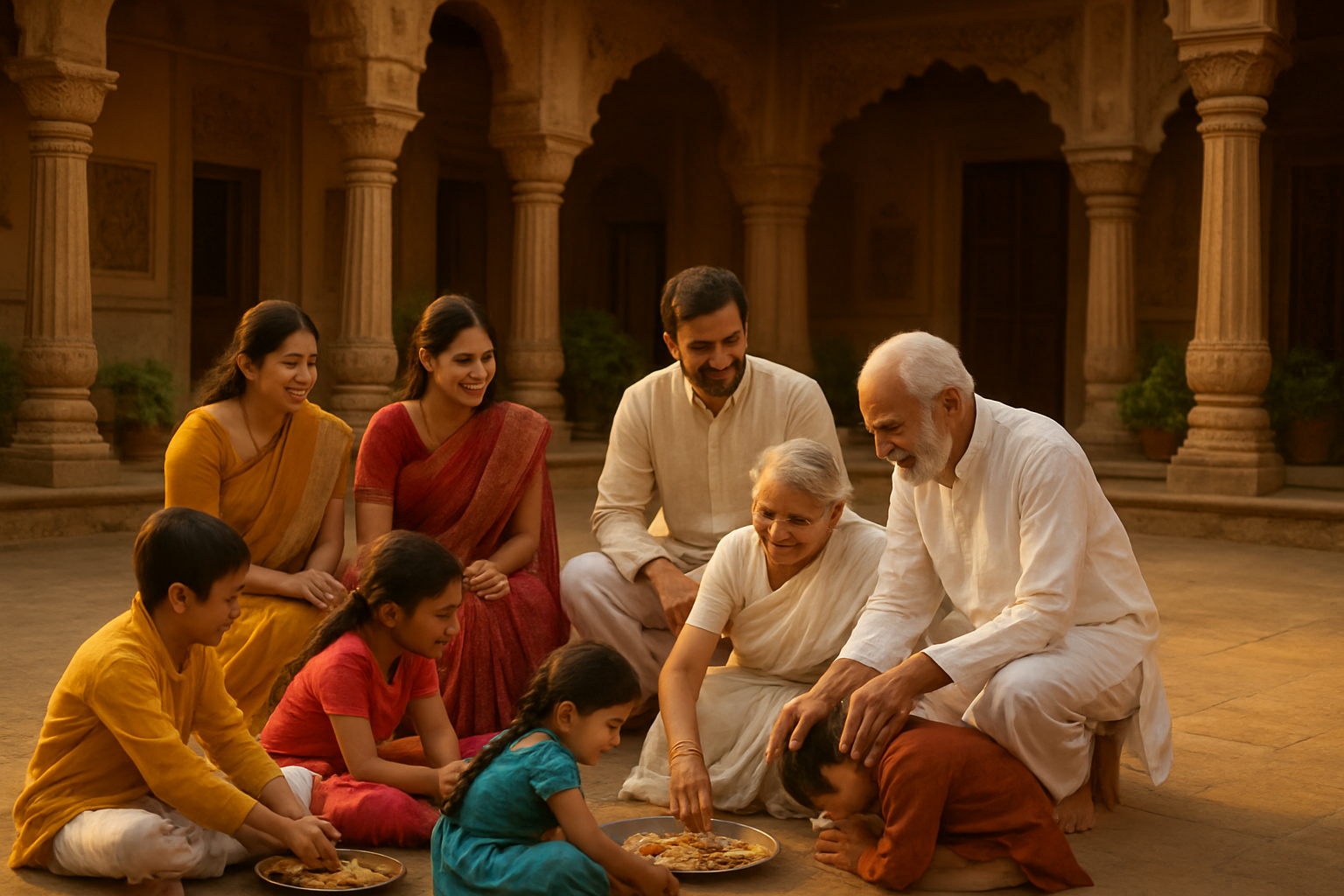
Build Stronger Relationships Through Joint Family Values
Joint families represent the cornerstone of traditional Indian heritage, where multiple generations live together under one roof, sharing responsibilities, wisdom, and unconditional love. This ancient system of living has shaped Bharatiya Sanskriti for thousands of years, creating bonds that transcend individual interests and foster collective growth.
The joint family structure operates on the principle of shared resources and collective decision-making. Grandparents, parents, uncles, aunts, and children all contribute to the household’s well-being while receiving emotional, financial, and moral support in return. This arrangement creates a natural safety net where everyone has a role to play and a voice to be heard.
Core Values of Joint Family Living:
- Shared Responsibility: Everyone contributes according to their abilities and circumstances
- Emotional Security: Children grow up surrounded by multiple caregivers and role models
- Resource Optimization: Pooling resources allows families to achieve more together
- Cultural Transmission: Traditions and values pass naturally from one generation to the next
- Conflict Resolution: Multiple perspectives help resolve disputes fairly
The financial benefits of joint family systems cannot be overstated. When resources are pooled, families can afford better housing, education, and healthcare than they could manage individually. This collective approach to finances also teaches children the value of sharing and cooperation from an early age.
Modern Adaptations of Traditional Values:
| Traditional Practice | Modern Application |
|---|---|
| Daily family meetings | Weekly video calls for scattered families |
| Shared cooking duties | Meal planning and grocery sharing |
| Joint property ownership | Investment groups among relatives |
| Collective childcare | Coordinated babysitting networks |
| Elder care responsibilities | Organized care schedules for aging parents |
Joint families also provide unparalleled emotional support during challenging times. When someone faces illness, job loss, or personal struggles, the entire family rallies to provide assistance. This creates resilience that individual nuclear families often struggle to achieve on their own.
Children raised in joint families develop strong social skills and emotional intelligence. They learn to navigate complex relationships, understand different perspectives, and appreciate the value of compromise. These skills serve them well throughout their lives, making them more adaptable and empathetic adults.
Practice Respect for Elders and Community Wisdom
Respect for elders forms the bedrock of Indian culture, deeply embedded in Hindu traditions and customs. This reverence goes beyond simple politeness; it represents a recognition that age brings wisdom, experience, and valuable life lessons that younger generations can learn from.
The concept of “Matru Devo Bhava, Pitru Devo Bhava” – meaning “mother is god, father is god” – extends to all elderly members of the community. This philosophy teaches that elders deserve respect not just because of their age, but because of the knowledge and sacrifices they represent.
Ways to Honor Elder Wisdom:
- Seeking advice before making important decisions
- Learning traditional skills that elders possess
- Recording family histories and stories
- Including elders in daily activities and conversations
- Consulting them for cultural and spiritual guidance
Elder respect manifests in both small daily gestures and significant life decisions. Touching the feet of elders for blessings, listening to their stories without interruption, and considering their opinions in family matters are all expressions of this deep-rooted value.
The wisdom of community elders extends beyond family circles. Village elders, spiritual teachers, and community leaders traditionally guide important decisions affecting the entire community. Their experience in navigating challenges, resolving conflicts, and maintaining social harmony makes them invaluable resources for collective well-being.
Traditional Roles of Community Elders:
- Conflict mediators in disputes between families or individuals
- Cultural preservers who maintain traditions and customs
- Wisdom keepers who share practical life knowledge
- Spiritual guides who provide moral and ethical direction
- Historical chroniclers who preserve community memories
Modern society sometimes struggles to maintain this reverence for elders, especially as young people become more educated or financially successful than their parents. However, Bharatiya Sanskriti teaches that true success includes honoring those who paved the way for current achievements.
The practice of elder respect also includes caring for aging parents and grandparents. This responsibility is seen not as a burden but as a privilege – an opportunity to give back to those who sacrificed for the family’s well-being. Many Indian families consider it shameful to place elderly relatives in care facilities, preferring to adjust their lives to accommodate their needs.
Community wisdom operates through informal networks where elders share knowledge about everything from agriculture and crafts to relationship advice and child-rearing. This organic transfer of knowledge ensures that valuable life lessons don’t get lost with each generation.
Benefits of Elder Consultation:
| Life Area | Elder Contribution | Modern Relevance |
|---|---|---|
| Career decisions | Industry wisdom and networking | Mentorship and guidance |
| Marriage choices | Compatibility assessment | Relationship counseling |
| Child-rearing | Practical parenting tips | Evidence-based advice |
| Financial planning | Long-term thinking | Investment strategies |
| Health management | Traditional remedies | Holistic wellness |
Embrace the Concept of Unity in Diversity
Unity in diversity represents one of the most powerful aspects of Indian culture, where countless languages, religions, customs, and traditions coexist harmoniously within a single national identity. This principle, known as “Vasudhaiva Kutumbakam” – the world is one family – demonstrates how Bharatiya Sanskriti embraces differences while maintaining social cohesion.
India’s incredible diversity spans 28 states, 8 union territories, over 700 languages, numerous religions, and countless regional traditions. Yet this variety strengthens rather than weakens the social fabric. Each community contributes unique perspectives, skills, and cultural richness to the collective Indian heritage.
Dimensions of Indian Diversity:
- Linguistic: Over 22 official languages and hundreds of dialects
- Religious: Hinduism, Islam, Christianity, Sikhism, Buddhism, Jainism, and others
- Cultural: Regional festivals, art forms, music, and dance traditions
- Culinary: Distinctive regional cuisines and cooking styles
- Artistic: Traditional crafts, architecture, and creative expressions
The strength of unity in diversity lies in mutual respect and learning. Communities celebrate each other’s festivals, learn different languages, and adopt beneficial practices from other cultures. This cross-cultural exchange enriches everyone’s experience while maintaining individual identity.
Festivals provide perfect examples of unity in diversity. During Diwali, people from all religious backgrounds participate in celebrations. Similarly, Eid, Christmas, and regional festivals like Durga Puja or Onam attract participants from diverse communities. This shared celebration creates bonds that transcend religious and cultural boundaries.
Practical Applications of Unity in Diversity:
- Interfaith marriages that blend different traditions respectfully
- Multilingual education that preserves local languages while teaching others
- Cultural festivals that showcase various traditions in single events
- Collaborative arts that combine different regional styles
- Community kitchens serving diverse cuisines during festivals
The workplace exemplifies modern unity in diversity, where people from different states, languages, and backgrounds collaborate effectively. Indian companies often have employees who speak different native languages but work together seamlessly using common languages like English or Hindi.
Regional specializations also demonstrate unity in diversity. Kerala excels in spices and Ayurveda, Punjab in agriculture, Gujarat in business, Bengal in arts and literature, and Tamil Nadu in technology. Each region’s strengths contribute to national prosperity while maintaining distinct cultural identities.
Regional Contributions to National Identity:
| Region | Primary Contributions | Cultural Distinctives |
|---|---|---|
| North India | Political leadership, agriculture | Classical music, Mughal influence |
| South India | Technology, temples | Classical dance, linguistic diversity |
| East India | Literature, arts | Intellectual traditions, festivals |
| West India | Business, industry | Maritime culture, entrepreneurship |
| Northeast | Biodiversity, textiles | Tribal traditions, unique languages |
Educational institutions play crucial roles in promoting unity in diversity. Schools and universities bring together students from different backgrounds, fostering friendships that last lifetimes. These relationships create networks of understanding that strengthen social harmony across cultural lines.
Marriage customs demonstrate beautiful adaptations of unity in diversity. Inter-regional and inter-community marriages often incorporate traditions from both families, creating new fusion customs that honor multiple heritage streams. These ceremonies become celebrations of cultural synthesis rather than cultural compromise.
The Indian family values of acceptance and inclusion make unity in diversity possible. Families readily adopt beneficial practices from other communities, whether it’s Gujarati business acumen, South Indian educational emphasis, or Punjabi hospitality. This openness to learning from others strengthens family units and communities.
Food culture perfectly embodies unity in diversity, with Indian families regularly enjoying cuisines from different regions. A typical Indian household might serve North Indian rotis, South Indian sambar, Bengali fish curry, and Gujarati dhokla in the same week, celebrating the nation’s culinary wealth.
Unity in diversity also extends to spiritual practices. Many Indians visit temples, gurudwaras, churches, and mosques with equal reverence, seeing different paths to the same divine truth. This spiritual inclusivity reflects the deeper philosophical understanding that diversity of expression doesn’t negate underlying unity of purpose.
The concept teaches children to appreciate differences rather than fear them. Growing up in diverse environments, Indian children learn that someone speaking a different language or following different customs is not a threat but an opportunity to learn something new. This early exposure to diversity creates adults who are comfortable with complexity and change.
Modern challenges like urbanization and globalization sometimes threaten traditional unity in diversity. However, Indian culture’s adaptability allows it to maintain core values while embracing necessary changes. Cities become melting pots where diversity thrives in new forms, creating contemporary expressions of ancient wisdom.
Experience Culinary Traditions and Food Culture
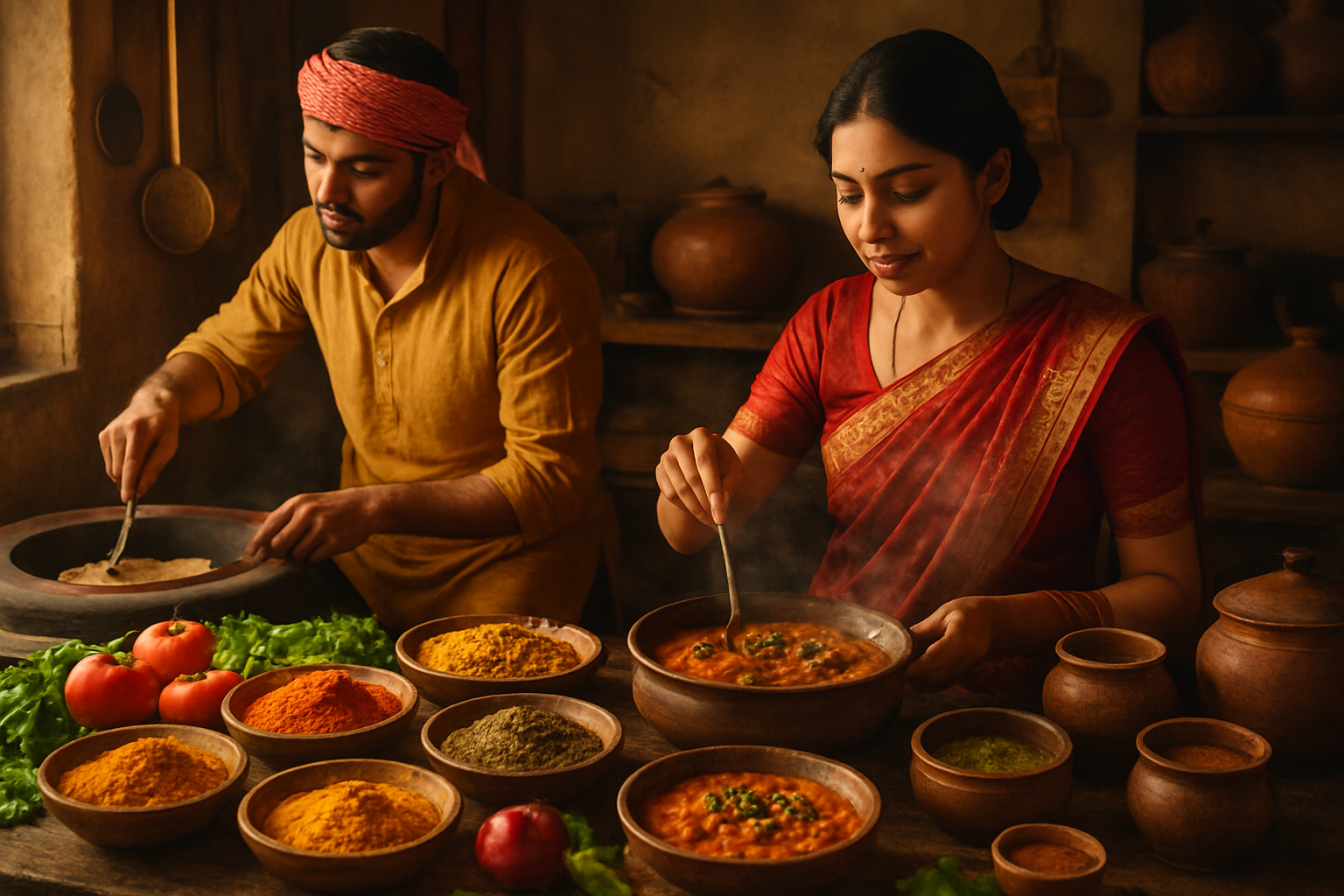
Savor the Health Benefits of Traditional Indian Cooking
Traditional Indian cooking offers a treasure trove of health benefits that modern nutritional science continues to validate. The practice of combining spices like turmeric, cumin, coriander, and ginger creates powerful anti-inflammatory and antioxidant properties that protect the body from disease. Turmeric contains curcumin, which researchers have found to be as effective as many pharmaceutical anti-inflammatory drugs, while black pepper enhances its absorption by up to 2000%.
The Indian philosophy of food as medicine shapes every aspect of traditional cooking. Ayurveda, the ancient Indian system of medicine, categorizes foods based on their heating or cooling properties and their effects on the three doshas – Vata, Pitta, and Kapha. This system ensures that meals naturally balance the body’s constitution and seasonal needs.
Key Health Benefits of Traditional Indian Spices:
| Spice | Primary Benefits | Common Uses |
|---|---|---|
| Turmeric | Anti-inflammatory, antioxidant | Curry powders, milk preparations |
| Cumin | Digestive aid, iron-rich | Tempering, spice blends |
| Coriander | Blood sugar regulation | Fresh garnish, powder form |
| Fenugreek | Diabetes management | Seeds in tempering, leaves as vegetables |
| Asafoetida | Digestive health | Lentil preparations, vegetable dishes |
Traditional cooking methods preserve these beneficial compounds while making nutrients more bioavailable. The practice of tempering (tadka) – heating whole spices in oil or ghee – releases essential oils and active compounds that would remain locked in ground spices. This technique also creates the characteristic flavors that make Indian food culture so distinctive.
The emphasis on fresh preparation means that meals retain maximum nutritional value. Unlike processed foods, traditional Indian meals combine proteins, carbohydrates, healthy fats, and fiber in proportions that promote sustained energy and optimal digestion. The practice of eating with hands, still common in many Indian households, adds beneficial bacteria from the fingertips and improves the mind-body connection during meals.
Fermentation plays a crucial role in traditional Indian cooking, creating probiotics that support gut health. Foods like idli, dosa, dhokla, and various pickles undergo natural fermentation processes that increase vitamin content and create beneficial bacteria. These fermented foods support digestive health and boost immune function.
Learn the Spiritual Significance of Food Preparation
Food preparation in Indian traditions transcends mere cooking – it becomes a spiritual practice that connects the cook with divine energy and infuses meals with positive intentions. The kitchen holds sacred status in traditional Indian homes, often considered a temple where the act of cooking becomes a form of meditation and devotion.
The concept of “anna brahma” – food as divine consciousness – permeates every aspect of food preparation. Cooks traditionally begin their work with prayers and mantras, believing that the mental state and intentions of the preparer directly influence the spiritual quality of the food. This practice transforms cooking from a mundane chore into a sacred ritual.
Spiritual Practices in Food Preparation:
- Morning purification rituals before entering the kitchen
- Chanting mantras while grinding spices or kneading dough
- Offering the first portion to deities before serving
- Maintaining mental purity through positive thoughts during cooking
- Using traditional copper and clay utensils believed to enhance food’s spiritual properties
The timing of food preparation follows spiritual rhythms. Many families avoid cooking during inauspicious hours or during solar and lunar eclipses, believing these times can negatively affect food’s spiritual quality. The practice of cooking fresh meals daily, rather than storing food for extended periods, maintains the life force (prana) in food.
Specific ingredients carry deep spiritual significance. Ghee (clarified butter) is considered pure and sacred, often used in religious ceremonies and believed to enhance the spiritual qualities of food. Basil (tulsi) leaves added to meals are thought to purify both body and spirit. Salt from specific regions, particularly rock salt, is preferred for its purity and spiritual properties.
The act of feeding others holds immense spiritual merit in Indian culture. The saying “annam parabrahma swaroopam” (food is the form of the supreme divine) emphasizes that serving food to others is equivalent to serving the divine. This belief transforms every meal into an opportunity for spiritual growth and service.
Traditional cooking also incorporates the five elements – earth, water, fire, air, and space – through ingredients and cooking methods. Clay pots represent earth, water for cooking and cleaning, fire for heating, air circulation during fermentation, and space created within covered pots. This elemental balance is believed to create harmonious food that nourishes not just the body but also the soul.
Master Regional Flavors That Reflect Cultural Identity
Indian food culture showcases incredible diversity across its regions, with each area developing distinct flavors that reflect local geography, climate, history, and cultural influences. These regional variations create a complex tapestry of tastes that define Indian culinary identity and preserve local traditions through generations.
Northern Indian Cuisine features rich gravies, wheat-based breads, and dairy products reflecting the region’s agricultural abundance. Punjabi cuisine celebrates robust flavors with dishes like butter chicken and dal makhani, while Kashmiri food incorporates Persian influences with aromatic spices like saffron and fennel. The use of ghee, cream, and nuts creates the characteristic richness associated with North Indian food.
Southern Indian flavors emphasize rice, coconut, and curry leaves, creating lighter yet intensely flavored dishes. Tamil cuisine balances sweet, sour, salty, and spicy elements in every meal, while Kerala cooking showcases coconut and seafood combinations that reflect its coastal geography. Andhra Pradesh delivers fiery heat through liberal use of red chilies, creating some of India’s spiciest regional dishes.
Western Indian Regional Specialties:
- Gujarat: Sweet and savory combinations with jaggery and tamarind
- Maharashtra: Bold flavors using kokum and goda masala
- Rajasthan: Preserved foods adapted to desert climate
- Goa: Portuguese-influenced seafood preparations
Eastern Indian cuisine presents subtle flavors with emphasis on fish, rice, and vegetables. Bengali cooking perfects the art of balancing sweet and savory, creating complex flavor profiles through minimal spice use. The region’s love for sweets has produced countless dessert varieties that showcase milk and jaggery combinations.
Regional spice blends tell stories of cultural exchange and local preferences. Garam masala varies dramatically across regions – Punjabi versions emphasize cinnamon and cardamom, while Bengali panch phoron combines five whole spices. South Indian sambar powder reflects Tamil preferences for coriander and red chilies, while Kashmiri spice blends incorporate exotic ingredients like mace and nutmeg.
Cooking techniques also vary regionally, reflecting available resources and climate considerations. Tandoor cooking dominates Punjab and neighboring areas, while South India perfects steaming and fermentation techniques. Coastal regions excel in coconut-based curries and seafood preparations, while mountain regions preserve foods through drying and smoking.
Local ingredients shape regional identities. Mustard oil defines Bengali and Punjabi cuisines, while coconut oil characterizes South Indian and coastal cooking. Regional vegetables and fruits create signature dishes – drumsticks in Tamil cuisine, lotus stems in Kashmiri cooking, and bamboo shoots in Northeastern preparations.
Understand the Role of Food in Religious Ceremonies
Food plays a central role in Hindu traditions and religious ceremonies, serving as a bridge between the physical and spiritual worlds. Every religious observance in Indian culture involves specific food preparations that carry deep symbolic meaning and spiritual significance, making culinary traditions an integral part of religious practice.
Prasadam represents the most sacred form of food in Hindu ceremonies – offerings made to deities and then distributed as blessed food. Different deities receive specific food offerings: Lord Ganesha receives modaks (sweet dumplings), Krishna enjoys butter and sweets, while Shiva accepts simple offerings like fruits and milk. The preparation of prasadam follows strict purity guidelines, with cooks maintaining ritual cleanliness and positive mental states.
Religious festivals showcase the deep connection between food and spirituality. During Diwali, families prepare multiple varieties of sweets and savory snacks, believing that the goddess Lakshmi blesses homes where food is abundantly shared. Holi celebrations feature special drinks like thandai and sweets colored with natural dyes. Navratri fasting periods involve specific foods that maintain spiritual purity while providing nutrition.
Sacred Food Practices in Major Festivals:
| Festival | Special Foods | Spiritual Significance |
|---|---|---|
| Diwali | Sweets, nuts, dried fruits | Prosperity and abundance |
| Janmashtami | Butter, milk sweets | Connection with Lord Krishna |
| Karva Chauth | Fasting foods, special meals | Marital devotion and sacrifice |
| Makar Sankranti | Sesame sweets, jaggery | Seasonal transition and health |
Fasting practices demonstrate food’s role in spiritual discipline and purification. Different fasts require specific food restrictions – some allow only fruits and milk, others permit single-grain meals, while the most austere involve complete food abstinence. These practices are believed to purify the body and mind, creating clarity for spiritual contemplation.
Temple food culture maintains ancient traditions of community feeding. Langar in Sikh temples, annadanam in Hindu temples, and community kitchens during festivals embody the principle that serving food to others serves the divine. These institutions ensure that religious practice includes social service and community building through shared meals.
Wedding ceremonies incorporate multiple food rituals that symbolize abundance, fertility, and prosperity. The exchange of sweets between families marks engagement ceremonies, while wedding feasts demonstrate the host family’s hospitality and social status. Specific dishes carry symbolic meaning – coconut represents fertility, jaggery symbolizes sweetness in marriage, and rice signifies prosperity.
Death and memorial ceremonies also involve specific food preparations. Offering pindas (rice balls) to ancestors during shraddha ceremonies maintains connections with departed souls. The practice of cooking and distributing simple, pure foods during mourning periods reflects beliefs about spiritual purification and community support.
Seasonal religious observances align food practices with natural cycles. Spring festivals celebrate new grains and fresh vegetables, while harvest festivals give thanks for agricultural abundance. These practices maintain humanity’s connection with natural rhythms and agricultural cycles that sustain life.
The concept of ahimsa (non-violence) influences religious food choices, leading many practitioners to adopt vegetarian diets. This practice extends beyond simple dietary restriction to encompass compassion for all living beings and environmental consciousness. Traditional Indian cuisine has developed sophisticated vegetarian cooking techniques that provide complete nutrition while honoring these spiritual principles.
Sacred food preparation involves specific vessels and cooking methods believed to enhance spiritual properties. Brass and copper utensils are preferred for religious cooking, while certain foods require preparation on wood-fired stoves rather than modern gas ranges. These practices maintain connections with traditional methods while preserving cultural knowledge about food’s spiritual dimensions.
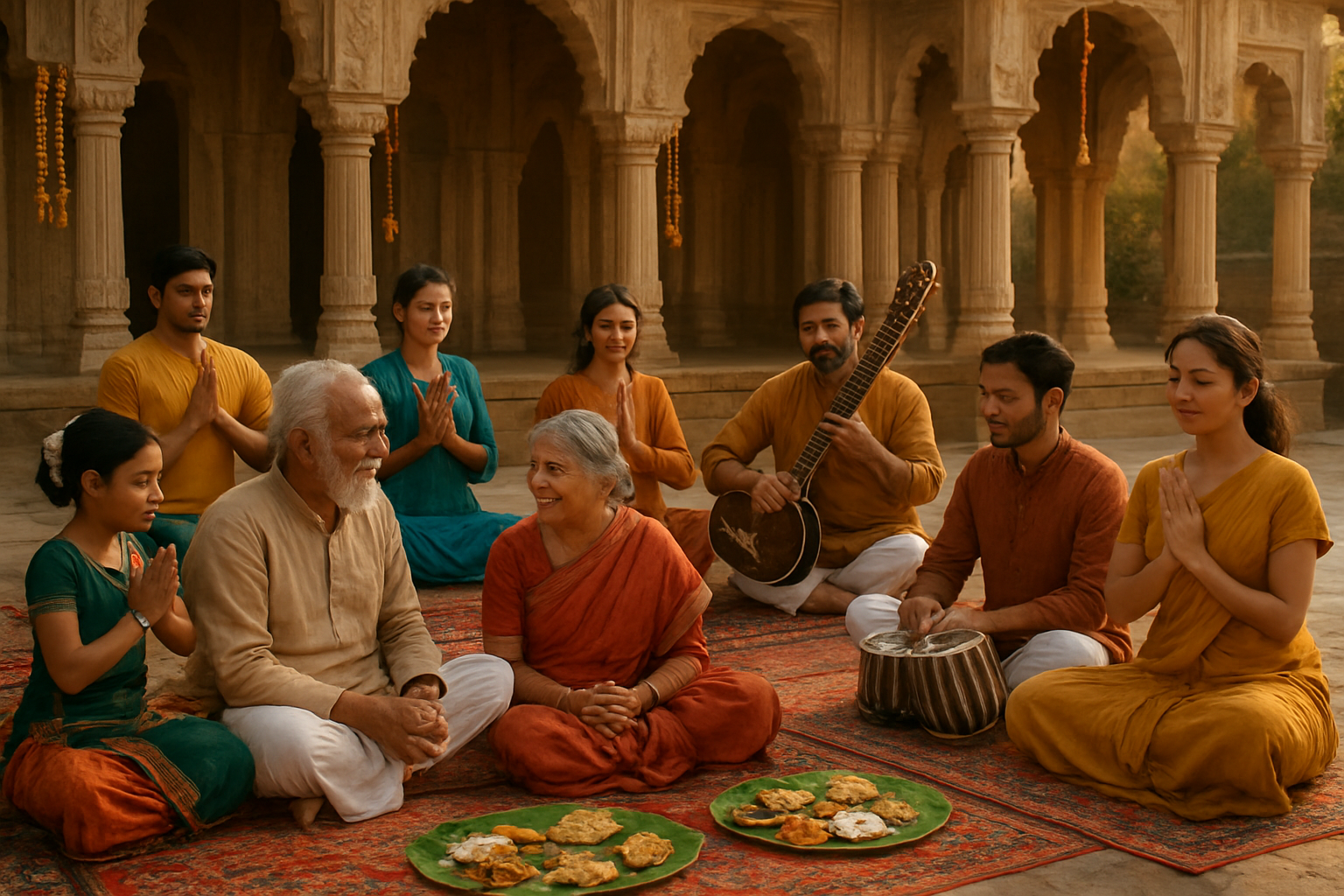
Indian culture offers an incredible journey through thousands of years of wisdom, creativity, and human connection. From the deep spiritual philosophies that guide daily life to the vibrant arts that tell stories across generations, every aspect of Bharatiya Sanskriti reveals something meaningful about how people can live together with purpose and joy. The strong family bonds and social structures show us how communities thrive when they support each other, while the rich food traditions remind us that sharing meals creates lasting memories and relationships.
Take time to explore these cultural treasures in your own life. Try cooking a traditional Indian dish with your family, learn about the philosophy behind yoga or meditation, or simply appreciate the incredible craftsmanship in Indian art and music. Indian culture isn’t just something to admire from a distance – it’s a living tradition that offers practical wisdom for creating deeper connections with others and finding meaning in everyday moments. Start small, stay curious, and let these timeless traditions enrich your own cultural journey.