Spiritual movements across the globe are transforming how millions practice faith and connect with the sacred. From ancient indigenous wisdom traditions finding new audiences to quantum spirituality bridging science and mysticism, these revolutionary developments are reshaping religious landscapes everywhere.
This guide is for spiritual seekers, religious studies enthusiasts, and anyone curious about how contemporary spirituality is evolving in our interconnected world. You’ll discover fascinating examples of modern religious practices that are breaking traditional boundaries and creating fresh pathways to spiritual awakening global.
We’ll explore how indigenous wisdom traditions are gaining recognition far beyond their origins, bringing time-tested sacred practices worldwide to modern practitioners. You’ll also learn about the rise of interfaith communities that are building spiritual unity across different faith based communities, proving that diverse beliefs can coexist and even strengthen each other.
Finally, we’ll dive into how technology enhanced meditation and digital platforms are making spiritual innovation accessible to millions, creating new forms of modern mysticism that our ancestors never imagined possible.
Revolutionary Religious Movements Reshaping Modern Society
How Neo-Shamanism is Healing Western Spiritual Emptiness
Western societies face a growing spiritual crisis. Traditional religious structures no longer resonate with millions seeking authentic spiritual connection. Enter neo-shamanism – an ancient practice reimagined for modern seekers hungry for direct spiritual experience.
Neo-shamanism draws from indigenous healing traditions worldwide while adapting to contemporary life. Unlike traditional shamanism tied to specific tribal cultures, this movement creates accessible pathways for anyone seeking deeper spiritual understanding. Practitioners learn journeying techniques, plant medicine ceremonies, and energy healing methods that bypass conventional religious hierarchies.
The movement gained momentum during the 1960s counterculture revolution but has exploded in recent decades. Urban shamanic circles now operate in major cities across North America and Europe. Weekend workshops teaching drumming, sacred breathwork, and soul retrieval pack conference centers and retreat venues. These modern spiritual movements offer what many find missing in institutional religion: direct personal revelation and healing.
Core neo-shamanic practices include drumming journeys where participants enter altered states of consciousness to receive guidance from spirit allies. Practitioners learn to identify and heal spiritual wounds through soul retrieval ceremonies. Many discover their power animals or spirit guides through guided meditation and vision quests adapted for modern schedules.
The scientific community increasingly recognizes shamanic techniques as legitimate therapeutic approaches. Research shows drumming and rhythmic breathing activate brain states similar to those produced by meditation and psychotherapy. Neuroscientist Dr. Michael Harner pioneered core shamanism, stripping away cultural specifics to reveal universal shamanic techniques that work across cultures.
Plant medicine ceremonies represent another crucial aspect of neo-shamanic healing. Ayahuasca retreats attract thousands seeking profound spiritual awakening and psychological healing. These sacred practices worldwide help participants confront trauma, addiction, and depression through guided psychedelic experiences in ceremonial settings.
Critics argue neo-shamanism appropriates indigenous traditions without proper understanding or permission. Legitimate concerns exist about commercialization and cultural misrepresentation. However, many indigenous elders support sharing their wisdom to help heal what they see as a spiritually sick world. The key lies in approaching these practices with respect, proper training, and acknowledgment of their origins.
The healing potential attracts healthcare professionals integrating shamanic techniques into therapeutic practice. Psychiatrists report remarkable success combining traditional therapy with shamanic healing methods. Patients experience breakthroughs that years of conventional treatment failed to achieve.
Women particularly gravitate toward neo-shamanic practices, finding empowerment in traditions that honor feminine wisdom and earth connection. Goddess spirituality merges with shamanic practices, creating powerful healing circles focused on reclaiming sacred feminine power.
Environmental activism intersects with neo-shamanism as practitioners develop deep earth connection through their spiritual work. Many become passionate advocates for protecting natural spaces they consider sacred. The movement bridges spirituality and environmental consciousness in ways traditional religions often struggle to achieve.
Training programs now exist worldwide for aspiring shamanic practitioners. Organizations like the Foundation for Shamanic Studies offer structured curricula teaching core shamanic techniques. Students learn to navigate non-ordinary reality safely while developing healing skills for themselves and others.
The integration challenge remains significant for neo-shamanic practitioners. Powerful spiritual experiences must be grounded into everyday life. Support communities help participants process profound insights and maintain spiritual practices amid busy modern schedules.
Digital platforms increasingly support neo-shamanic practice. Online circles connect practitioners globally. Virtual drumming sessions and guided journeys reach people unable to attend in-person gatherings. Apps provide shamanic drumming tracks and meditation guidance.
The Rise of Digital Buddhism in Tech-Driven Communities
Silicon Valley’s high-stress environment sparked an unexpected spiritual revolution. Tech workers discovered ancient Buddhist wisdom perfectly suited for modern digital life challenges. This fusion created new expressions of Buddhist practice that reach millions through technology enhanced meditation platforms and virtual sanghas.
Meditation apps like Headspace, Calm, and Insight Timer democratized Buddhist mindfulness practices. These platforms strip away traditional religious elements while preserving core meditation techniques. Users access guided meditations, dharma talks, and community features without stepping foot in a monastery.
The gamification of spiritual practice appeals to tech-minded practitioners. Apps track meditation streaks, award achievement badges, and create progress charts that motivate consistent practice. These features transform ancient contemplative practices into engaging digital experiences that fit modern attention spans.
Virtual reality meditation experiences represent the cutting edge of digital Buddhism. Users don VR headsets to meditate in simulated Buddhist temples, mountain retreats, or cosmic landscapes. These immersive experiences provide profound spiritual encounters previously available only through years of intensive practice.
Artificial intelligence increasingly supports Buddhist practice. AI meditation guides adapt to individual needs, suggesting specific practices based on mood, stress levels, and personal goals. Machine learning algorithms analyze meditation patterns to optimize spiritual growth paths for each practitioner.
Online dharma communities replace traditional sanghas for many practitioners. Facebook groups, Discord servers, and dedicated platforms connect Buddhist practitioners worldwide. These digital sanghas offer support, guidance, and fellowship that transcends geographical limitations.
Live-streamed teachings bring renowned Buddhist masters directly into practitioners’ homes. Monks and teachers broadcast dharma talks, guided meditations, and Q&A sessions to global audiences. These sessions often surpass physical temple attendance, democratizing access to high-level spiritual instruction.
Secular Buddhism appeals particularly to scientifically-minded tech workers. This approach extracts Buddhist psychological insights while discarding supernatural elements like rebirth and karma. Practitioners focus on mindfulness, compassion cultivation, and mental training techniques proven effective by neuroscience research.
Major tech companies now offer meditation rooms, mindfulness training, and Buddhist-inspired wellness programs. Google’s “Search Inside Yourself” program teaches mindfulness and emotional intelligence to employees. These corporate initiatives normalize contemplative practices in high-pressure work environments.
Buddhist concepts influence product design and company culture throughout Silicon Valley. Principles of interdependence inform collaborative software development. Right livelihood considerations shape ethical AI development. Compassion cultivation programs improve workplace relationships and reduce burnout.
Mindfulness-based stress reduction (MBSR) programs proliferate in tech companies. These eight-week courses teach Buddhist meditation techniques without religious context. Participants learn to manage anxiety, improve focus, and maintain work-life balance through regular mindfulness practice.
Digital detox retreats blend Buddhist principles with technology awareness. Participants practice noble silence while learning healthy relationships with digital devices. These programs address tech addiction using ancient wisdom about craving and attachment.
Blockchain technology supports Buddhist charitable giving and community building. Crypto-Buddhism projects fund dharma centers, teacher training, and humanitarian work through decentralized fundraising. Smart contracts ensure transparent donation distribution aligned with Buddhist ethical principles.
Podcast dharma reaches millions hungry for spiritual guidance. Buddhist teachers create regular audio content covering meditation instruction, life guidance, and philosophical exploration. Popular shows like “Dharma Ocean” and “Buddhist Geeks” blend traditional wisdom with contemporary insights.
The quantified self movement intersects with Buddhist self-examination practices. Practitioners track meditation minutes, mindfulness moments, and compassion activities. Data visualization helps reveal patterns in spiritual development previously invisible to casual observation.
Youth particularly embrace digital Buddhism’s accessibility and flexibility. Younger practitioners appreciate stripped-down approaches focused on practical life benefits rather than traditional cultural trappings. Social media helps them share insights and build communities around shared practice.
Research validates digital meditation’s effectiveness. Studies show app-based mindfulness training reduces anxiety, improves attention, and increases emotional regulation. Neuroscience reveals meditation’s brain-changing effects, lending scientific credibility to ancient practices.
Christian Mysticism’s Return in Progressive Churches
Progressive Christianity experiences a mystical renaissance as seekers rediscover contemplative traditions long marginalized by institutional religion. This revival transforms worship experiences, theological understanding, and spiritual formation in churches embracing both ancient wisdom and contemporary insights.
Contemplative worship services replace traditional liturgies in many progressive congregations. Silent meditation periods, chanting, and labyrinth walking create sacred space for direct divine encounter. These practices invite deeper spiritual connection than conventional services focused on preaching and singing.
Centering Prayer emerges as the most popular Christian contemplative practice. This meditation technique, developed by Trappist monks, teaches practitioners to rest in God’s presence beyond thoughts and emotions. Prayer groups meet in churches, homes, and online to support this ancient-yet-accessible spiritual discipline.
Progressive theology embraces mystical experience as valid spiritual authority alongside scripture and tradition. Mystics throughout church history provide models for contemporary seekers pursuing direct divine relationship. St. Teresa of Avila, Meister Eckhart, and Julian of Norwich inspire modern practitioners seeking transformative spiritual encounters.
Interfaith dialogue enriches Christian mysticism as practitioners learn from other contemplative traditions. Buddhist meditation techniques inform Christian mindfulness practice. Sufi whirling inspires ecstatic Christian worship. Hindu yoga enhances embodied Christian prayer. This cross-pollination creates innovative spiritual practices rooted in Christian tradition yet expanded by global wisdom.
Creation spirituality represents a major mystical movement within progressive Christianity. This theological framework celebrates divine presence in nature, inspiring earth-based worship and environmental activism. Practitioners find God in wilderness experiences, seasonal cycles, and ecological relationships rather than exclusively in religious buildings.
The Divine Feminine receives renewed attention in mystical Christianity. Sophia theology explores feminine aspects of divinity long suppressed by patriarchal church structures. Mary Magdalene emerges as an apostolic figure and mystical teacher. The Black Madonna traditions inspire contemporary goddess spirituality within Christian contexts.
Emerging church movements integrate mystical practices into postmodern worship expressions. These communities blend ancient contemplative traditions with contemporary arts, technology, and cultural engagement. Taize chanting, icon meditation, and sacred dance create multisensory worship experiences appealing to younger generations.
Seminary education increasingly includes contemplative formation alongside academic study. Future clergy learn meditation techniques, spiritual direction skills, and mystical theology. This training prepares religious leaders to guide congregations into deeper spiritual practice rather than merely intellectual belief.
Spiritual direction experiences tremendous growth as laypeople seek personalized guidance for their contemplative journeys. Trained directors help individuals recognize divine movement in their lives, discern spiritual callings, and navigate mystical experiences. This ancient practice provides the individual attention missing in large congregational settings.
Retreat centers multiply to meet demand for intensive mystical practice opportunities. These facilities offer silent retreats, contemplative workshops, and spiritual renewal programs. Practitioners withdraw from daily life to deepen their relationship with the divine through extended prayer, meditation, and reflection.
Progressive mystics reclaim panentheism – the belief that God exists both within and beyond creation. This theological perspective supports ecological activism, social justice work, and interfaith cooperation. Practitioners experience divine presence in all life rather than limiting God to supernatural interventions or distant heavenly realms.
Lectio divina, or divine reading, resurfaces as a popular contemplative Bible study method. This ancient practice involves slow, meditative engagement with scripture seeking personal revelation rather than intellectual understanding. Small groups gather to share insights received through contemplative reading of sacred texts.
Desert spirituality inspires contemporary hermits and urban contemplatives. The Desert Fathers and Mothers provide models for radical spiritual commitment and social withdrawal. Modern practitioners adapt these traditions through urban hermitages, intentional simplicity, and committed contemplative practice while remaining engaged in world service.
Mystical social action bridges contemplative practice and justice work. Progressive Christians discover that deep spiritual practice naturally leads to compassionate engagement with social problems. Contemplative activism combines prayer with protest, meditation with service, and mystical experience with prophetic action.
Women’s mystical leadership expands significantly in progressive church contexts. Female spiritual directors, retreat leaders, and contemplative teachers guide both women and men in mystical practice. This represents a dramatic shift from historical periods when women’s mystical experiences were often suppressed or controlled by male religious authorities.
Online communities support mystical practice for geographically isolated practitioners. Virtual prayer groups, guided meditations, and theological discussions connect contemplatives worldwide. These digital sanghas provide fellowship and instruction for those lacking local mystical communities.
Islamic Sufism’s Growing Appeal Among Young Seekers
Sufism captivates young spiritual seekers across religious boundaries with its emphasis on direct divine experience, mystical poetry, and transformative spiritual practices. This Islamic mystical tradition offers pathways to the sacred that transcend conventional religious limitations while providing depth often missing in contemporary spiritual movements.
Sufi whirling meditation attracts diverse practitioners seeking embodied spiritual practice. The spinning dance induces altered states of consciousness where participants experience unity with divine love. Modern whirling groups adapt traditional sema ceremonies for contemporary practitioners, creating accessible entry points into Sufi spirituality.
Rumi’s poetry enjoys unprecedented popularity among young adults seeking spiritual inspiration. His verses about divine love, spiritual longing, and mystical union resonate across cultural and religious boundaries. Poetry readings, musical adaptations, and social media quotes spread Sufi wisdom to millions discovering Islamic mysticism through literary beauty.
Sufi music transcends religious boundaries to inspire global audiences. Qawwali performances, sacred chanting, and mystical songs create powerful worship experiences that move hearts regardless of listeners’ religious background. Artists like Nusrat Fateh Ali Khan and Abida Parveen introduce Sufi spirituality through transformative musical experiences.
Dhikr circles provide community-centered spiritual practice focused on remembrance of Allah. These gathering involve rhythmic chanting, breathing exercises, and meditation techniques that induce spiritual states. Contemporary dhikr groups welcome sincere seekers regardless of their Islamic knowledge or religious background.
Young Muslims rediscover Sufi traditions as antidotes to rigid fundamentalist interpretations of Islam. Sufism offers a more heart-centered, experiential approach to Islamic faith that emphasizes love over law, mercy over judgment, and spiritual experience over literal interpretation. This appeals to Muslims seeking authentic spiritual practice within their religious tradition.
Interfaith Sufi communities emerge in diverse urban centers worldwide. These groups welcome practitioners from various religious backgrounds united by commitment to mystical experience and spiritual transformation. Participants discover universal spiritual principles through Islamic mystical frameworks while honoring their own religious backgrounds.
Sufi psychology provides sophisticated understanding of spiritual development stages and psychological transformation. The nafs (ego) levels, spiritual stations (maqamat), and mystical states (hal) offer detailed maps for spiritual growth. Contemporary practitioners apply these teachings to personal development, therapy, and consciousness exploration.
Breathing practices (latif) and meditation techniques attract practitioners interested in contemplative spirituality. Sufi breath work coordinates physical, emotional, and spiritual dimensions of human experience. These practices produce profound altered states and spiritual insights without requiring extensive theological knowledge.
Female Sufi teachers gain recognition for their spiritual authority and mystical attainment. Historical figures like Rabia al-Adawiyya inspire contemporary women pursuing mystical realization. Modern female Sufi leaders guide both men and women in spiritual practice, challenging traditional gender roles within Islamic contexts.
Sacred geometry and Islamic art inspire contemporary spiritual practitioners interested in mystical symbolism. The mathematical perfection found in Islamic architectural designs, calligraphy, and decorative arts reveals divine principles embedded in creation. Artists and designers draw inspiration from these traditions for contemporary spiritual expression.
Sufi retreat centers offer intensive spiritual training programs for serious practitioners. These facilities provide structured environments for dhikr practice, mystical study, and spiritual mentorship under qualified teachers. Participants experience traditional Sufi training adapted for contemporary lifestyles and spiritual needs.
Academic study of Sufism increases in universities worldwide as scholars recognize its philosophical sophistication and psychological insights. Sufi metaphysics, epistemology, and consciousness studies contribute to contemporary discussions about spirituality, psychology, and philosophy of religion. This scholarly attention legitimizes Sufi wisdom for intellectually oriented seekers.
Digital platforms spread Sufi teachings through podcasts, online courses, and virtual sohbet (spiritual discourse) sessions. These technologies connect global communities of practice while maintaining traditional teacher-student relationships essential to Sufi spiritual transmission. Online resources make authentic Sufi instruction available to geographically isolated seekers.
Healing practices within Sufi tradition attract practitioners interested in spiritual medicine and energy work. Traditional Islamic healing combines prayer, Quranic recitation, and energy transmission for physical, emotional, and spiritual wellness. Contemporary practitioners adapt these methods for holistic healing approaches.
Environmental consciousness emerges from Sufi teachings about divine presence in nature and human responsibility as earth stewards. Sufi ecology connects mystical experience with environmental activism, inspiring practices that honor both divine transcendence and immanence in natural world.
Youth particularly appreciate Sufism’s emphasis on love, tolerance, and spiritual experience over rigid religious rules. The tradition’s history of welcoming diverse seekers and emphasizing inner transformation appeals to young adults skeptical of institutional religion but hungry for authentic spiritual practice.
Therapeutic applications of Sufi principles help practitioners address modern psychological challenges. Concepts like spiritual poverty (faqr), surrender (taslim), and divine love provide frameworks for healing trauma, addiction, and depression. Mental health professionals integrate Sufi insights into therapeutic approaches for Muslim clients and others drawn to these concepts.
Cultural festivals and artistic expressions bring Sufi spirituality into mainstream cultural awareness. Sufi music festivals, poetry competitions, and art exhibitions introduce broader audiences to Islamic mysticism through beauty and artistic excellence rather than theological argument or missionary activity.
Indigenous Wisdom Traditions Gaining Global Recognition
Native American Ceremonies Transforming Corporate Leadership
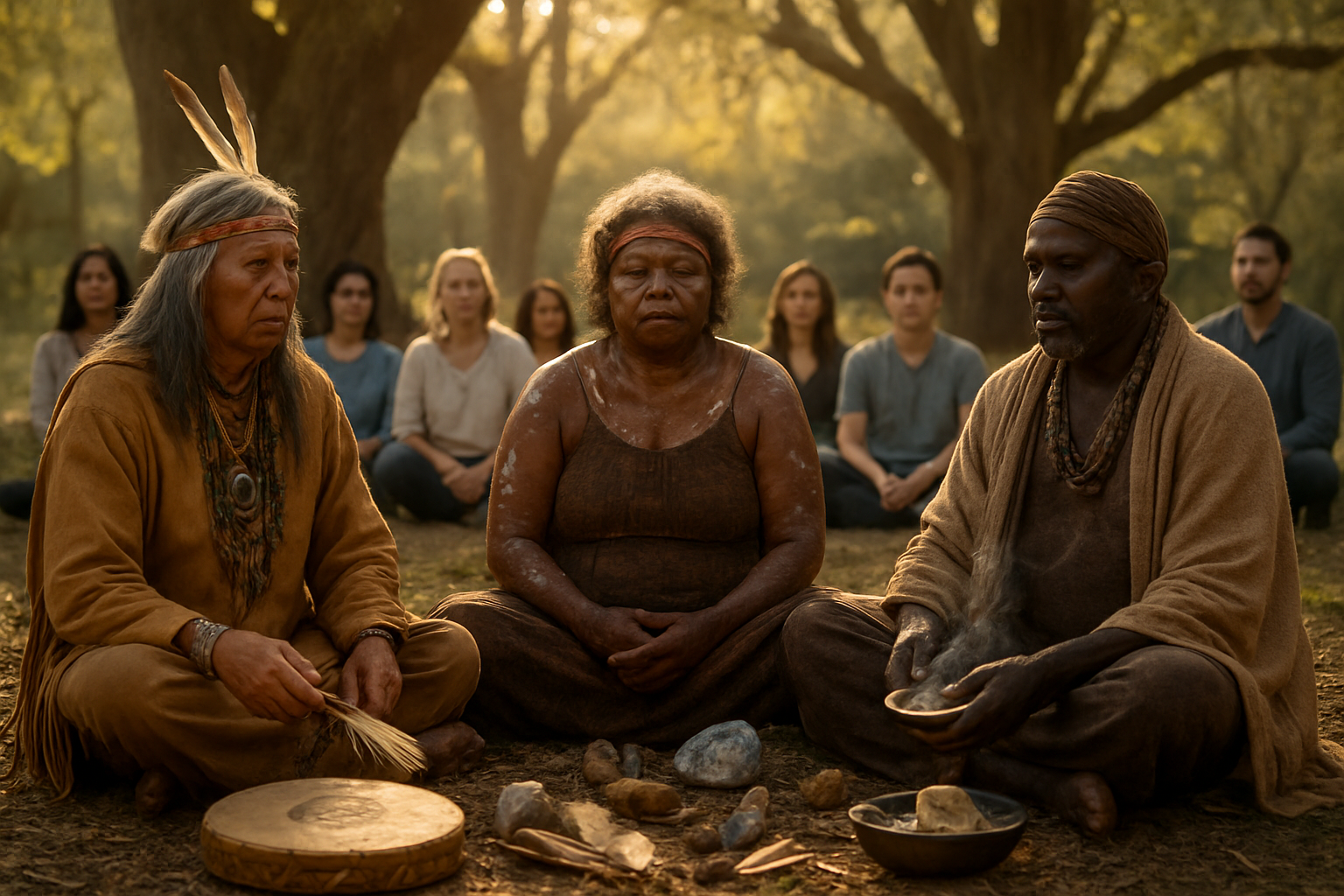
The boardrooms of Fortune 500 companies are witnessing something extraordinary. Native American spiritual practices, once marginalized and nearly destroyed through centuries of colonization, are now being embraced by corporate leaders seeking authentic guidance in an increasingly complex business landscape. This transformation represents one of the most significant shifts in modern spiritual movements, as indigenous wisdom traditions find new relevance in unexpected places.
Companies like Patagonia, Ben & Jerry’s, and Interface Inc. have integrated traditional Native American council circles into their decision-making processes. These sacred practices, rooted in thousands of years of collective wisdom, offer a stark contrast to the hierarchical, profit-driven models that have dominated corporate culture for decades. The talking stick ceremony, where only the person holding the sacred object may speak while others listen without interruption, has revolutionized how executive teams approach conflict resolution and strategic planning.
Maya Patel, a former Wall Street executive turned indigenous wisdom consultant, describes the profound impact she witnessed during a three-day retreat with Lakota elders at a technology startup in Silicon Valley. “The CEO came in thinking this was just another team-building exercise,” she recalls. “By the end of the weekend, he was restructuring the entire company hierarchy based on the seven-generation principle, asking how every decision would affect the company seven generations into the future.”
This seven-generation thinking, fundamental to many Native American spiritual movements, challenges the quarterly profit mentality that has driven business decisions for decades. Leaders participating in these programs report making more sustainable choices, considering long-term environmental impact, and developing deeper connections with their employees and communities.
The sweat lodge ceremony has become particularly popular among corporate leaders seeking personal transformation. These sacred purification rituals, conducted under the guidance of respected Native American spiritual teachers, create an environment where ego-driven behaviors dissolve and authentic leadership emerges. Participants describe experiencing profound spiritual awakening moments that fundamentally change how they approach their professional responsibilities.
| Traditional Native Practice | Corporate Application | Reported Benefits |
|---|---|---|
| Talking Circle | Team meetings and conflict resolution | Improved communication, reduced hierarchy |
| Seven-Generation Thinking | Strategic planning | Sustainable decision-making |
| Sweat Lodge | Leadership development | Personal transformation, authentic leadership |
| Vision Quest | Career transitions | Clarity of purpose, spiritual guidance |
| Smudging Ceremonies | Workplace wellness | Stress reduction, energy clearing |
Native American elder Robert Stands Tall has worked with over 200 corporate leaders in the past five years, facilitating vision quests that help executives reconnect with their purpose beyond profit margins. “These leaders come to us burned out, disconnected from their true selves,” he explains. “They’ve lost touch with the sacred in their daily work. Our ceremonies help them remember that business can be a spiritual practice when conducted with respect for all life.”
The integration of indigenous wisdom traditions into corporate settings goes beyond individual transformation. Companies adopting these practices report significant improvements in employee satisfaction, reduced turnover rates, and enhanced creativity. The emphasis on consensus-building and honoring different perspectives, central to many Native American spiritual practices, creates more inclusive work environments where diverse voices are valued.
However, this growing trend also raises important questions about cultural appropriation and the commercialization of sacred practices. Many Native American spiritual leaders emphasize the importance of approaching these traditions with proper respect, understanding, and reciprocity. They stress that these are not quick fixes or productivity hacks, but profound spiritual practices that require commitment and genuine reverence.
The National Congress of American Indians has developed guidelines for corporations seeking to engage with indigenous wisdom traditions, emphasizing the need for authentic partnerships with Native communities rather than superficial adoption of practices. These guidelines ensure that indigenous communities benefit from the sharing of their sacred knowledge and that the spiritual integrity of these practices remains intact.
Some companies have gone beyond incorporating individual practices to establish ongoing relationships with Native American tribes, supporting sovereignty efforts and contributing to community development. This approach recognizes that true spiritual transformation requires addressing historical injustices and supporting the communities that have preserved these sacred teachings through centuries of persecution.
The environmental consciousness inherent in Native American spiritual movements has particularly resonated with corporate leaders facing increasing pressure to address climate change. The concept of Mother Earth as a living entity deserving respect and protection has influenced companies to adopt more sustainable practices and consider their environmental impact in all business decisions.
Indigenous ceremonies focusing on gratitude and reciprocity have challenged the extractive mindset that has characterized much of corporate culture. Leaders participating in these practices report a shift from asking “How can we extract maximum value?” to “How can we give back and create mutual benefit?” This fundamental change in perspective has led to innovative business models that prioritize regenerative practices and community well-being.
The influence of Native American spiritual movements on corporate leadership extends to executive coaching and professional development programs. Leadership institutes across the country now offer immersive experiences that combine traditional business training with indigenous wisdom teachings. Participants learn to navigate the complexities of modern business while staying grounded in values of integrity, respect, and interconnectedness.
Research conducted by the Harvard Business School on companies integrating indigenous wisdom traditions shows measurable improvements in leadership effectiveness, employee engagement, and long-term financial performance. The study suggests that the holistic approach to leadership development found in Native American spiritual practices addresses crucial aspects of human development often overlooked in traditional business education.
The transformation happening in corporate boardrooms reflects a broader hunger for authentic spiritual movements that offer practical wisdom for navigating modern challenges. Native American traditions, with their emphasis on balance, sustainability, and collective well-being, provide exactly what many leaders have been searching for in an era of increasing uncertainty and environmental crisis.
African Spiritual Practices Influencing Mental Health Treatment
The healing traditions of Africa, spanning thousands of years and countless diverse cultures, are revolutionizing mental health treatment across the globe. From the ancestral wisdom of Yoruba spiritual practices to the community-centered healing approaches of Ubuntu philosophy, African spiritual movements are offering fresh perspectives on psychological well-being that mainstream psychiatry is finally beginning to recognize and integrate.
Dr. Aisha Mbeki, a psychiatrist at Johns Hopkins who has pioneered the integration of African traditional healing methods with Western psychotherapy, explains the profound impact she’s witnessed: “We’ve been treating symptoms while African healing traditions address the whole person – their relationship with community, ancestors, and the natural world. The results speak for themselves.”
Mental health facilities across the United States, Canada, and the United Kingdom are incorporating African-inspired therapeutic practices that view mental illness not as individual pathology, but as spiritual and communal imbalance. These approaches, rooted in ancient African spiritual movements, emphasize restoration of harmony rather than suppression of symptoms.
The concept of Ubuntu – “I am because we are” – has become central to innovative group therapy programs. This South African philosophical principle recognizes that individual healing cannot occur in isolation from community healing. Therapy sessions based on Ubuntu principles involve extended family and community members in the healing process, creating support networks that extend far beyond the therapist’s office.
Traditional African healing circles, where community members gather to witness and support individual healing journeys, have been adapted for modern therapeutic settings. These circles incorporate drumming, storytelling, and ritual practices that help patients process trauma and reconnect with their cultural identity. The communal aspect of healing, fundamental to African spiritual traditions, provides a powerful alternative to the individualistic approach that has dominated Western psychology.
Yoruba spiritual practices, originating from West Africa and preserved through the African diaspora, have introduced concepts of spiritual balance that are transforming how therapists understand mental health. The Yoruba understanding of ori (personal destiny), ase (life force), and the importance of ancestral guidance offers a framework for healing that addresses spiritual dimensions often ignored in conventional treatment.
Dr. Kofi Asante, who directs an innovative mental health program in Atlanta that integrates African traditional healing with modern psychiatry, has documented remarkable success rates with patients who had previously been considered treatment-resistant. “We work with traditional healers, incorporate ritual cleansing practices, and help patients reconnect with their ancestral wisdom,” he explains. “Mental illness often stems from spiritual disconnection, and African traditions have sophisticated methods for restoring that connection.”
The growing recognition of African spiritual movements in mental health treatment has led to the establishment of training programs for therapists interested in culturally responsive healing approaches. These programs teach the fundamental principles of African healing traditions while maintaining respect for their sacred nature and avoiding appropriation.
| African Healing Tradition | Mental Health Application | Key Benefits |
|---|---|---|
| Ubuntu Philosophy | Group therapy and community healing | Enhanced social support, collective healing |
| Yoruba Spiritual Balance | Holistic treatment approaches | Spiritual integration, cultural identity healing |
| Ancestral Veneration | Trauma therapy and grief counseling | Connection to lineage, wisdom access |
| Ritual Cleansing | PTSD and anxiety treatment | Energy clearing, symbolic healing |
| Drumming and Dance | Depression and emotional regulation | Embodied healing, community connection |
| Storytelling Traditions | Narrative therapy and meaning-making | Cultural wisdom, identity formation |
The integration of African spiritual practices has proven particularly effective in treating trauma within African diaspora communities. Historical trauma from slavery, colonization, and ongoing systemic racism has created complex psychological wounds that traditional Western therapy often fails to address adequately. African healing traditions offer culturally specific approaches that validate the spiritual dimensions of these experiences while providing pathways to healing that honor ancestral strength and resilience.
Community-based healing practices from various African traditions emphasize the role of elders, griots (traditional storytellers), and spiritual leaders in the therapeutic process. Modern adaptation of these roles has led to innovative peer counseling programs where community elders and cultural leaders work alongside licensed therapists to provide culturally grounded healing experiences.
The African concept of spiritual cleansing, involving rituals that remove negative energy and restore spiritual balance, has been carefully adapted for therapeutic settings. These practices, when conducted with proper cultural guidance and respect, have shown remarkable effectiveness in treating anxiety disorders, depression, and PTSD. Patients report feeling spiritually renewed and emotionally lighter after participating in these adapted cleansing ceremonies.
Research conducted at the University of Cape Town has demonstrated the neurological benefits of traditional African healing practices. Brain imaging studies show that participants in drumming and dance healing circles experience increased production of endorphins and decreased stress hormones. The rhythmic and communal aspects of these practices activate healing responses in the brain that complement and enhance traditional pharmaceutical interventions.
The emphasis on storytelling in African healing traditions has influenced narrative therapy approaches worldwide. African griots have always understood that healing happens through telling and retelling our stories in supportive community settings. Modern therapists are now incorporating these storytelling techniques to help patients process trauma, integrate difficult experiences, and construct empowering personal narratives.
African spiritual movements have also introduced the concept of ancestral healing into mental health treatment. Many African traditions view mental illness as disconnection from ancestral wisdom and guidance. Therapeutic practices that help patients reconnect with their cultural lineage and access ancestral strength have proven particularly effective for individuals struggling with identity issues and intergenerational trauma.
The holistic nature of African healing traditions, which consider physical, emotional, spiritual, and social dimensions of health simultaneously, has influenced the development of integrative mental health programs. These programs combine traditional psychiatric interventions with culturally appropriate spiritual practices, creating more comprehensive and effective treatment approaches.
Training programs for mental health professionals now include modules on African healing philosophies and practices. These educational initiatives ensure that therapists understand the cultural context and spiritual significance of the healing methods they’re learning to integrate into their practice. The emphasis on cultural humility and ongoing relationship with African traditional healers prevents superficial adoption of these sacred practices.
The success of African-inspired mental health approaches has led to increased collaboration between academic medical centers and traditional African healers. These partnerships create opportunities for mutual learning and ensure that the integration of African spiritual practices into modern mental health treatment maintains authenticity and cultural integrity.
Community mental health centers in areas with significant African diaspora populations have begun incorporating traditional healing practices as standard components of their treatment offerings. These programs recognize that effective mental health treatment must address the spiritual and cultural dimensions of healing that are central to African wellness traditions.
The influence of African spiritual movements on mental health treatment extends beyond direct therapeutic interventions. The African understanding of mental health as fundamentally connected to community well-being has inspired policy changes that emphasize social support, economic justice, and community development as essential components of mental health care.
Australian Aboriginal Dreamtime Teachings in Environmental Movements
The ancient Aboriginal understanding of Country as a living spiritual entity is reshaping environmental movements worldwide. Aboriginal Dreamtime teachings, representing the world’s oldest continuous spiritual tradition, offer profound insights into sustainable living that environmental activists and policymakers are increasingly recognizing as essential for planetary survival.
Aboriginal spiritual movements emphasize the fundamental interconnectedness of all life, a concept that has become central to modern environmental activism. The Dreamtime, which describes both the creation period and the eternal present where spiritual beings continue to shape the world, provides a framework for understanding environmental relationships that goes far beyond Western concepts of conservation.
Elder Mary Tungarra from the Arrernte people of Central Australia has worked with environmental groups across six continents, sharing traditional ecological knowledge that spans over 65,000 years. “Country is not something you own or manage,” she explains to groups of environmental scientists and activists. “Country is family. You belong to Country, and Country belongs to you. When you understand this relationship, everything about how you treat the environment changes.”
Environmental movements worldwide are incorporating Aboriginal concepts of sacred sites and the spiritual responsibility humans have to care for specific places. This understanding has transformed how conservation groups approach land management, shifting from protective barriers to active participation in the spiritual life of ecosystems.
The Aboriginal practice of fire management, based on Dreamtime stories that encode sophisticated ecological knowledge, has revolutionized wildfire prevention strategies. Environmental organizations in Australia, California, and Mediterranean climates are working with Aboriginal fire practitioners to implement traditional burning practices that reduce catastrophic wildfires while promoting biodiversity.
Aboriginal artist and environmentalist Clifton Bieundurry has documented how Dreamtime stories contain precise ecological information about seasonal changes, animal behaviors, and plant cycles. These stories, passed down through countless generations, represent one of the world’s most sophisticated environmental monitoring systems. Environmental movements are learning to read landscapes through the lens of these ancient narratives.
The concept of totemic relationships, where individuals and groups have spiritual connections to specific plants or animals, has influenced modern environmental movements to develop more personal and spiritual connections to the natural world. Environmental groups are creating programs that help participants discover their own totemic relationships with local ecosystems, fostering deeper commitment to conservation efforts.
| Aboriginal Concept | Environmental Application | Impact on Movements |
|---|---|---|
| Country as Living Entity | Ecosystem-based management | Holistic conservation approaches |
| Dreamtime Navigation | Landscape reading and monitoring | Enhanced environmental awareness |
| Traditional Fire Management | Wildfire prevention and ecosystem health | Reduced catastrophic fires |
| Totemic Relationships | Personal connection to nature | Increased conservation commitment |
| Songlines | Ecosystem corridors and migration paths | Improved habitat connectivity |
| Water Ceremony | Watershed protection | Sacred approach to water conservation |
Songlines, the Aboriginal practice of singing the landscape into existence through ceremonial songs that map the country, have inspired environmental movements to understand ecosystem connectivity in spiritual terms. These ancient paths, which often correspond to animal migration routes and watershed boundaries, provide templates for creating wildlife corridors and protecting ecosystem integrity.
The Aboriginal understanding of water as sacred has profoundly influenced water protection movements globally. Traditional water ceremonies, which honor the spiritual essence of rivers, lakes, and underground water systems, have been adapted by environmental groups fighting against water privatization and pollution. These ceremonies create powerful focal points for community organizing and political action.
Aboriginal elder Robert Hoosan has worked with environmental groups to establish “Country healing” practices that combine traditional ecological restoration with spiritual ceremony. These programs engage volunteers in activities like native plant restoration, invasive species removal, and habitat rehabilitation while incorporating traditional songs, stories, and rituals that honor the spiritual dimension of ecological healing.
The Aboriginal concept of “business time,” which refers to the seasonal and ceremonial cycles that govern interaction with Country, has influenced environmental movements to develop more cyclical and seasonal approaches to activism. Instead of constant campaigning, these movements now incorporate periods of reflection, ceremony, and deep listening to natural cycles.
Environmental education programs worldwide are incorporating Aboriginal teaching methods that use story, song, and ceremony to transmit ecological knowledge. These approaches engage multiple senses and emotional connections, creating more lasting environmental awareness than traditional fact-based education methods.
The Aboriginal understanding of country as ancestor has challenged environmental movements to consider the spiritual relationships between indigenous peoples and their traditional lands. This recognition has led to increased support for indigenous land rights as an essential component of environmental protection.
Climate change activism has been particularly influenced by Aboriginal perspectives on the spiritual dimensions of environmental crisis. Aboriginal teachings about the consequences of breaking spiritual relationships with Country provide powerful frameworks for understanding climate change as fundamentally a spiritual crisis requiring spiritual as well as practical solutions.
Aboriginal concepts of “men’s business” and “women’s business” – gender-specific responsibilities for caring for different aspects of Country – have influenced environmental movements to develop more inclusive approaches that honor different ways of relating to the natural world. These approaches recognize that effective environmental stewardship requires diverse perspectives and specialized knowledge.
The Aboriginal practice of smoking ceremony, used to cleanse and protect sacred sites, has been adapted by environmental groups to create ritual frameworks for entering and caring for natural areas. These ceremonies help participants approach environmental work with appropriate respect and spiritual preparation.
Research collaboration between Aboriginal knowledge holders and environmental scientists has produced innovative approaches to species conservation, ecosystem management, and climate adaptation. These partnerships demonstrate how indigenous spiritual movements can contribute scientific insights while maintaining their sacred integrity.
Aboriginal seasonal calendars, which integrate astronomical observations with plant and animal cycles, have influenced environmental movements to develop more sophisticated understanding of natural timing and seasonal relationships. These calendars provide templates for sustainable harvesting, planting, and conservation activities.
The Aboriginal concept of increase ceremonies – rituals designed to support the reproduction and abundance of specific species – has inspired environmental movements to develop spiritual practices that actively support biodiversity rather than simply protecting it. These ceremonies create opportunities for communities to participate in the spiritual support of local ecosystems.
Aboriginal teaching about the responsibility of humans to “sing up Country” – to maintain the spiritual health of landscapes through ceremony and attention – has influenced environmental movements to understand conservation as ongoing spiritual practice rather than one-time protective actions. This perspective emphasizes the continuous relationship required for healthy ecosystems.
Environmental movements influenced by Aboriginal Dreamtime teachings are developing new models of environmental activism that prioritize relationship-building, ceremony, and spiritual connection alongside political action and policy change. These approaches recognize that lasting environmental protection requires transformation of human consciousness and spiritual relationship with the natural world.
The growing influence of Aboriginal spiritual movements in environmental activism reflects a broader recognition that indigenous wisdom traditions offer essential guidance for navigating ecological crisis. These ancient teachings, preserved through thousands of generations, provide tested frameworks for living in sustainable relationship with the Earth that modern environmental movements desperately need.
Universities and research institutions worldwide are establishing programs that bring together Aboriginal knowledge holders, environmental scientists, and spiritual practitioners to develop integrated approaches to environmental protection that honor both scientific rigor and sacred relationship. These collaborations represent a new model for environmental education that recognizes indigenous spiritual movements as sources of essential wisdom for planetary healing.
Quantum Spirituality Merging Science with Sacred Practices
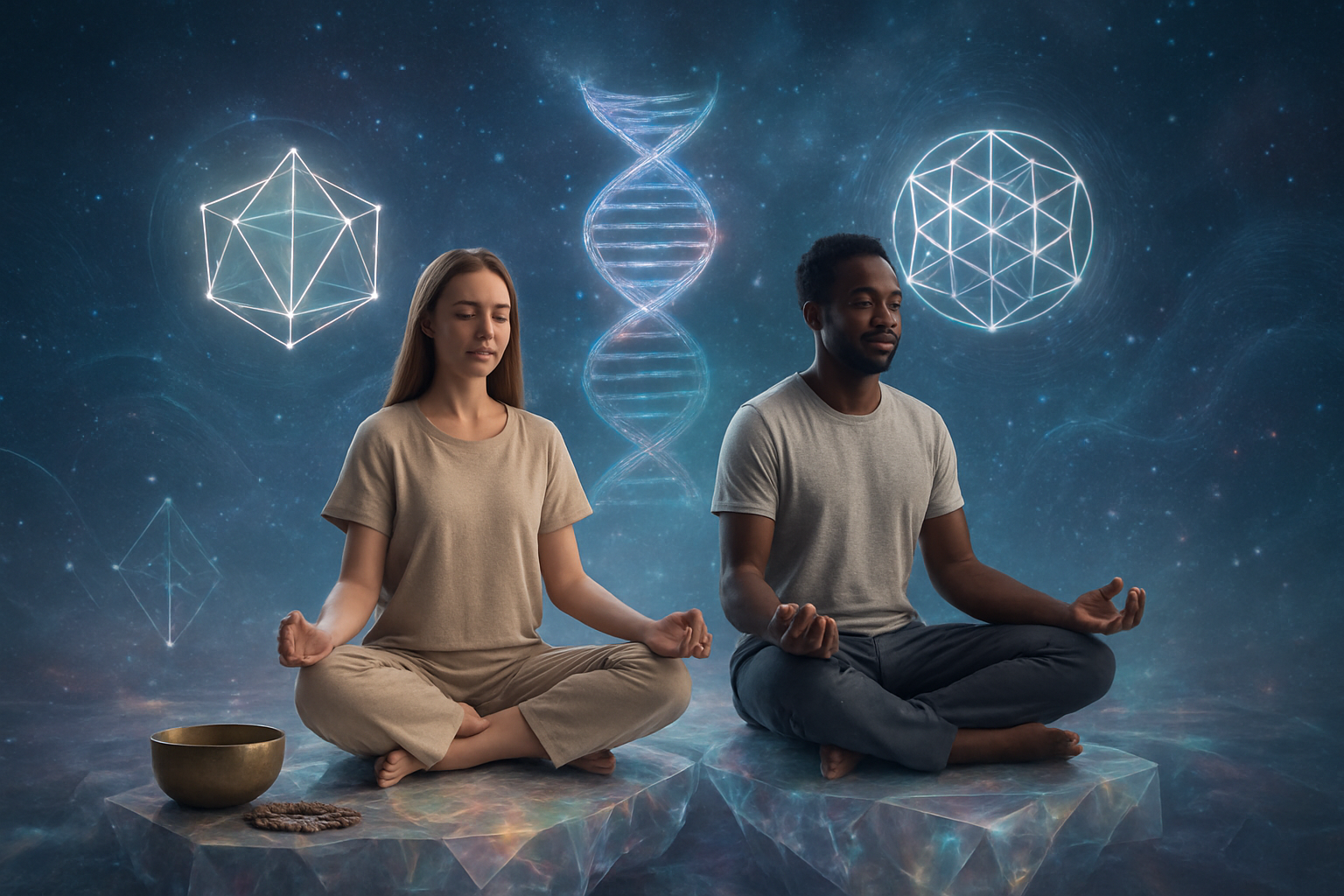
How Physics Principles are Validating Ancient Meditation Techniques
The marriage between cutting-edge physics and ancient meditation practices has created one of the most fascinating spiritual movements of our time. Researchers worldwide are discovering that what mystics understood thousands of years ago aligns remarkably with modern quantum mechanics and neuroscience findings. This convergence represents a profound shift in how we understand consciousness and reality itself.
Quantum coherence theory provides compelling explanations for meditation phenomena that once seemed purely mystical. When the brain enters deep meditative states, neuronal activity exhibits patterns strikingly similar to quantum coherence, where particles maintain synchronized states across vast distances. Dr. Stuart Hameroff’s groundbreaking research at the University of Arizona demonstrates that microtubules within brain cells operate as quantum processors, supporting consciousness through quantum mechanical processes.
Meditation practices from Tibetan Buddhism, Hindu traditions, and Zen schools consistently produce measurable changes in brain wave patterns that mirror quantum field fluctuations. The alpha and theta waves generated during deep meditation create coherent electromagnetic fields extending beyond the physical brain, suggesting consciousness operates through quantum field interactions rather than classical neural networks alone.
Heisenberg’s uncertainty principle finds practical application in mindfulness meditation. Just as quantum particles exist in superposition until observed, thoughts and emotions remain fluid and changeable until focused attention crystallizes them into specific experiences. Advanced meditators report experiences of existing in multiple states simultaneously, perfectly describing quantum superposition in consciousness.
The observer effect in quantum physics directly parallels meditation teachings about awareness transforming reality. When scientists observe quantum particles, the act of observation changes the particles’ behavior. Similarly, meditation traditions teach that pure awareness without judgment transforms mental and emotional states simply through conscious observation. This isn’t metaphorical – brain imaging studies show that observing thoughts without attachment literally rewires neural pathways.
Entanglement, perhaps quantum physics’ most mysterious phenomenon, offers scientific backing for meditation experiences of universal connection. Advanced practitioners across cultures report direct perception of their interconnectedness with all existence. Recent studies suggest human consciousness exhibits non-local correlations similar to quantum entanglement, where changes in one person’s mental state instantaneously affect others regardless of physical distance.
The double-slit experiment reveals how consciousness influences physical reality. When quantum particles pass through two slits, they create interference patterns suggesting they travel through both slits simultaneously. However, observing which slit the particle passes through collapses this wave function into a single path. Meditation masters have long taught that consciousness shapes reality through attention and intention, a principle now supported by quantum mechanical evidence.
Zero-point field theory explains the profound stillness experienced in deep meditation. The quantum vacuum isn’t empty but filled with infinite potential energy in its lowest possible state. Meditators accessing deep stillness often describe touching this field of infinite potential, where all possibilities exist simultaneously. This experiential knowledge aligns perfectly with quantum field theory’s description of the universe’s fundamental substrate.
Fractal geometry in meditation reveals how consciousness operates across multiple scales simultaneously. The recursive patterns found in brain activity during meditation mirror fractal structures throughout nature, from quantum foam to galactic clusters. This suggests consciousness itself follows fractal principles, with each level of awareness containing infinite depth and complexity.
Coherent meditation groups produce measurable effects on their surrounding environment, supporting theories about collective consciousness operating through quantum field interactions. The Global Coherence Initiative documents how synchronized meditation reduces crime rates, decreases violence, and improves collective well-being in participating communities. These effects extend far beyond statistical probability, suggesting quantum field influences on social systems.
Biophotons, the quantum light emissions from living cells, increase dramatically during meditation. Russian physicist Alexander Gurwitsch’s research reveals that human cells emit coherent light that carries information throughout the body. Meditation amplifies these biophotonic emissions, creating stronger electromagnetic fields that extend beyond the physical body and interact with the quantum vacuum.
The holographic principle in physics validates meditation experiences of containing the entire universe within individual consciousness. Just as any piece of a hologram contains the complete image, mystics report experiencing the totality of existence within their expanded awareness. Recent theoretical work suggests the universe itself might be holographic, with all information about reality encoded on its boundary surfaces.
Quantum tunneling offers explanations for sudden breakthroughs in meditation practice. Just as particles can tunnel through seemingly impossible barriers, consciousness can leap across apparent limitations in understanding or experience. Many meditators report spontaneous shifts in awareness that transcend gradual progression, perfectly describing quantum tunneling in consciousness evolution.
Energy Healing Methods Backed by Neuroscience Research
Energy healing practices once dismissed as pseudoscience now enjoy robust scientific validation through neuroscience research. Modern brain imaging technology reveals the precise mechanisms through which energy healing modalities affect neural pathways, hormonal systems, and cellular regeneration. This scientific backing has transformed energy healing from fringe practice into evidence-based therapeutic intervention.
Reiki, perhaps the most widely practiced energy healing method, demonstrates measurable effects on the autonomic nervous system. Functional magnetic resonance imaging shows that Reiki sessions activate the parasympathetic nervous system while reducing activity in the amygdala and anterior cingulate cortex – brain regions associated with stress and pain processing. Recipients exhibit decreased cortisol levels, reduced inflammatory markers, and enhanced immune function for weeks following treatment.
The human biofield, once purely theoretical, now enjoys scientific recognition through advanced electromagnetic detection equipment. The HeartMath Institute’s research reveals that the heart generates an electromagnetic field extending eight feet from the body, carrying information that affects others’ brain waves and emotional states. Trained energy healers demonstrate significantly stronger and more coherent biofields, explaining their therapeutic effectiveness.
Therapeutic Touch protocols developed by nursing researcher Dolores Krieger show consistent positive outcomes across multiple clinical trials. Patients receiving Therapeutic Touch demonstrate accelerated wound healing, reduced pain scores, and improved sleep quality. Electroencephalography studies reveal that both practitioner and recipient enter synchronized brain wave states during sessions, with increased alpha and theta wave production indicating deep relaxation and healing activation.
Acupuncture’s meridian system finds validation through fascial network research. Dr. Helene Langevin’s studies at Harvard Medical School demonstrate that acupuncture points correspond precisely with fascial plane intersections and major nerve pathways. Needle insertion at these points triggers cascading neurochemical responses including endorphin release, neurotransmitter regulation, and anti-inflammatory cytokine production.
Healing touch modalities activate mirror neuron networks in both practitioner and client. Mirror neurons fire when performing actions and when observing others perform the same actions, creating empathetic resonance between individuals. During energy healing sessions, mirror neuron activation synchronizes brain activity between practitioner and recipient, facilitating therapeutic state transfer and promoting healing responses.
The relaxation response identified by Dr. Herbert Benson provides neurophysiological explanations for energy healing effectiveness. This innate healing mechanism counteracts the stress response by activating genes associated with cellular repair, immune function, and longevity while suppressing inflammatory pathways. Energy healing consistently triggers the relaxation response, explaining its wide-ranging therapeutic benefits.
Polyvagal theory offers sophisticated understanding of energy healing’s autonomic nervous system effects. The vagus nerve’s multiple branches regulate different physiological responses to safety and threat. Energy healing activates the social engagement system through the ventral vagal complex, promoting feelings of safety, connection, and healing. This activation explains why clients often report profound emotional releases during sessions.
Biofield therapies demonstrate measurable effects on cellular metabolism through biophotonic emissions. Living cells emit weak light signals that coordinate biological processes and carry healing information between organisms. Energy healers produce enhanced biophotonic coherence that entrains recipient cells into more optimal functioning patterns, accelerating tissue repair and restoring homeostatic balance.
The placebo effect’s neurobiological mechanisms validate energy healing through expectation and belief effects on physiology. Modern research reveals that positive expectations activate endogenous opioid systems, boost immune function, and trigger gene expression changes associated with healing. Energy healing practitioners skilled in creating therapeutic rapport enhance placebo responses through trusting relationships and positive expectancy.
Craniosacral therapy’s effectiveness receives support through research on cerebrospinal fluid dynamics and fascial system mechanics. The central nervous system’s rhythmic fluctuations, detectable through gentle palpation, reflect brain and spinal cord health. Therapeutic interventions affecting craniosacral rhythm demonstrate improvements in neurological function, pain reduction, and emotional regulation through direct central nervous system influence.
Sound healing modalities show profound effects on brain wave entrainment and neuroplasticity. Specific frequencies resonate with different brain wave states, guiding consciousness into desired therapeutic ranges. Tibetan singing bowls, crystal bowls, and binaural beats consistently produce alpha and theta wave dominance associated with healing, creativity, and emotional processing. These frequency-specific interventions promote neurogenesis and synaptic plasticity.
Energy psychology techniques like Emotional Freedom Technique (EFT) combine acupressure with cognitive processing to resolve trauma and emotional blocks. Brain imaging studies reveal that EFT sessions rapidly deactivate amygdala hyperarousal while strengthening prefrontal cortex regulation. This dual action explains EFT’s effectiveness in treating post-traumatic stress disorder, phobias, and emotional dysregulation.
Breathwork practices fundamental to many energy healing systems demonstrate direct effects on brain chemistry and neural connectivity. Conscious breathing patterns influence autonomic nervous system balance, neurotransmitter production, and brainwave states. Holotropic breathwork, Wim Hof method, and pranayama practices show consistent ability to induce altered states of consciousness that facilitate psychological healing and spiritual insights.
Intention and focused attention, core components of energy healing, activate specific neural networks associated with healing and transformation. The anterior cingulate cortex and insula show increased activity when practitioners direct healing intention toward recipients. This focused attention appears to create coherent electromagnetic fields that influence recipient physiology through quantum field interactions and electromagnetic resonance.
Consciousness Studies Proving Interconnectedness of All Life
Revolutionary consciousness research provides compelling scientific evidence for the interconnected nature of all existence. Leading scientists and researchers worldwide are documenting phenomena that validate ancient spiritual teachings about universal consciousness and the fundamental unity underlying apparent separation. This research represents perhaps the most significant paradigm shift in modern science.
The Global Consciousness Project, coordinated by Princeton University’s PEARS laboratory, operates a worldwide network of random number generators that detect subtle changes in global consciousness. During major collective events like natural disasters, terrorist attacks, or moments of unified celebration, these devices show statistically significant departures from randomness hours before and after the events. This suggests human consciousness operates as a global field that influences physical systems.
Morphic resonance theory, proposed by biologist Rupert Sheldrake, offers explanations for how consciousness and information transfer across species boundaries without physical contact. Experimental evidence shows that when laboratory rats learn specific tasks in one location, genetically similar rats worldwide learn identical tasks faster, suggesting shared information fields. This phenomenon extends to human learning, collective behavior patterns, and cultural evolution.
Near-death experience research provides profound insights into consciousness existing beyond physical brain activity. Dr. Pim van Lommel’s cardiac arrest studies document patients reporting detailed observations of resuscitation procedures while brain activity remained flatlined. These experiences consistently include encounters with deceased relatives, life reviews, and profound realizations about universal interconnectedness that transform subjects’ worldviews permanently.
Quantum entanglement experiments with living systems demonstrate non-local connections between organisms. Dr. Cleve Backster’s pioneering research showed that plants respond instantly to emotional states and intentions of distant humans with whom they’ve established relationships. More recent studies using sophisticated measurement equipment confirm that intention and emotion create measurable physiological responses in distant living systems.
The Observer Effect extends beyond quantum physics into consciousness research, revealing how awareness itself influences physical reality. Princeton’s Random Event Generator experiments demonstrate that human intention can significantly bias random number generation toward intended outcomes. Thousands of trials across multiple laboratories confirm that consciousness directly affects physical systems through focused attention and clear intention.
Collective meditation experiments produce measurable changes in social systems and environmental conditions. The Transcendental Meditation movement’s research documents consistent reductions in crime rates, violence, and social unrest when one percent of a population practices meditation regularly. These effects extend beyond statistical probability, suggesting consciousness operates as a field that influences collective behavior patterns.
Consciousness research in quantum biology reveals how living systems utilize quantum coherence for optimal functioning. Photosynthesis, bird navigation, and enzyme efficiency all depend on quantum effects that classical physics cannot explain. This suggests consciousness might operate through similar quantum mechanisms, creating coherent fields that connect all living systems through underlying quantum substrates.
Plant intelligence research demonstrates sophisticated communication networks that challenge conventional understanding of consciousness. Trees in forests share nutrients, warn of dangers, and coordinate responses through underground fungal networks called mycorrhizae. These communication systems exhibit properties of intelligence, memory, and collective decision-making that suggest consciousness operates at every level of biological organization.
Dr. Dean Radin’s telepathy research at the Institute of Noetic Sciences provides rigorous scientific evidence for direct mind-to-mind communication. Meta-analyses of thousands of telepathy experiments show consistent statistical significance far beyond chance expectations. Brain imaging studies reveal that receiver brains show measurable activity in response to distant sender stimulation, confirming non-local consciousness connections.
The hundredth monkey phenomenon illustrates how behavioral innovations spread instantly across separated populations once critical mass is reached. Originally documented in Japanese macaques learning new behaviors, this effect appears throughout nature and human societies. Cultural innovations, scientific discoveries, and social movements often emerge simultaneously in multiple locations without apparent communication, suggesting shared consciousness fields.
Consciousness research with indigenous shamans reveals sophisticated understanding of reality’s interconnected nature. Anthropologist Michael Harner’s cross-cultural studies document remarkably consistent descriptions of non-ordinary reality accessed through shamanic practices. These experiences consistently feature encounters with helping spirits, power animals, and interconnected web-like structures that connect all existence.
Dr. Bruce Lipton’s epigenetics research demonstrates how consciousness and beliefs directly influence gene expression. Environmental signals processed through conscious awareness activate or suppress specific genes, affecting health, behavior, and evolutionary adaptation. This mind-gene interaction suggests consciousness operates as an organizing field that coordinates biological systems in response to environmental and social conditions.
Biophotonic coherence studies reveal that living organisms emit organized light patterns that carry information and coordinate biological processes. Fritz-Albert Popp’s research shows that healthy organisms maintain high degrees of biophotonic coherence, while disease states exhibit incoherent emissions. These light communications appear to coordinate healing responses and maintain systemic health across entire organisms and potentially between organisms.
Psychoneuroimmunology research documents how mental and emotional states directly affect immune system functioning through consciousness-mediated pathways. Meditation, prayer, and positive emotional states enhance immune responses, while stress, isolation, and negative emotions suppress immunity. These findings suggest consciousness operates as an integrating field that coordinates all bodily systems for optimal health and adaptation.
The double-slit delayed choice experiment reveals that conscious observation retroactively determines particle behavior, suggesting consciousness transcends conventional time limitations. When observers choose to measure particle properties after the particles have already passed through the experimental apparatus, this future choice determines past particle behavior. This implies consciousness operates outside linear time constraints and influences past events.
Sacred Geometry Applications in Modern Architecture and Art
Sacred geometry’s integration into contemporary architecture and art represents a renaissance of ancient wisdom principles applied through modern materials and construction techniques. Architects and artists worldwide are rediscovering how geometric proportions based on natural patterns create spaces and artworks that resonate with human consciousness and promote healing, creativity, and spiritual awakening.
The golden ratio, found throughout nature from spiral galaxies to flower petals, appears increasingly in modern architectural marvels. The Louvre Pyramid in Paris incorporates precise golden ratio proportions in its glass and steel structure, creating visual harmony that subconsciously elevates visitors’ psychological states. Research demonstrates that buildings designed using golden ratio proportions reduce stress hormones in occupants while enhancing creativity and cognitive function.
Frank Gehry’s Guggenheim Museum Bilbao exemplifies sacred geometry’s modern expression through complex curved surfaces based on mathematical algorithms derived from natural forms. The building’s titanium exterior follows fractal patterns that mirror cloud formations and water flow, creating architecture that appears alive and constantly changing with light conditions. Visitors report profound emotional responses to the space’s organic geometry that transcends typical museum experiences.
The Dome of the Rock in Jerusalem demonstrates how sacred geometric principles continue influencing modern restoration and preservation efforts. Contemporary architects working on the structure’s maintenance apply advanced understanding of octagonal and circular proportions to maintain the building’s acoustic properties and spiritual atmosphere. The dome’s precise mathematical relationships create acoustic resonances that enhance prayer and meditation experiences.
Biomimetic architecture increasingly incorporates nature’s geometric patterns to create sustainable and spiritually uplifting spaces. Santiago Calatrava’s architectural works, including the City of Arts and Sciences in Valencia, Spain, translate organic forms like bird wings and tree branches into steel and concrete structures. These biologically-inspired geometries create spaces that feel natural and alive while achieving unprecedented engineering efficiency.
Mandala-inspired architecture finds expression in modern spiritual centers and healing facilities worldwide. The Lotus Temple in New Delhi utilizes sacred lotus geometry to create a space that promotes interfaith harmony and spiritual contemplation. The building’s 27 marble petals arranged in precise geometric relationships create acoustic properties that naturally amplify prayer and meditation while maintaining perfect silence for individual reflection.
Fractal architecture applies mathematical principles of self-similarity across multiple scales to create buildings that mirror natural growth patterns. The National Library of Belarus incorporates fractal design principles that create visual complexity and interest while maintaining structural integrity and functional efficiency. These recursive patterns engage visitors’ consciousness in ways that support learning, creativity, and mental clarity.
Crystal geometry influences modern architectural forms through the application of crystalline structures to building design. The Crystal Cathedral in California, though now the Christ Cathedral, demonstrated how crystal-like geometric forms create uplifting spiritual spaces through precise angular relationships and light manipulation. Modern architects continue developing crystal-inspired designs that focus and amplify natural energies within built environments.
The Flower of Life pattern, found in many ancient spiritual traditions, appears in contemporary architectural details and spatial planning. This geometric pattern, consisting of overlapping circles forming petal-like shapes, creates harmonic proportions that resonate with human consciousness. Modern buildings incorporating Flower of Life geometry report enhanced occupant well-being, improved group collaboration, and increased creative output.
Vesica Piscis geometry, formed by two intersecting circles, provides foundational principles for modern sacred architecture. This ancient symbol representing the intersection of spirit and matter appears in contemporary chapel designs, meditation halls, and healing centers. The proportions created by vesica piscis geometry naturally create spaces that feel balanced and harmonious while supporting contemplative practices.
Spiral geometry based on the fibonacci sequence appears increasingly in modern staircase designs, garden layouts, and building configurations. These natural spirals mirror growth patterns found throughout nature and create movement paths that feel intuitive and energizing. Research shows that spaces incorporating fibonacci spirals reduce anxiety and promote feelings of connection with natural rhythms and cycles.
Pentagonal geometry, expressing the golden ratio through five-fold symmetry, influences modern residential and commercial design. Buildings incorporating pentagonal proportions create spaces that feel balanced and harmonious while maximizing natural light and energy efficiency. The Pentagon building in Washington D.C. demonstrates how pentagonal geometry can create functional spaces that also embody symbolic and energetic significance.
Sacred sound and geometry intersect in modern acoustic architecture that applies ancient understanding of harmonic ratios to create optimal acoustic environments. Concert halls, meditation spaces, and healing centers increasingly utilize geometric proportions that enhance specific frequency ranges and create acoustic environments that support their intended functions. These spaces demonstrate how geometry directly influences sound quality and consciousness states.
Labyrinth designs based on sacred geometric principles find new expression in modern hospitals, schools, and corporate environments. These walking meditation paths, incorporating precise mathematical relationships, provide stress relief and contemplative spaces within contemporary institutional settings. Research documents significant reductions in patient anxiety and staff burnout in facilities incorporating labyrinth designs.
Contemporary art installations increasingly explore sacred geometry’s consciousness-altering properties through large-scale geometric sculptures and light installations. Artists like James Turrell create geometric light environments that induce altered states of consciousness and promote spiritual insights. These installations demonstrate how sacred geometric principles can create transformative experiences within gallery and public art contexts.
Modern urban planning incorporates sacred geometric principles to create communities that support human well-being and social harmony. New town designs increasingly utilize geometric layouts that mirror natural patterns while providing efficient transportation and communication networks. These geometrically-planned communities report higher resident satisfaction, lower crime rates, and stronger social cohesion compared to conventionally planned developments.
Digital sacred geometry explores how computer-generated geometric patterns can create virtual environments that promote healing and spiritual development. Virtual reality meditation environments, video game designs, and digital art installations apply sacred geometric principles to create immersive experiences that affect consciousness through visual and auditory geometric relationships. These applications extend sacred geometry’s influence into digital realms that increasingly shape human experience.
Interfaith Communities Creating Unprecedented Unity
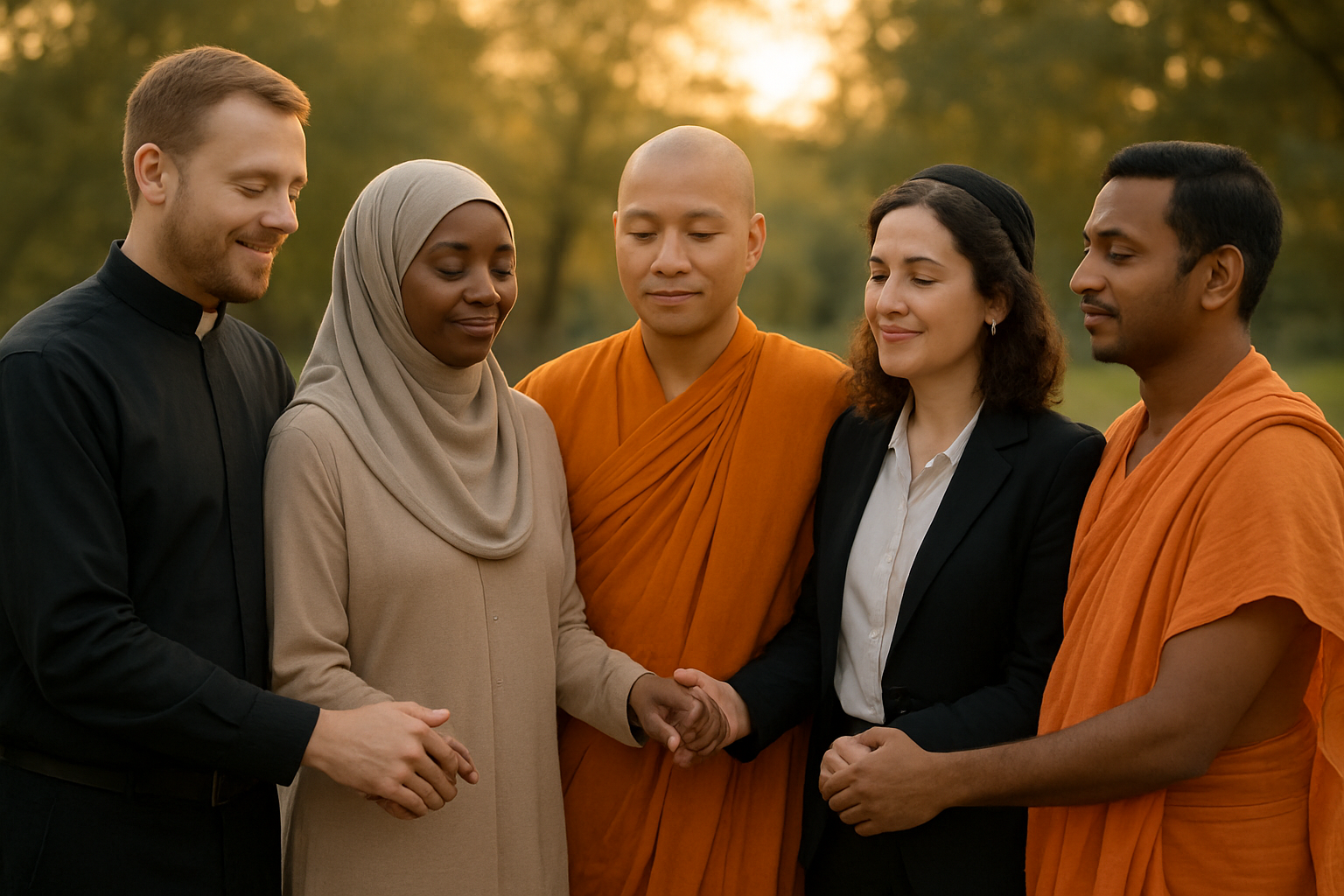
Multi-Religious Worship Spaces Breaking Traditional Barriers
The landscape of spiritual practice is transforming dramatically as communities worldwide embrace multi-religious worship spaces that welcome people from all faith traditions under one roof. These remarkable sanctuaries represent a bold departure from centuries-old traditions of separate, denomination-specific places of worship.
The Parliament of Religions building in Chicago stands as a pioneering example, featuring dedicated prayer areas for Christians, Muslims, Jews, Hindus, Buddhists, and followers of indigenous wisdom traditions. The space includes adjustable architectural elements that can be reconfigured for different religious ceremonies throughout the week. On Sunday mornings, the main hall might host Christian services, while Friday afternoons see the same space transformed for Islamic prayers, complete with proper orientation toward Mecca.
Similar initiatives are sprouting across major metropolitan areas. The Unity Temple in Minneapolis features a central meditation hall surrounded by smaller chambers designed for specific faith practices. Each chamber incorporates authentic elements from different traditions – prayer wheels for Buddhist practices, a mikvah for Jewish rituals, and sacred fire spaces honoring Native American ceremonies. The genius lies in the shared common area where people from all backgrounds gather for interfaith discussions, community meals, and collaborative spiritual experiences.
These spaces aren’t just architectural marvels; they’re fundamentally reshaping how people understand and practice their faith. The Abrahamic Family House in Abu Dhabi exemplifies this vision on a grand scale. This complex houses a mosque, synagogue, and church within walking distance of each other, connected by peaceful gardens where visitors can reflect on their shared humanity. The project has already welcomed over 500,000 visitors from 180 countries, proving that spiritual unity transcends geographical and cultural boundaries.
The design principles behind these spaces reveal deep consideration for religious sensitivities while promoting inclusivity. The interfaith community center in Toronto features moveable walls that create intimate spaces for quiet prayer while also opening up for large gatherings. The lighting system adjusts throughout the day to honor different prayer times, and the acoustics are engineered to support everything from Christian hymns to Islamic calls to prayer without disturbing other activities.
What makes these spaces truly revolutionary is how they handle religious symbols and artifacts. Rather than attempting to create neutral, sterile environments, many multi-religious facilities celebrate the richness of different traditions through rotating displays and shared symbolic elements. The Peace Garden at the Interfaith Center in Los Angeles features plants and flowers mentioned in various holy texts, creating a living tapestry that honors multiple traditions simultaneously.
The impact on local communities has been profound. Regular attendees report feeling more connected not just to their own faith but to their neighbors’ spiritual journeys as well. Sarah Chen, a Buddhist practitioner in Seattle, shares how attending weekly interfaith meditation sessions has deepened her understanding of Christian contemplative practices while strengthening her own Buddhist path. This cross-pollination of spiritual wisdom is creating richer, more nuanced faith experiences for thousands of people.
These worship spaces are also pioneering new forms of interfaith liturgy and ritual. The Unity Service held monthly at the Global Faith Center combines elements from multiple traditions into cohesive worship experiences. Participants might begin with Hindu mantras, transition to Jewish psalms, include Islamic recitations, and conclude with Buddhist loving-kindness meditations. Rather than diluting individual traditions, these hybrid ceremonies seem to amplify the universal themes present in all faiths.
Technology plays a crucial role in making these spaces accessible to diverse populations. Translation apps help participants follow along with prayers in unfamiliar languages, while augmented reality features allow visitors to learn about different religious symbols and practices in real-time. The Virtual Reality Prayer Experience at the London Interfaith Center lets people participate in pilgrimage experiences from multiple traditions without leaving the building.
The economic model supporting these spaces varies significantly but often relies on shared resources and community investment. The Denver Multi-Faith Complex operates on a membership model where different religious communities contribute proportionally to maintenance and programming costs. This shared investment creates genuine ownership across faith lines and ensures that programming reflects the actual needs and interests of diverse user communities.
Children and young people are experiencing particularly profound benefits from these multi-religious environments. The Youth Interfaith Academy in Phoenix provides religious education that helps young people understand their own traditions while building respect and knowledge about other faiths. Students learn to ask thoughtful questions about different belief systems and develop the critical thinking skills needed for meaningful interfaith dialogue.
Collaborative Social Justice Initiatives Across Faith Lines
The most compelling evidence of growing spiritual unity emerges from the remarkable social justice initiatives that bring together faith communities across traditional religious boundaries. These collaborative efforts address pressing social issues while demonstrating how shared values can transcend theological differences.
The Faith Alliance for Climate Action represents one of the most successful examples of interfaith environmental activism. This coalition brings together over 2,000 religious congregations from dozens of faith traditions to address climate change through coordinated action. Christian churches partner with Islamic centers to install solar panels, while Buddhist communities work alongside Jewish congregations to create sustainable community gardens. The alliance has prevented over 50,000 tons of carbon emissions annually while creating green jobs and educational opportunities in underserved neighborhoods.
What makes these initiatives particularly powerful is their ability to mobilize resources and people that might never otherwise work together. The Housing First Coalition in Portland demonstrates this perfectly. Catholic parishes provide financial support, Protestant churches offer volunteer labor, Muslim organizations contribute legal expertise, and Hindu temples provide meals for construction workers. This multi-faith approach has resulted in 300 affordable housing units over three years, far exceeding what any single faith community could have accomplished alone.
The methodology behind successful interfaith social justice work reveals important patterns. The most effective initiatives begin with shared listening sessions where representatives from different faith communities identify common concerns and values. The Homelessness Task Force in San Antonio spent six months in these sessions before launching any programs, ensuring that their approach honored the diverse perspectives and resources of participating communities.
Criminal justice reform has become another powerful arena for interfaith collaboration. The Restorative Justice Circle in Baltimore brings together Christian pastors, Islamic imams, Jewish rabbis, and Buddhist teachers to support both crime victims and formerly incarcerated individuals. The program combines traditional religious approaches to forgiveness and healing with evidence-based rehabilitation practices. Participants report significantly lower recidivism rates compared to traditional criminal justice interventions.
Education represents perhaps the most promising area for interfaith social justice collaboration. The Literacy Coalition of Greater Miami includes over 100 faith communities working together to address educational inequities in low-income neighborhoods. Muslim organizations provide after-school tutoring, Christian churches host weekend learning programs, Jewish centers offer college preparation courses, and Hindu temples provide STEM education resources. This comprehensive approach has improved reading scores by an average of 23% among participating students.
Healthcare initiatives showcase the practical benefits of combining different faith traditions’ approaches to healing and wellness. The Community Health Partnership in Cleveland integrates prayer and spiritual counseling from multiple traditions with conventional medical care. Patients can access Buddhist meditation teachers, Christian chaplains, Islamic spiritual counselors, and Native American healing practitioners alongside their regular medical team. Patient satisfaction scores have increased by 34% since the program launched, and health outcomes show measurable improvement across multiple conditions.
Food security programs benefit tremendously from interfaith cooperation because different communities bring unique resources and cultural knowledge. The Interfaith Food Network in Phoenix operates 15 food pantries that serve culturally appropriate meals reflecting the dietary requirements and preferences of diverse populations. Sikh gurdwaras contribute vegetarian meals and cooking expertise, Jewish organizations provide kosher options and food distribution experience, and Latino churches bring deep knowledge of traditional foods that support health and cultural identity.
Immigration support has become a defining issue for many interfaith communities, particularly as global displacement continues to increase. The Sanctuary Coalition in Chicago includes over 200 congregations from 25 different faith traditions committed to providing shelter, legal support, and integration services for asylum seekers and undocumented immigrants. The coalition has successfully prevented over 150 deportations while helping thousands of families navigate complex immigration systems.
The advocacy power of united faith communities has proven remarkably effective in influencing policy changes. The Minimum Wage Campaign in Los Angeles brought together religious leaders from across the spectrum to advocate for fair wages. Their moral authority and diverse representation made it difficult for opponents to dismiss the movement as partisan politics. The campaign succeeded in raising the minimum wage to $15 per hour while creating pathways for small businesses to adapt gradually.
Mental health support represents an emerging area where interfaith collaboration is breaking new ground. The Wellness Alliance in Seattle combines traditional religious approaches to emotional healing with modern therapeutic practices. Participants can access Buddhist mindfulness training, Christian contemplative prayer, Islamic meditation practices, and Jewish text study alongside professional counseling and psychiatric care. The holistic approach addresses both spiritual and psychological aspects of mental health challenges.
Disaster relief efforts reveal the incredible mobilization capacity of interfaith communities working together. When Hurricane Harvey devastated Houston, the Interfaith Relief Network coordinated response efforts among over 500 religious congregations. Within 72 hours, they had established 25 emergency shelters, distributed food to 10,000 families, and begun coordinating long-term rebuilding efforts. The network’s success came from pre-existing relationships and shared resources that enabled rapid, coordinated response.
Shared Pilgrimage Experiences Building Global Brotherhood
The ancient practice of pilgrimage is experiencing a remarkable renaissance as faith communities create shared spiritual journeys that bring together people from diverse religious backgrounds. These modern pilgrimage experiences are transforming how people understand both their own faith traditions and those of others, creating deep bonds that transcend cultural and theological differences.
The Camino de Santiago has become an unexpected catalyst for interfaith dialogue as pilgrims from multiple religious traditions walk together across northern Spain. While the route traditionally attracted Christian pilgrims, today’s walkers include Muslims seeking spiritual renewal, Buddhists practicing walking meditation, Jews exploring their connection to Spanish Jewish history, and spiritual seekers from indigenous traditions. The shared experience of physical challenge, natural beauty, and quiet reflection creates profound opportunities for cross-cultural understanding.
These modern pilgrimage experiences are carefully designed to honor multiple spiritual traditions while creating authentic opportunities for encounter. The Interfaith Peace Walk through the Holy Land brings together Christians, Muslims, and Jews for a 14-day journey that includes sacred sites important to all three Abrahamic faiths. Participants visit the Western Wall, the Church of the Holy Sepulchre, and the Al-Aqsa Mosque while engaging in daily dialogue sessions that explore shared themes in their respective traditions.
What distinguishes these interfaith pilgrimages from traditional religious journeys is their intentional focus on building relationships across difference. The Sacred Sites Tour of India welcomes participants from all faith backgrounds to explore Hindu temples, Buddhist monasteries, Jain pilgrimage sites, and Sikh gurdwaras. Each day begins with meditation practices from different traditions, and evenings feature storytelling sessions where participants share their own spiritual journeys and cultural backgrounds.
The logistics of organizing interfaith pilgrimages require careful attention to diverse religious requirements and cultural sensitivities. The Multi-Faith Journey through Turkey accommodates Islamic prayer times, Jewish dietary laws, Christian worship needs, and Buddhist meditation practices. Accommodations are selected based on their ability to provide appropriate spaces and foods for all participants, while daily schedules balance group activities with time for individual spiritual practice.
Technology has opened new possibilities for virtual pilgrimage experiences that connect people across vast distances. The Global Virtual Pilgrimage Project allows participants to “walk” together through sacred landscapes using virtual reality while maintaining real-time connections with fellow pilgrims around the world. Participants from different continents can share the experience of visiting Mount Kailash, walking through ancient Buddhist temples in Cambodia, or exploring Native American sacred sites in the southwestern United States.
The transformative power of shared pilgrimage experiences becomes evident in the lasting relationships and changed perspectives that participants report. Maria Rodriguez, a Catholic teacher from Mexico, describes how walking with Muslim and Jewish companions through Jerusalem fundamentally changed her understanding of religious diversity. She now leads interfaith dialogue groups in her home community and has developed curriculum that teaches students about multiple faith traditions with equal respect and curiosity.
Physical pilgrimage routes are being developed specifically to honor multiple spiritual traditions and create opportunities for interfaith encounter. The Sacred Valley Trek in Peru combines Incan spiritual sites with Christian churches built during colonial times, while incorporating contemporary indigenous spiritual practices. Participants learn about the complex history of religious encounter in South America while experiencing the natural beauty that has inspired spiritual seekers for millennia.
The Abraham Path Initiative represents perhaps the most ambitious interfaith pilgrimage project currently underway. This developing network of walking routes traces the journey of Abraham/Ibrahim through the Middle East, connecting sites sacred to Jews, Christians, and Muslims. Local communities along the route provide hospitality and share their own stories and traditions, creating economic opportunities while fostering cross-cultural understanding.
Urban pilgrimage experiences are emerging as powerful tools for building interfaith community within major metropolitan areas. The Sacred Sites Walking Tour of London takes participants through Hindu temples, Islamic centers, Jewish synagogues, Christian churches, and Buddhist meditation centers over the course of a weekend. Participants learn about the history of religious diversity in the city while meeting community leaders and participating in brief worship or meditation experiences at each location.
The economics of interfaith pilgrimage create interesting opportunities for supporting local communities while building global connections. The Silk Road Interfaith Journey contributes to economic development in Central Asian communities while connecting participants with contemporary Islamic, Buddhist, and Christian traditions in the region. Local guides share not only historical information but also contemporary spiritual practices and cultural traditions that have evolved over centuries.
Youth programs built around shared pilgrimage experiences are creating the next generation of interfaith leaders. The Young Pilgrims Program brings together teenagers from different faith backgrounds for summer journeys that combine adventure, service, and spiritual exploration. Participants might spend weeks rebuilding homes in disaster-affected areas while learning about the religious traditions of the communities they serve.
The psychological and spiritual benefits of interfaith pilgrimage experiences extend far beyond the journey itself. Research conducted by the Institute for Contemplative Studies shows that participants in interfaith pilgrimages report significantly higher levels of religious tolerance, cultural competency, and spiritual satisfaction compared to control groups. The shared experience of physical challenge, natural beauty, and spiritual seeking creates bonds that persist long after the journey ends.
Documentary projects are capturing these transformative experiences and sharing them with broader audiences. The film series “Walking Together” follows interfaith pilgrimage groups as they navigate both external challenges and internal spiritual growth. These documentaries are being used by religious communities worldwide to inspire their own interfaith initiatives and to help people understand the universal human longing for spiritual connection and meaning.
The food traditions encountered during interfaith pilgrimages create particularly memorable opportunities for cultural exchange. The Taste of Faith Culinary Pilgrimage through Morocco introduces participants to Islamic halal practices, Jewish kosher traditions, and Berber indigenous food customs. Cooking classes and shared meals become spaces for deep conversation about how food practices reflect spiritual values and cultural identity.
Artistic expression emerges naturally from these shared spiritual journeys. The Interfaith Creativity Retreat combines pilgrimage with workshops in music, visual arts, poetry, and dance drawn from multiple cultural traditions. Participants create collaborative artworks that reflect their diverse backgrounds while expressing shared themes of hope, peace, and spiritual seeking.
These pilgrimage experiences are also developing new models for conflict transformation and peacebuilding. The Peace Pilgrimage through Northern Ireland brings together Catholics and Protestants for walking meditation through locations significant to the peace process. Similar programs are being developed for other regions experiencing religious or ethnic conflict, demonstrating how shared spiritual practice can contribute to healing and reconciliation.
The environmental dimensions of modern interfaith pilgrimage are receiving increased attention as communities recognize the connection between spiritual seeking and ecological responsibility. The Green Pilgrimage Network promotes environmentally sustainable travel practices while highlighting the role of faith communities in environmental stewardship. Participants learn about creation care traditions from multiple religions while practicing low-impact travel and supporting conservation efforts along their routes.
These shared spiritual journeys are creating new forms of religious community that transcend traditional institutional boundaries. Many interfaith pilgrimage participants maintain connections through online communities, annual reunions, and collaborative social action projects. These networks represent emerging forms of global faith communities that honor diverse traditions while creating space for continued spiritual growth and mutual support.
Technology-Enhanced Spiritual Practices Reaching Millions
Virtual Reality Meditation Experiences Transforming Inner Journeys
Virtual reality meditation has completely changed how millions of people approach their spiritual practices. What started as a niche experiment has grown into a massive movement that bridges ancient wisdom with cutting-edge technology. People who once struggled to quiet their minds in traditional meditation settings now find themselves transported to serene mountaintops, peaceful forests, or sacred temples through VR headsets.
The power of VR meditation lies in its ability to eliminate the distractions that plague modern practitioners. Instead of sitting in a noisy apartment trying to ignore traffic sounds or roommate conversations, users can immerse themselves in perfectly crafted environments designed specifically for spiritual practice. These virtual spaces aren’t just pretty backgrounds – they’re carefully engineered experiences that use visual, audio, and even haptic feedback to guide users into deeper states of consciousness.
Companies like Guided Meditation VR and Tripp have developed sophisticated platforms that offer everything from basic breathing exercises to advanced consciousness exploration. Their libraries include experiences modeled after real sacred sites like Buddhist monasteries in Tibet, ancient Greek temples, and Native American sacred spaces. Users report achieving meditative states faster and more consistently than they ever did with traditional methods.
The variety of VR meditation experiences available today is staggering. Beach meditation sessions feature realistic wave sounds synchronized with breathing patterns. Forest experiences include gentle rain, bird songs, and rustling leaves that respond to the user’s heart rate. Mountain peak sessions offer expansive views that shift and change based on meditation depth, creating a feedback loop between the practitioner’s inner state and their virtual environment.
One particularly innovative approach involves biometric integration. Advanced VR meditation systems now monitor heart rate variability, brain wave patterns, and breathing rhythms in real-time. The virtual environment adapts accordingly – if stress levels spike, the scene might shift to a more calming setting with slower colors and gentler sounds. If deep relaxation is achieved, the experience might open up to reveal hidden aspects of the virtual sacred space.
Group meditation in VR has created entirely new forms of spiritual community. Practitioners from different continents can gather in shared virtual spaces for guided sessions led by renowned teachers. These aren’t just video calls with meditation backgrounds – they’re fully immersive environments where participants can see each other’s avatars, share energy visualizations, and even experience synchronized breathing patterns represented as flowing light or color.
The accessibility factor cannot be overstated. People with mobility limitations who cannot visit physical meditation centers now have access to virtual replicas of the world’s most sacred spaces. Someone recovering from surgery can visit a virtual Zen garden. A parent with small children can escape to a peaceful temple whenever needed. This democratization of access to spiritual spaces represents a profound shift in how spiritual practice can be integrated into everyday life.
Research institutions have begun studying the neurological effects of VR meditation, and the results are remarkable. Brain imaging studies show that VR meditation can produce similar changes in neural activity to traditional meditation practices, but often with faster onset and deeper states achieved in shorter time periods. The immersive nature of VR seems to bypass some of the mental resistance that beginners often face when starting meditation practices.
AI-Powered Spiritual Guidance Systems for Personal Growth
Artificial intelligence has entered the spiritual realm in ways that would have seemed impossible just a decade ago. AI-powered spiritual guidance systems are providing personalized insights, teachings, and support to millions of seekers worldwide. These sophisticated programs don’t just offer generic spiritual advice – they learn from user interactions, analyze patterns in spiritual growth, and provide customized guidance that evolves with each individual’s journey.
The most advanced AI spiritual guides function more like digital wisdom keepers than simple chatbots. They’ve been trained on vast databases of spiritual texts, philosophical works, and wisdom traditions from around the world. When someone asks about dealing with grief, the AI might draw from Buddhist teachings on impermanence, Christian perspectives on comfort, Islamic wisdom on patience, and psychological insights on the grieving process, weaving together a response tailored to the person’s specific situation and spiritual background.
Personal spiritual AI assistants now track meditation sessions, mood patterns, spiritual practices, and life circumstances to offer increasingly refined guidance. If someone consistently struggles with meditation on Monday mornings, the AI might suggest adjusting their practice schedule, trying different techniques, or addressing underlying stress patterns. These systems recognize that spiritual growth isn’t linear and adapt their recommendations accordingly.
One fascinating development is AI systems that analyze speaking patterns, word choices, and emotional undertones to assess spiritual well-being. These programs can detect when someone is experiencing a spiritual crisis, period of doubt, or breakthrough moment, and adjust their guidance style appropriately. During dark nights of the soul, the AI might offer more comforting, supportive messages. During periods of spiritual expansion, it might provide more challenging teachings or advanced practices.
The integration of AI with spiritual practice has created new forms of digital discipleship. AI mentors can provide consistent, patient guidance without judgment – something many human teachers struggle to maintain across hundreds or thousands of students. These systems never get tired, never have bad days, and never project their own spiritual baggage onto their guidance. They offer a unique form of unconditional positive regard that many practitioners find deeply healing.
Language barriers that once limited access to spiritual teachings have largely disappeared with AI translation and cultural adaptation systems. A Sufi teaching originally written in Persian can be intelligently translated and contextualized for a modern American seeker, maintaining the essence while making it accessible. AI systems can explain cultural references, provide historical context, and even suggest parallel teachings from the reader’s own cultural background.
The personalization capabilities of AI spiritual guidance extend to learning style preferences as well. Visual learners might receive guided imagery exercises and symbolic representations of spiritual concepts. Kinesthetic learners get recommendations for movement-based practices and embodied spirituality exercises. Analytical types receive logical frameworks for understanding mystical concepts, while intuitive types get more experiential approaches.
Some AI systems specialize in specific spiritual traditions while others offer interfaith perspectives. A Buddhist AI might focus on mindfulness, impermanence, and compassion practices while incorporating relevant insights from other traditions when helpful. Interfaith AI assistants help users explore common threads across different wisdom traditions and find practices that resonate with their unique spiritual makeup.
The ethical considerations around AI spiritual guidance have sparked important conversations in both tech and spiritual communities. Questions about authenticity, the role of human connection in spiritual growth, and the potential for AI to replace rather than supplement human spiritual teachers continue to evolve. Most thoughtful approaches position AI as a complement to, rather than replacement for, human spiritual community and guidance.
Real-time spiritual support through AI has proven particularly valuable during crisis periods. When someone is facing a spiritual emergency at 3 AM, they can access intelligent, compassionate guidance immediately rather than waiting for a counselor or spiritual director to become available. This instant accessibility has prevented spiritual crises from deepening and helped maintain continuity in practice during challenging times.
Global Prayer Networks Connected Through Social Platforms
Social media platforms have transformed from spaces of casual connection into powerful networks for spiritual unity and collective prayer. Millions of people now participate in synchronized prayer sessions, healing circles, and meditation gatherings that span continents and time zones. These networks demonstrate how technology can amplify ancient practices of collective spiritual intention in unprecedented ways.
The scale of global prayer networks today defies imagination. During major world events, conflicts, or natural disasters, prayer networks can mobilize millions of participants within hours. When the Notre Dame Cathedral caught fire, prayer groups across Facebook, WhatsApp, and specialized spiritual platforms organized instant prayer vigils. During the early days of the COVID-19 pandemic, coordinated meditation sessions brought together practitioners from every continent in shared intentions for healing and peace.
WhatsApp has become an unexpected platform for continuous prayer chains. Groups of hundreds or thousands of people share prayer requests, spiritual insights, and coordinate collective prayer times. These groups often operate 24/7, with participants from different time zones ensuring constant spiritual support. When someone in India shares a prayer request in the morning, practitioners in Europe pick it up during their lunch break, while Americans respond during their evening reflection time.
Facebook groups dedicated to interfaith prayer have created new models of spiritual solidarity. Christians, Muslims, Hindus, Buddhists, and practitioners of indigenous traditions gather in shared virtual spaces to pray for common concerns. These groups have developed protocols for respectful prayer sharing, where each tradition maintains its authentic practices while contributing to collective intentions. The result is a powerful demonstration of unity in diversity.
Specialized platforms like PrayerGrams and Circle of Prayer have been designed specifically for coordinated spiritual practice. These platforms allow users to schedule prayer times, share intentions, track collective participation, and even visualize global prayer coverage in real-time. Maps show where prayers are being offered around the world, creating a visual representation of spiritual unity that many find deeply moving.
The phenomenon of viral spiritual movements has emerged through these networks. A simple prayer or meditation practice shared by one person can spread across platforms and reach millions within days. The “Om at One” movement, where people worldwide chant Om at 1 PM in their local time zone, started as a single Facebook post and now involves participants across six continents daily.
Instagram has become a powerful platform for visual prayer and spiritual sharing. Prayer circles share beautiful images, sacred art, and inspirational quotes that accompany collective intentions. Stories feature real-time prayer moments, creating a sense of immediate spiritual connection. Live streaming allows prayer leaders to guide global audiences in real-time spiritual practices, with viewers from dozens of countries participating simultaneously.
Twitter’s hashtag system has enabled rapid organization of prayer responses to current events. Hashtags like #PrayForPeace, #HealingVibes, and #GlobalMeditation can trend within hours, connecting millions of people in shared spiritual intention. The brevity of Twitter posts has created new forms of prayer poetry, with profound spiritual intentions expressed in 280 characters or less.
The integration of time zone coordination tools has solved the challenge of synchronizing global spiritual practices. Apps like World Prayer Clock show optimal times for collective prayer that maximize global participation. These tools calculate time zones, account for work schedules across different cultures, and suggest multiple daily opportunities for synchronized spiritual practice.
Local prayer networks have also flourished through neighborhood-focused social platforms like Nextdoor and local Facebook groups. Communities organize prayer walks, meditation gatherings, and spiritual support networks for local challenges. During natural disasters or community crises, these local spiritual networks often provide faster response and more sustained support than traditional institutional channels.
The documentation of prayer outcomes has created new conversations about spiritual efficacy. Groups track their collective intentions and share stories of positive outcomes, creating databases of experiences that blur the lines between faith and evidence. While these remain anecdotal, the volume and consistency of reported positive outcomes have sparked interest from researchers studying consciousness and collective intention.
Online Ritual Ceremonies Uniting Practitioners Worldwide
The digitization of sacred ceremonies has created new possibilities for spiritual participation and community that transcend geographical boundaries. Ancient rituals that once required physical presence in specific locations can now include participants from around the globe, creating hybrid experiences that maintain spiritual authenticity while embracing technological innovation.
Wedding ceremonies conducted online have become elaborate affairs that include family members and spiritual communities from multiple continents. Couples exchange vows while relatives in different countries light unity candles simultaneously, creating a powerful symbol of global family connection. Shamanic practitioners have adapted traditional blessing ceremonies for digital formats, using video calls to include distant relatives in naming ceremonies, coming-of-age rituals, and healing circles.
Buddhist sanghas have pioneered sophisticated online dharma ceremonies. Full moon celebrations, refuge ceremonies, and teaching transmissions now routinely include practitioners from dozens of countries. The visual elements of these ceremonies – altar arrangements, ceremonial objects, incense lighting – are carefully choreographed for camera, while chanting and meditation portions are synchronized across time zones. Participants report feeling genuine spiritual connection despite physical separation.
Hindu puja ceremonies conducted online have maintained their sacred power through careful attention to ritual detail. Priests perform elaborate ceremonies in temple settings while devotees worldwide follow along, making offerings at home altars, chanting mantras, and receiving blessings through digital transmission. The visual splendor of these ceremonies, enhanced by high-quality cameras and streaming technology, has actually improved access for many devotees who could never afford to travel to major temples.
Indigenous ceremony leaders have selectively adapted certain rituals for online participation while maintaining strict boundaries around sacred practices that require physical presence. Talking circles, storytelling ceremonies, and some healing practices work effectively in digital formats. Elders report that online ceremonies have helped maintain cultural connections for indigenous youth living in urban areas far from their traditional communities.
The logistics of coordinating global ceremonies require sophisticated planning and technology infrastructure. Multilingual interpretation, multiple camera angles, interactive participation features, and technical support teams work behind the scenes to create seamless spiritual experiences. Some ceremonies now include breakout rooms for small group sharing, virtual altar spaces for offering placement, and real-time polls for collective decision-making during community rituals.
Seasonal celebrations have found new expression through online platforms. Solstice and equinox ceremonies now include participants from both hemispheres, creating unique opportunities to honor different seasonal energies simultaneously. Samhain celebrations connect practitioners across time zones as the veil between worlds is honored continuously around the globe. These globally synchronized celebrations create new forms of planetary spiritual awareness.
Memorial and grief ceremonies conducted online have provided profound healing opportunities for distributed families and communities. When travel restrictions or distance prevent physical attendance at funerals or memorial services, online ceremonies ensure no one is excluded from the grieving and healing process. These services often include interactive elements where distant participants can light candles, share memories, or contribute to collective prayers in real-time.
Initiation ceremonies adapted for digital formats maintain their transformational power through creative use of technology. Mystery school traditions have developed protocols for conducting initiations that honor the sacred while utilizing video conferencing capabilities. These ceremonies often combine online elements with local physical practices, creating hybrid experiences that bridge virtual and embodied spiritual practice.
The authenticity questions surrounding online ceremonies have led to thoughtful discussions about the nature of sacred space and spiritual presence. Many traditions have concluded that intention, preparation, and genuine spiritual focus matter more than physical location. The energy and presence cultivated by sincere practitioners seems to translate effectively across digital mediums when proper attention is paid to creating sacred virtual space.
Interactive elements in online ceremonies have actually enhanced participation for many people. Chat features allow participants to share insights, prayer requests, and spiritual experiences in real-time. Polling functions enable collective decision-making in community rituals. Breakout rooms provide opportunities for intimate spiritual sharing that might not occur in large physical gatherings.
Blockchain Technology Preserving Sacred Texts and Teachings
Blockchain technology has emerged as an unexpected guardian of Amazing Spiritual Movements wisdom, offering unprecedented security and authenticity for sacred texts, spiritual teachings, and religious artifacts. This technology ensures that ancient wisdom traditions remain uncorrupted and accessible for future generations while creating new models for spiritual content authentication and preservation.
The preservation of sacred texts through blockchain creates immutable records that cannot be altered, censored, or destroyed by any single authority. Buddhist sutras, Hindu scriptures, indigenous oral teachings converted to digital formats, and modern spiritual writings can be stored on distributed networks that exist across thousands of computers worldwide. This distributed storage means that no government, institution, or natural disaster can eliminate these teachings from existence.
Authentication of spiritual teachers and lineages has found new possibilities through blockchain verification systems. In traditions where authentic transmission from teacher to student is crucial, blockchain can create verifiable records of spiritual lineages, teaching certifications, and empowerment transmissions. This prevents fraudulent claims of spiritual authority while maintaining clear records of authentic teaching relationships.
The tokenization of spiritual content has created new models for supporting spiritual teachers and preserving their work. Teachers can create blockchain-based certificates for their teachings, ensuring that students receive authentic content while providing sustainable income streams. These spiritual tokens can represent access to teachings, participation in ceremonies, or membership in spiritual communities, all tracked through transparent, tamper-proof systems.
Crowdfunding spiritual preservation projects through blockchain platforms has enabled communities to collectively support the digitization and preservation of endangered spiritual traditions. When ancient texts are at risk of being lost, or when elder teachers need support to record their knowledge, blockchain-based fundraising can rapidly mobilize global spiritual communities to provide necessary resources.
Smart contracts on blockchain networks have automated aspects of spiritual community management and resource distribution. Donation systems can automatically distribute funds to multiple spiritual causes based on predetermined criteria. Membership in spiritual organizations can be managed through smart contracts that handle dues, voting rights, and access to exclusive teachings or ceremonies.
The creation of decentralized spiritual libraries through blockchain technology has made rare spiritual texts and teachings accessible to practitioners worldwide. These libraries cannot be controlled by any single institution and remain available even if individual nodes go offline. Scholars and practitioners can access materials that were previously available only in specific monasteries, temples, or private collections.
Cultural preservation initiatives using blockchain have protected indigenous spiritual knowledge from appropriation while maintaining accessibility for authentic practitioners. Indigenous communities can control access to their sacred teachings through blockchain-based permission systems, ensuring that traditional knowledge is shared respectfully while preventing commercial exploitation or misrepresentation.
Verification of spiritual artifacts and relics through blockchain documentation has created new standards for authenticity in spiritual collections. Museums, temples, and private collectors can maintain transparent provenance records that cannot be falsified. This system helps prevent trafficking of sacred objects while ensuring legitimate artifacts can be properly valued and preserved.
Translation projects for ancient spiritual texts benefit from blockchain’s version control and collaborative editing capabilities. Teams of scholars can work together on translations while maintaining clear records of their contributions and decisions. Multiple translations of the same text can coexist with full attribution, allowing students to access various interpretations and scholarly perspectives.
Micropayments through blockchain systems have created new models for supporting spiritual content creators and teachers. Instead of large upfront payments for courses or books, students can make small payments for individual teachings, meditation sessions, or spiritual consultations. This makes spiritual education more accessible while providing sustainable income for teachers.
The global nature of blockchain networks aligns well with the universal aspirations of many spiritual traditions. Teachings and practices can flow freely across national boundaries without government interference. Practitioners in restrictive countries can access spiritual materials that might be censored through traditional channels, while teachers can reach global audiences without institutional gatekeepers.
Spiritual community governance through blockchain voting systems has created new models for democratic decision-making in religious and spiritual organizations. Community members can vote on important decisions, resource allocation, and leadership selection through transparent, tamper-proof systems. This reduces the potential for corruption while ensuring all voices are heard in community decisions.
The environmental considerations of blockchain technology have led to the development of eco-friendly blockchain networks specifically designed for Amazing Spiritual Movements and cultural preservation. These networks use energy-efficient consensus mechanisms that align with the environmental values of many spiritual traditions while providing the security and permanence needed for sacred text preservation.
Digital pilgrimage experiences recorded on blockchain create permanent records of spiritual journeys and achievements. Virtual visits to sacred sites, completion of online spiritual courses, and participation in digital ceremonies can be documented in ways that create lasting spiritual credentials and community recognition.
The intersection of blockchain technology with spiritual practice continues to evolve as communities discover new applications for this powerful tool. From preserving ancient wisdom to creating new forms of spiritual community and practice, blockchain is proving to be a valuable ally in the ongoing evolution of global spirituality and faith traditions.
Amazing Spiritual Movements: Mind-blowing Global Faith
Amazing Spiritual Movements worldwide are breaking traditional boundaries and creating new ways for people to connect with their faith. From ancient indigenous wisdom gaining respect on the global stage to quantum spirituality bridging the gap between science and the sacred, these revolutionary approaches are changing how we think about religion and spirituality. Interfaith communities are proving that unity is possible despite different beliefs, while technology is making spiritual practices accessible to millions who might never have found them otherwise.
The future of faith looks incredibly diverse and inclusive. These movements show us that spirituality doesn’t have to fit into neat, traditional boxes anymore. Whether you’re drawn to ancient wisdom, scientific spirituality, or tech-enhanced practices, there’s a path waiting for you. Take some time to explore what resonates with your soul – you might be surprised by what you discover when you open your mind to these Amazing Spiritual Movements possibilities.