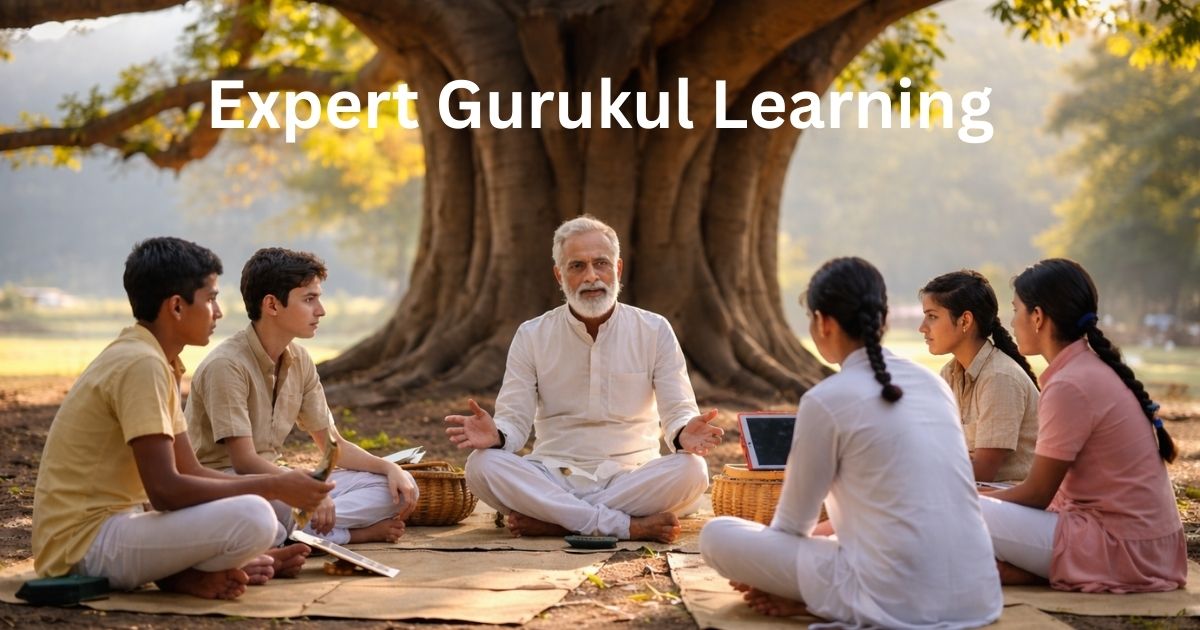
Traditional Indian education methods are making a powerful comeback as parents and educators seek more meaningful ways to shape young minds. The Gurukul learning system offers a refreshing alternative to cookie-cutter classrooms, focusing on the deep guru-disciple relationship in education that has produced brilliant thinkers for thousands of years.
This guide is designed for progressive parents, innovative educators, and students who want to break free from one-size-fits-all learning. You’ll discover how this holistic learning approach can transform education by treating each learner as a unique individual with unlimited potential.
We’ll explore the core philosophy that makes Gurukul education so effective, diving into time-tested techniques that combine character building through education with academic excellence. You’ll also learn practical energizing methods that keep students engaged and passionate about learning, while discovering how technology-enhanced traditional learning creates the perfect blend of ancient wisdom and modern tools.
Get ready to see education in a completely new light – one where learning becomes a joyful journey of personal growth rather than a stressful race to the finish line.
Understanding the Gurukul Learning Philosophy
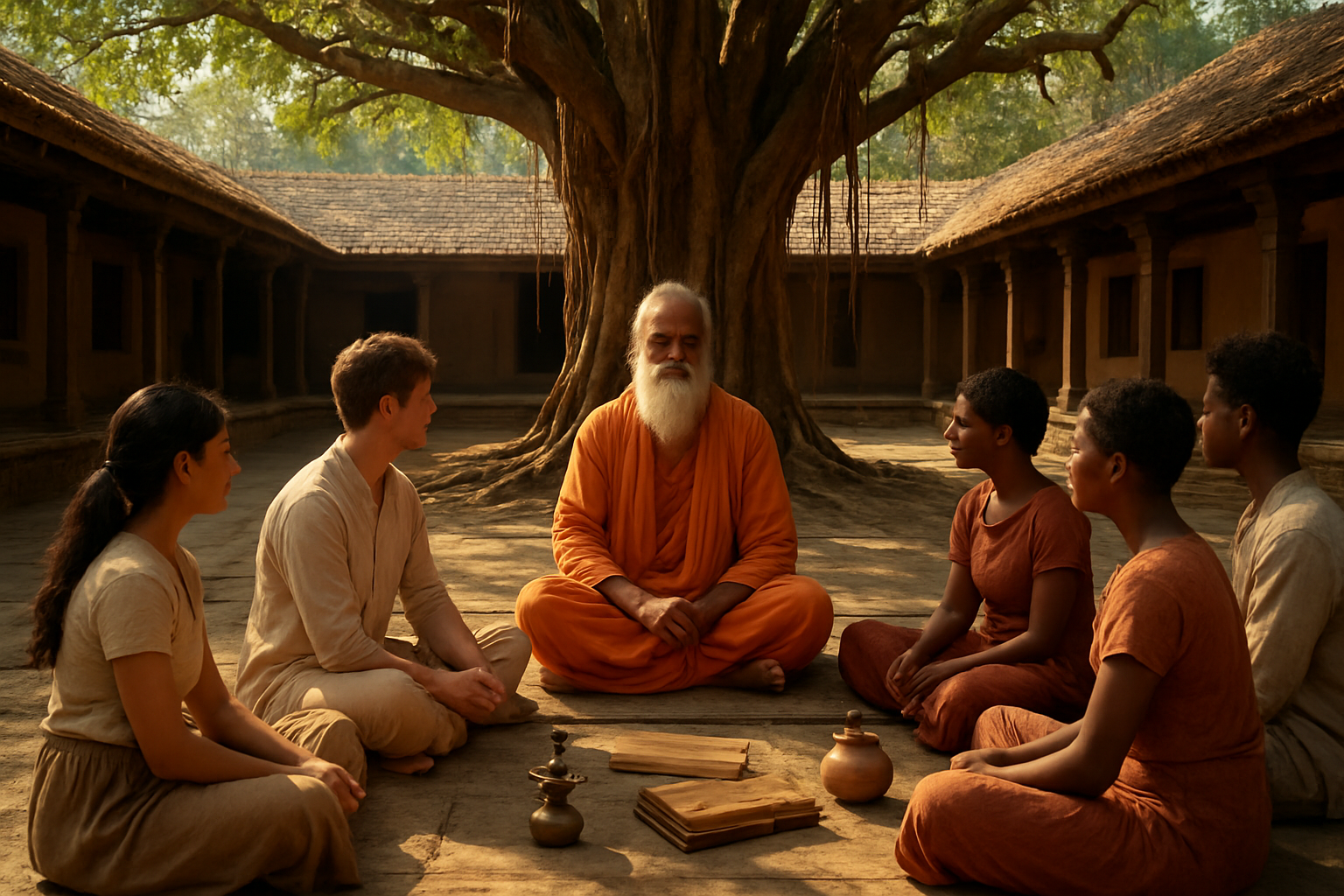
Traditional Wisdom Meets Modern Education
The Gurukul learning system represents one of humanity’s oldest and most profound educational philosophies, tracing its roots back thousands of years to ancient India. This traditional Indian education method stands as a testament to the power of personalized, experiential learning that goes far beyond simple knowledge transfer. At its core, the Gurukul system embodies a revolutionary approach where education becomes a transformative journey rather than a mere accumulation of facts.
The ancient learning techniques employed in Gurukul settings create an immersive environment where students lived alongside their teachers, absorbing wisdom through daily interactions, practical applications, and spiritual guidance. This wasn’t just about academic instruction – it was about shaping complete human beings capable of contributing meaningfully to society.
In today’s educational landscape, we’re witnessing a remarkable convergence where these time-tested principles are being reimagined and integrated with contemporary pedagogical approaches. Modern educators and institutions are recognizing that the Gurukul’s emphasis on personalized attention, experiential learning methods, and character development addresses many of the shortcomings present in conventional educational systems.
The traditional Gurukul operated on the principle that true learning happens when there’s deep trust and mutual respect between teacher and student. Students would often spend years under the guidance of their Guru, not just learning specific subjects but absorbing a way of life, a philosophical outlook, and practical skills that would serve them throughout their existence. This intensive, long-term relationship allowed for education that was perfectly tailored to each student’s unique capabilities, interests, and developmental needs.
What makes this ancient system particularly relevant today is its holistic learning approach. While modern education often compartmentalizes knowledge into separate subjects, the Gurukul method viewed learning as an interconnected web where spiritual, intellectual, physical, and emotional development happened simultaneously. Students learned mathematics through architectural projects, understood science through agricultural practices, and developed leadership skills through community service.
The integration of traditional wisdom with modern educational tools creates exciting possibilities. Technology-enhanced traditional learning environments can now support the personalized education system that was once only possible in small, intimate settings. Digital platforms can facilitate the mentor-student relationship while maintaining the deep, personal connections that make Gurukul education so effective.
This synthesis doesn’t mean abandoning technological advances or reverting to ancient methods wholesale. Instead, it involves carefully selecting the most valuable elements from both approaches. The Gurukul’s emphasis on character building through education, for instance, can be enhanced through modern psychological insights about human development and motivation. Similarly, the traditional focus on experiential learning can be amplified through virtual reality, simulation technologies, and collaborative online platforms.
The wisdom embedded in Gurukul philosophy recognizes that every student is unique and requires different approaches to reach their full potential. This understanding has become increasingly important as we recognize the limitations of standardized education systems that often fail to accommodate diverse learning styles, cultural backgrounds, and individual aspirations.
Modern Gurukul teaching approaches are emerging in various forms across the globe. Some institutions are creating residential programs that mirror the traditional setup, while others are implementing mentorship programs that maintain the essential guru-disciple relationship in education within contemporary school structures. These adaptations demonstrate that the core principles of Gurukul education can be preserved and enhanced even as the delivery methods evolve.
Personalized Mentor-Student Relationships
The guru-disciple relationship in education forms the beating heart of the Gurukul system, representing a bond that transcends typical teacher-student interactions. This relationship is built on mutual respect, deep trust, and a shared commitment to the student’s comprehensive development. Unlike conventional educational settings where teachers manage large groups of students, the Gurukul approach emphasizes intimate, individualized connections that allow for truly personalized learning experiences.
In traditional Gurukul settings, the Guru was not merely an instructor but a life guide, mentor, and spiritual father figure. This relationship typically lasted for years, sometimes decades, allowing the Guru to understand each student’s strengths, weaknesses, learning patterns, and life aspirations in profound detail. The depth of this connection enabled the Guru to customize teaching methods, pace, and content to match each student’s unique needs and potential.
The personalized education system within the Gurukul framework operates on several key principles that remain remarkably relevant today. The Guru observes each student carefully, noting their natural inclinations, areas of struggle, emotional patterns, and motivational triggers. This detailed understanding allows for educational experiences that feel organic and personally meaningful to each learner.
The mentorship aspect goes beyond academic instruction to include life skills, moral guidance, and practical wisdom. Students learn not just through formal lessons but through observing their Guru’s daily actions, decision-making processes, and interactions with others. This modeling approach creates powerful learning opportunities that shape character and values alongside intellectual development.
Modern applications of this mentorship model are finding success in various educational contexts. Some schools are implementing advisor systems where teachers work with small groups of students over multiple years, developing deep understanding and personalized support strategies. Corporate training programs are adopting apprenticeship models that mirror the Guru-disciple dynamic, pairing experienced professionals with newcomers for extended mentorship relationships.
The technology-enhanced traditional learning environments emerging today can support these deep relationships in new ways. Digital portfolios allow mentors to track student progress across multiple years and subjects, identifying patterns and growth opportunities that might otherwise be missed. Communication platforms enable ongoing dialogue between mentors and students, even when physical presence isn’t possible.
The personalized nature of Gurukul mentorship recognizes that learning is not a one-size-fits-all process. Some students thrive with direct instruction, while others learn best through experimentation and discovery. Some need gentle encouragement, while others respond to challenging goals and high expectations. The Guru’s role is to discern these individual needs and adapt their approach accordingly.
This individualization extends to pacing as well. Traditional Gurukul education allowed students to master concepts thoroughly before moving on to more advanced topics. There was no arbitrary timeline or standardized progression. Students advanced when they were truly ready, ensuring deep understanding rather than superficial coverage. This approach prevents the gaps in foundational knowledge that often plague students in traditional educational systems.
The emotional and psychological support provided through the Guru-disciple relationship creates a safe learning environment where students can take risks, make mistakes, and grow from their experiences. The Guru’s role includes helping students develop resilience, self-confidence, and intrinsic motivation. This emotional guidance is often as important as academic instruction in shaping successful, well-rounded individuals.
Trust forms the foundation of effective mentor-student relationships in the Gurukul system. Students must trust that their Guru has their best interests at heart and is guiding them toward their highest potential. Gurus must trust that their students are capable of growth and worthy of their investment of time and energy. This mutual trust creates an atmosphere where authentic learning can occur.
The accountability inherent in these close relationships also drives both parties to perform at their best. Students feel responsible to their mentor and don’t want to disappoint someone who has invested so much in their development. Gurus feel accountable for their students’ success and are motivated to continually improve their teaching methods and understanding.
Modern educational institutions implementing Gurukul-inspired mentorship programs report significant improvements in student engagement, academic performance, and personal development. Students in these programs often demonstrate higher levels of self-awareness, better communication skills, and stronger problem-solving abilities compared to their peers in traditional educational settings.
Holistic Development Beyond Academics
The holistic learning approach central to Gurukul philosophy recognizes that human beings are complex, multifaceted creatures who require development across multiple dimensions to reach their full potential. This comprehensive view of education encompasses intellectual, physical, emotional, spiritual, social, and creative aspects of human development, treating them as interconnected elements rather than separate components.
Traditional Gurukul education operated on the understanding that true wisdom emerges from the integration of knowledge, experience, and character. Students weren’t just learning subjects; they were developing as complete human beings capable of contributing meaningfully to their communities and society at large. This approach stands in stark contrast to modern educational systems that often prioritize academic achievement while neglecting other crucial aspects of human development.
Physical development received significant attention in the Gurukul system through various practices including yoga, martial arts, dance, and physical labor. These activities weren’t viewed as separate from academic learning but as essential components that supported intellectual development. Physical practices enhanced concentration, discipline, and mental clarity while building strength, flexibility, and overall health.
The integration of physical activities with learning created embodied knowledge that students could access more readily than purely theoretical concepts. For example, mathematical principles were often taught through architectural projects that required physical construction, geometric concepts through dance movements, and scientific principles through agricultural practices and craftsmanship.
Emotional development received equal emphasis through practices designed to cultivate emotional intelligence, empathy, and interpersonal skills. Students learned to recognize and regulate their emotions, understand others’ perspectives, and navigate complex social situations. This emotional education happened through community living, conflict resolution practices, storytelling, and guided reflection on personal experiences.
The residential nature of traditional Gurukul education provided constant opportunities for emotional growth. Living in close quarters with diverse groups of people taught students tolerance, cooperation, and communication skills. They learned to manage conflicts constructively, support peers through difficulties, and celebrate others’ successes without jealousy or resentment.
Spiritual development formed another cornerstone of holistic Gurukul education, though this didn’t necessarily involve religious instruction in the modern sense. Instead, it focused on developing a sense of purpose, connection to something greater than oneself, and understanding of universal principles that govern human behavior and natural phenomena.
This spiritual dimension included meditation practices, study of philosophical texts, contemplation of life’s deeper questions, and service to others. Students developed a strong moral compass and sense of responsibility toward their community and environment. They learned to see beyond immediate personal interests to consider the broader implications of their actions.
Creative expression was woven throughout the Gurukul experience through various art forms including music, poetry, storytelling, sculpture, and painting. These creative pursuits weren’t considered optional enrichment activities but essential tools for developing imagination, problem-solving skills, and emotional expression. Creative work also provided different pathways for learning and understanding complex concepts.
Social development happened naturally through the communal living arrangement and collaborative learning activities. Students learned to work effectively in teams, lead when appropriate, follow when necessary, and contribute to group goals while maintaining their individual identity. They developed strong communication skills, cultural awareness, and the ability to build meaningful relationships.
The experiential learning methods employed in Gurukul education ensured that students didn’t just learn about these various aspects of development but actually practiced and embodied them. Knowledge was gained through direct experience rather than abstract study alone. This hands-on approach created deeper understanding and more lasting behavioral changes.
Modern applications of holistic Gurukul principles are appearing in various educational contexts. Some schools are implementing project-based learning approaches that integrate multiple subjects and skills within single assignments. Others are incorporating mindfulness practices, emotional intelligence training, and character development programs into their standard curriculum.
Outdoor education programs that combine academic learning with physical challenges, environmental awareness, and team-building activities reflect Gurukul principles of integrated development. These programs demonstrate that students can achieve academic goals while simultaneously developing physical capabilities, emotional resilience, and social skills.
Technology can support holistic development when used thoughtfully. Digital platforms can facilitate collaborative projects that span geographic boundaries, virtual reality can provide immersive learning experiences that engage multiple senses, and online portfolios can track growth across various developmental domains rather than just academic subjects.
The assessment methods in holistic Gurukul education differ significantly from traditional testing approaches. Instead of relying primarily on written examinations that measure memorized information, assessment includes observation of behavior, practical demonstrations of skills, portfolio development, peer feedback, and self-reflection exercises.
This comprehensive assessment approach provides a more accurate picture of student development and learning. It recognizes that intelligence manifests in many different ways and that students may excel in areas not captured by traditional academic measures. This broader view of achievement helps students develop confidence in their unique abilities while identifying areas for continued growth.
Character Building Through Ancient Principles
Character building through education represents perhaps the most distinctive and valuable aspect of the Gurukul learning system. This ancient approach recognizes that technical knowledge and skills, while important, are insufficient for creating individuals capable of leading fulfilling lives and contributing positively to society. The development of strong moral character, ethical decision-making abilities, and personal integrity forms the foundation upon which all other learning builds.
The ancient learning techniques employed for character development were sophisticated and multifaceted, incorporating direct instruction, storytelling, role modeling, practical application, and reflective practices. These methods were designed to internalize values rather than simply memorize moral precepts. Students didn’t just learn about honesty, compassion, courage, and responsibility – they practiced these virtues in daily interactions and decision-making situations.
Storytelling played a central role in character education within the Gurukul system. Ancient texts, folk tales, and personal narratives were used to illustrate moral principles and their practical applications. These stories weren’t presented as abstract lessons but as living examples of how values manifest in real-world situations. Students analyzed characters’ motivations, discussed alternative choices, and explored the consequences of different actions.
The power of storytelling for character development lies in its ability to engage emotions and imagination while conveying important lessons. Stories create memorable experiences that students can recall and apply when facing their own moral dilemmas. The narrative format also allows for nuanced exploration of complex ethical situations where simple rules might not provide adequate guidance.
Personal reflection and self-examination were emphasized as essential tools for character development. Students were encouraged to regularly assess their own behavior, motivations, and decisions against established moral principles. This introspective practice helped develop self-awareness, personal accountability, and the ability to learn from mistakes rather than simply avoiding them.
Mentorship relationships provided crucial support for character development. Gurus served as moral exemplars, demonstrating through their own behavior how values could be lived authentically. Students observed how their mentors handled difficult situations, made ethical decisions, and balanced competing priorities. This modeling approach was often more powerful than direct instruction in shaping character.
The residential community setting of traditional Gurukul education provided constant opportunities for character practice and development. Students faced real situations requiring moral decision-making: how to handle conflicts with peers, whether to help struggling classmates, how to manage personal resources, and how to balance individual desires with community needs. These weren’t artificial scenarios but genuine life experiences with real consequences.
Service to others formed an integral part of character building in the Gurukul system. Students regularly engaged in activities that benefited their community, from caring for younger students to helping with agricultural work or assisting in community celebrations. This service orientation helped develop empathy, humility, and understanding of their interconnectedness with others.
The gradual assumption of responsibility was another key element in character development. As students matured, they were given increasing levels of responsibility for their own learning, the welfare of junior students, and various aspects of community life. This progressive responsibility helped develop leadership skills, decision-making abilities, and personal accountability.
Discipline in the Gurukul context wasn’t punitive but developmental. When students made poor choices or behaved inappropriately, the focus was on understanding the underlying causes and developing better decision-making strategies for the future. This approach helped students develop internal motivation and self-regulation rather than simply complying with external rules.
Modern applications of these character building principles are finding success in various educational settings. Schools implementing character education programs based on Gurukul principles report improvements in student behavior, academic performance, and overall school climate. These programs typically combine direct instruction in values with opportunities for practical application and reflection.
Peer mediation programs reflect ancient Gurukul practices where older students helped younger ones navigate conflicts and challenges. These programs develop leadership skills in senior students while providing meaningful support for younger ones. The peer-to-peer learning relationship often proves more effective than adult intervention alone.
Service learning initiatives that connect academic learning with community service mirror the Gurukul emphasis on contributing to society. Students working on environmental projects, tutoring younger children, or supporting local charities develop both technical skills and character traits like empathy, responsibility, and civic engagement.
Technology-enhanced traditional learning can support character development through digital portfolios that track ethical decision-making experiences, online platforms that facilitate reflection and discussion about moral dilemmas, and virtual reality simulations that allow students to practice handling challenging ethical situations in safe environments.
The integration of character education with academic subjects reflects the Gurukul approach of viewing character development as inseparable from other forms of learning. Literature classes that explore moral themes, history lessons that examine the character of historical figures, science courses that consider the ethical implications of scientific discoveries, and mathematics problems that involve resource allocation and fairness all provide opportunities for character development within academic contexts.
Assessment of character development requires different approaches than traditional academic evaluation. Portfolio-based assessment that documents growth over time, peer feedback systems, self-reflection exercises, and observation of behavior in various contexts provide more meaningful measures of character development than standardized tests or written assignments alone.
The long-term focus of character building in the Gurukul system recognizes that developing strong character is a lifelong process that begins in childhood but continues throughout adulthood. The goal isn’t to create perfect individuals but to establish strong foundations for continued growth and to develop the self-awareness and reflection skills necessary for ongoing character development.
Parental involvement in character education reflects the Gurukul understanding that character development requires consistent messaging and support across all areas of a student’s life. When families, schools, and communities work together to reinforce similar values and expectations, students receive clearer guidance and stronger support for their character development journey.
The emphasis on wisdom rather than just knowledge distinguishes Gurukul character education from purely academic approaches. Wisdom involves the integration of knowledge, experience, and values to make sound decisions and live meaningful lives. This focus on wisdom development helps students understand not just what they know but how to apply their knowledge ethically and effectively in service of worthy goals.
Core Components of Expert Gurukul Methods
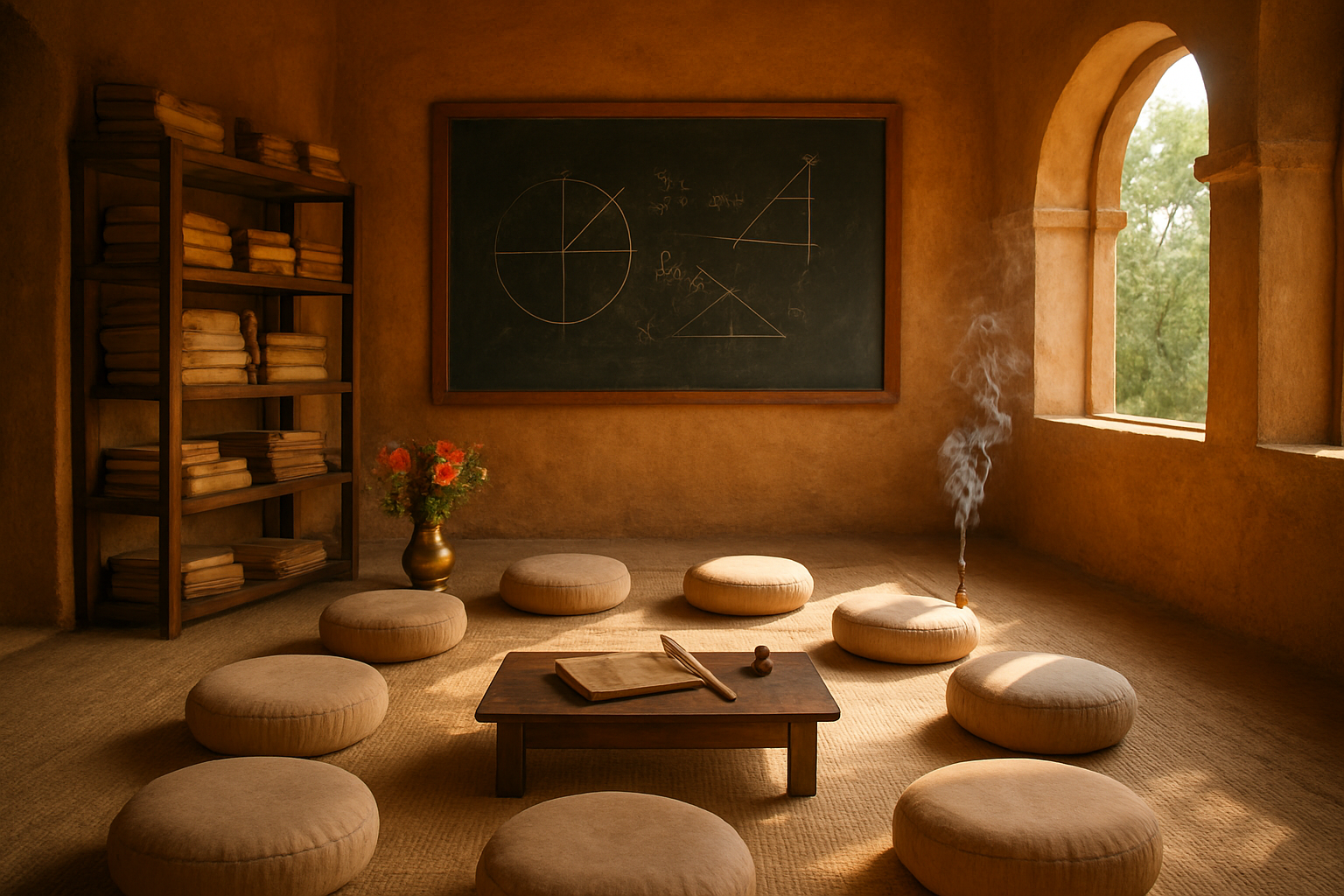
One-on-One Intensive Guidance Systems
The hallmark of the Gurukul learning system lies in its personalized approach through one-on-one intensive guidance. This ancient educational framework recognizes that each student possesses unique learning patterns, intellectual capacities, and spiritual inclinations that require individualized attention from the guru.
In traditional Indian education methods, the guru-disciple relationship in education forms the cornerstone of knowledge transfer. The guru doesn’t just impart information; they observe, understand, and adapt their teaching methodology to match each student’s learning style. This intensive guidance system creates an environment where students receive undivided attention during critical learning moments.
Modern educational institutions often struggle with large class sizes, making personalized attention nearly impossible. The Gurukul approach solves this challenge through carefully maintained teacher-to-student ratios. A typical guru would work with a small group of disciples, allowing for deep understanding of each individual’s progress, challenges, and potential.
The intensive guidance system operates on several levels. During daily interactions, the guru assesses not just academic progress but also character development, emotional stability, and spiritual growth. This comprehensive observation enables the guru to provide targeted interventions when students face difficulties or show signs of stagnation in their learning journey.
Weekly one-on-one sessions form the backbone of this system. During these dedicated periods, students receive focused attention on their specific learning challenges. The guru might identify knowledge gaps that weren’t apparent during group activities and provide customized exercises to address these shortcomings. These sessions also allow for deeper discussions about concepts that might require additional clarification.
The personalized education system in Gurukul methods extends beyond academic subjects. The guru serves as a mentor for life decisions, career choices, and personal development. This holistic guidance helps students develop decision-making skills and builds confidence in their abilities. Students learn to articulate their thoughts, question assumptions, and develop critical thinking skills through these intensive interactions.
Technology now enhances these traditional methods without replacing the human connection. Digital platforms can help track individual progress, identify learning patterns, and suggest personalized learning paths. However, the core principle remains unchanged: each student deserves individual attention and customized guidance based on their unique needs and potential.
The assessment within this intensive guidance system differs significantly from standardized testing. The guru continuously evaluates progress through observation, dialogue, and practical demonstrations. This ongoing assessment allows for immediate course corrections and prevents students from developing misconceptions or bad habits that might be difficult to correct later.
Practical Application of Theoretical Knowledge
The Gurukul system distinguishes itself through its emphasis on experiential learning methods that bridge the gap between theoretical understanding and practical wisdom. This approach recognizes that true learning occurs when students can apply concepts in real-world situations rather than merely memorizing information for examinations.
In ancient learning techniques, students didn’t just study texts about agriculture; they worked in fields, observed seasonal changes, and learned to predict weather patterns through practical experience. This hands-on approach ensured that knowledge became deeply ingrained and immediately useful in daily life.
Modern Gurukul approaches maintain this tradition by incorporating practical workshops, laboratory experiments, and field studies into the curriculum. Students studying mathematics don’t just solve abstract problems; they apply mathematical concepts to design projects, calculate construction requirements, or analyze market trends. This practical application makes abstract concepts tangible and memorable.
The holistic learning approach includes apprenticeship-style learning where students work alongside experts in various fields. Whether studying medicine, engineering, or arts, students gain firsthand experience under the guidance of practitioners. This exposure helps them understand the gap between theoretical knowledge and practical implementation while developing problem-solving skills that textbooks alone cannot provide.
Project-based learning forms a crucial component of practical application. Students undertake long-term projects that require them to research, plan, execute, and evaluate their work. These projects often address real community needs, giving students a sense of purpose and social responsibility. For example, students might design water conservation systems for their locality or develop educational programs for younger children.
Case study analysis represents another powerful tool for practical application. Students examine real-world scenarios, analyze different approaches, and propose solutions based on their theoretical understanding. This method develops critical thinking skills and helps students understand how theoretical frameworks apply to complex, real-world situations.
Laboratory work and experimentation allow students to test theoretical concepts under controlled conditions. Rather than accepting scientific principles as given facts, students design experiments, collect data, and draw conclusions based on their observations. This scientific approach develops analytical skills and fosters a deeper understanding of cause-and-effect relationships.
Field trips and study tours provide opportunities to observe practical applications in professional settings. Students visit industries, research institutions, and cultural centers to see how their subjects of study translate into careers and societal contributions. These experiences help students make informed decisions about their future paths while maintaining motivation for current studies.
The integration of internships and work-study programs allows students to gain professional experience while completing their education. These programs provide insights into workplace dynamics, professional expectations, and industry standards. Students learn to apply their knowledge in competitive environments while developing professional skills and networks.
Community service projects form an essential part of practical application, teaching students how their knowledge can benefit society. Whether organizing health camps, teaching literacy programs, or environmental conservation projects, students learn to use their skills for social good while developing leadership and organizational abilities.
Continuous Assessment and Feedback Loops
The ancient learning techniques employed in Gurukul education emphasized continuous evaluation rather than periodic examinations. This approach recognizes that learning is an ongoing process that requires regular monitoring, adjustment, and reinforcement rather than sporadic testing that often fails to capture true understanding or long-term retention.
Daily observation forms the foundation of continuous assessment in the Gurukul system. The guru watches students during various activities, noting their approach to problem-solving, their interaction with peers, their response to challenges, and their demonstration of learned concepts. This constant monitoring provides a comprehensive picture of student progress that no single examination could capture.
Immediate feedback represents a crucial element of this assessment system. Rather than waiting for formal evaluation periods, the guru provides real-time corrections, encouragement, and guidance. When a student makes an error or demonstrates a misconception, the guru addresses it immediately, preventing the reinforcement of incorrect understanding. This immediate intervention saves time and prevents the development of persistent learning difficulties.
The feedback mechanisms in Gurukul education are multidirectional. Students receive feedback from their guru, but they also learn to evaluate their own progress and provide feedback to their peers. This peer assessment develops critical evaluation skills and helps students understand different perspectives on the same concepts. Students learn to give constructive criticism and accept feedback gracefully, skills that serve them well in professional and personal relationships.
Self-assessment tools play a vital role in developing independent learners. Students learn to monitor their own understanding, identify areas where they need additional practice, and set personal learning goals. This self-awareness develops metacognitive skills that enable students to become lifelong learners who can adapt to new challenges throughout their lives.
Portfolio development serves as a comprehensive assessment tool that captures student growth over time. Rather than relying on single test scores, portfolios include samples of work from different periods, showing progression in understanding, skill development, and creative expression. These portfolios become valuable resources for students to reflect on their learning journey and for gurus to track long-term development patterns.
Practical demonstrations form a significant component of assessment in the Gurukul system. Students must show their ability to apply knowledge in real situations rather than simply recalling information. These demonstrations might include solving practical problems, creating original work, or teaching concepts to younger students. This performance-based assessment ensures that students can transfer their learning to new contexts.
Verbal examinations and discussions replace or supplement written tests in many areas. These conversations allow the guru to probe deeper into student understanding, ask follow-up questions, and explore the reasoning behind student responses. This format helps identify superficial understanding and encourages students to articulate their thoughts clearly and logically.
The assessment cycle includes regular goal-setting sessions where students and gurus collaborate to establish learning objectives, timelines, and success criteria. These goals are revisited and adjusted as needed, ensuring that expectations remain challenging yet achievable. This collaborative approach helps students take ownership of their learning and develops planning and organizational skills.
Remedial interventions are built into the assessment system, ensuring that students who struggle receive additional support before falling too far behind. Rather than labeling students as failures, the system recognizes that different students need different amounts of time and different approaches to master concepts. This inclusive approach maintains student motivation and prevents the development of learned helplessness.
Integration of Life Skills with Academic Learning
The holistic learning approach of the Gurukul system recognizes that education must prepare students for all aspects of life, not just academic or professional success. This integration ensures that students develop practical life skills alongside theoretical knowledge, creating well-rounded individuals capable of navigating complex personal and professional challenges.
Communication skills receive special attention within this integrated approach. Students learn to express themselves clearly in multiple formats: verbal presentations, written reports, artistic expression, and digital media. These communication skills are developed through academic subjects rather than as separate courses. Students might present scientific findings, debate historical events, or create artistic interpretations of literary works, developing communication skills while mastering subject content.
Financial literacy becomes embedded within mathematical studies and social sciences. Students learn budgeting, investment principles, and economic concepts through practical exercises that mirror real-life situations. They might manage mock businesses, analyze family budgets, or study market trends, developing financial acumen while strengthening their analytical and mathematical skills.
Time management and organizational skills are naturally developed through the structured yet flexible nature of Gurukul education. Students learn to balance multiple responsibilities, prioritize tasks, and manage long-term projects. These skills are practiced daily rather than taught as theoretical concepts, ensuring that students internalize effective time management strategies.
Leadership development occurs through group projects, peer tutoring, and community service activities. Students take turns leading initiatives, organizing events, and mentoring younger peers. This hands-on approach to leadership development helps students understand different leadership styles, learn to motivate others, and take responsibility for group outcomes.
Emotional regulation and interpersonal skills are developed through daily interactions within the Gurukul community. Students learn to handle conflicts constructively, work collaboratively with diverse personalities, and maintain emotional balance during challenging situations. The guru models appropriate emotional responses and guides students in developing healthy coping mechanisms.
Critical thinking and decision-making skills are embedded within all academic subjects. Students learn to analyze information, question assumptions, evaluate evidence, and make informed decisions. These skills are practiced through case studies, debates, research projects, and practical problem-solving exercises that mirror real-world decision-making scenarios.
Digital literacy and technological competence are increasingly important life skills that must be integrated with traditional learning. Students learn to use technology as a tool for learning, communication, and creative expression while understanding the ethical implications of digital citizenship. This integration ensures that students can leverage technology effectively while maintaining human connections and values.
Health and wellness education permeates the daily routine rather than being confined to specific health classes. Students learn about nutrition through science and practical cooking experiences, understand exercise physiology through sports and movement, and explore mental health concepts through literature and philosophical discussions.
Environmental awareness and sustainability practices are integrated across multiple subjects. Students study ecological systems in science, explore environmental themes in literature, analyze environmental policies in social studies, and participate in conservation projects. This comprehensive approach develops environmentally conscious citizens who understand their role in protecting natural resources.
Creative problem-solving abilities are fostered through interdisciplinary projects that require students to draw from multiple knowledge areas. Students might design solutions for community problems, create artistic interpretations of scientific concepts, or develop innovative approaches to traditional challenges. This creative integration helps students understand the connections between different fields of knowledge.
Cultural competence and global awareness are developed through exposure to diverse perspectives within academic content. Students study different cultural approaches to similar problems, explore global issues through multiple lenses, and participate in cultural exchange programs or virtual connections with students from other regions.
Spiritual and Emotional Intelligence Development
The character building through education aspect of the Gurukul system addresses the spiritual and emotional dimensions of human development that are often neglected in conventional educational approaches. This comprehensive development ensures that students grow as complete human beings with strong moral foundations, emotional maturity, and spiritual awareness.
Mindfulness and meditation practices form the daily foundation for spiritual development. Students begin each day with periods of quiet reflection, breathing exercises, or meditation practices that help them develop inner awareness and emotional regulation. These practices are not imposed as religious requirements but offered as tools for personal development and stress management.
Ethical reasoning and moral development are woven throughout the curriculum rather than confined to specific ethics courses. Students encounter moral dilemmas through literature, historical events, scientific applications, and contemporary issues. They learn to analyze ethical implications, consider multiple perspectives, and develop personal value systems based on reasoned consideration rather than blind acceptance of rules.
Service learning and compassionate action provide practical outlets for spiritual development. Students participate in community service projects, care for those in need, and work to address social problems. These experiences develop empathy, social responsibility, and understanding of interconnectedness while providing meaningful contexts for applying academic knowledge.
Self-reflection and introspection are encouraged through journaling, discussion groups, and individual counseling sessions. Students learn to examine their thoughts, motivations, and actions honestly, developing self-awareness that supports personal growth and emotional maturity. This reflective practice helps students understand their own learning processes and emotional patterns.
Emotional intelligence development occurs through structured activities and natural daily interactions. Students learn to recognize and name emotions, understand emotional triggers, and develop healthy expression strategies. They practice empathy through role-playing exercises, peer counseling, and collaborative problem-solving activities that require emotional sensitivity and understanding.
Stress management and resilience building prepare students for life’s inevitable challenges. Rather than shielding students from difficulties, the Gurukul approach teaches them to face challenges with courage, persistence, and wisdom. Students learn coping strategies, develop support systems, and build confidence in their ability to overcome obstacles.
Gratitude practices and appreciation exercises help students develop positive mindsets and recognition of life’s blessings. Students might keep gratitude journals, participate in appreciation circles, or engage in practices that help them notice and acknowledge positive aspects of their experiences, relationships, and opportunities.
Conflict resolution and peace-making skills are developed through guided practice in addressing disagreements and tensions. Students learn to communicate assertively rather than aggressively, listen actively to opposing viewpoints, and seek win-win solutions to conflicts. These skills serve them well in personal relationships and professional environments.
Purpose exploration and meaning-making activities help students understand their unique gifts, interests, and potential contributions to society. Through career exploration, volunteer experiences, and guided reflection, students develop clarity about their life direction and understand how their individual talents can serve broader purposes.
Wisdom traditions and philosophical inquiry expose students to diverse approaches to life’s fundamental questions. Students study various philosophical and spiritual traditions, not to indoctrinate but to provide them with tools for examining life’s deeper meanings and developing their own philosophical frameworks.
Connection with nature and environmental spirituality helps students understand their place within larger ecological systems. Through outdoor education, environmental stewardship projects, and nature-based learning experiences, students develop reverence for the natural world and understanding of their responsibility as environmental caretakers.
Community building and collaborative spirit are fostered through shared meals, group celebrations, and collective decision-making processes. Students learn to balance individual needs with community welfare, contribute to group harmony, and celebrate diverse contributions within unified purposes.
The integration of these spiritual and emotional development components with academic learning creates graduates who possess not only intellectual knowledge but also wisdom, compassion, and inner strength. These individuals are prepared to lead meaningful lives, contribute positively to society, and continue growing throughout their lifetimes while maintaining strong ethical foundations and emotional well-being.
Energizing Techniques for Enhanced Learning
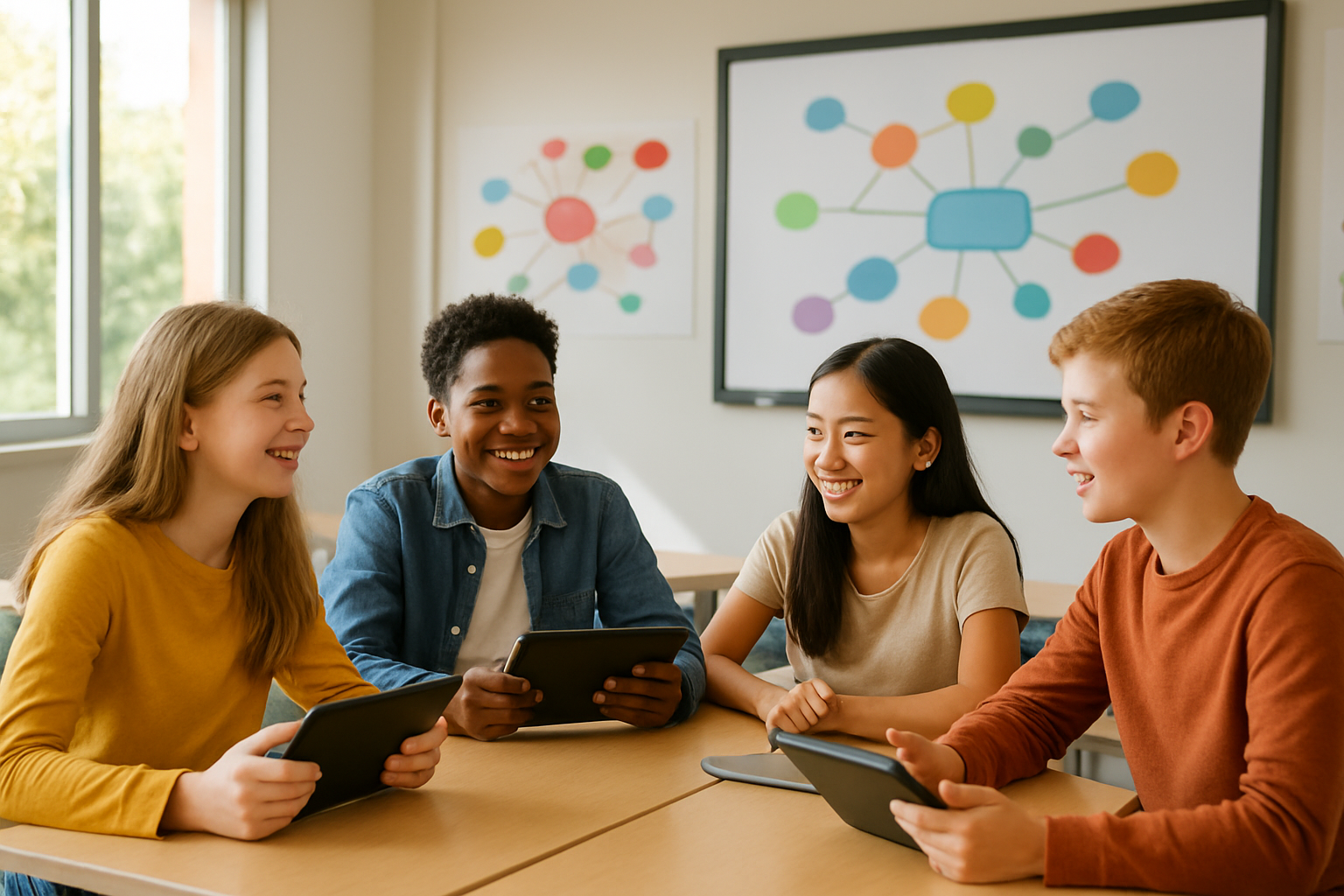
Interactive Storytelling and Case Studies
The Gurukul learning system has always recognized the magnetic pull of well-crafted stories. Ancient Indian sages knew something that modern neuroscience confirms: stories create neural pathways that facts alone cannot forge. When we wrap complex concepts in narrative, the brain doesn’t just process information—it experiences it.
Take the story of young Arjuna learning archery from Dronacharya. The guru didn’t simply explain the physics of trajectory or the mechanics of drawing a bow. He created scenarios where Arjuna had to shoot in complete darkness, hit targets while blindfolded, and demonstrate precision under extreme pressure. Each challenge came wrapped in a story that made the lesson unforgettable.
Modern Gurukul approaches harness this ancient wisdom through structured storytelling frameworks. A mathematics teacher might introduce calculus through the story of an ancient architect trying to build the perfect dome. Students follow the architect’s journey, encountering each mathematical principle as a problem the character must solve to achieve his goal. The derivative becomes the tool for finding the optimal curve. Integration helps calculate the materials needed. Complex mathematical concepts transform from abstract formulas into essential tools for a compelling narrative.
Case studies work similarly but anchor learning in real-world scenarios. When studying business principles, students don’t memorize theories about market dynamics. They dive into the story of how a small village potter in Rajasthan built a global ceramics empire. They analyze each decision point, debate alternatives, and predict outcomes. The case study becomes a living laboratory where theoretical knowledge meets practical application.
The power of interactive storytelling lies in its ability to create emotional investment. When students care about the character’s outcome, they naturally invest more mental energy in understanding the principles that will help solve the story’s challenges. A physics lesson about electromagnetic induction becomes the tale of a young inventor trying to bring electricity to her remote village. Students don’t just learn Faraday’s law; they feel the urgency of the character’s mission and understand why these scientific principles matter.
Building effective case studies requires careful selection of scenarios that mirror real challenges students might face. A chemistry lesson might explore the case of a pharmaceutical company racing to develop a new drug. Students work through molecular structures, reaction mechanisms, and optimization challenges alongside the research team. They experience the excitement of breakthrough moments and the frustration of failed experiments. The chemistry becomes inseparable from the human drama of scientific discovery.
Interactive storytelling also accommodates different learning styles within the traditional Indian education methods. Visual learners connect with rich descriptive passages and mental imagery. Auditory learners engage with dialogue and character voices. Kinesthetic learners participate through role-playing and hands-on demonstrations woven into the narrative.
The guru’s role shifts from information deliverer to master storyteller and case study facilitator. They guide students through narrative arcs, pause at critical moments for deeper exploration, and help learners make connections between story elements and core principles. This approach mirrors the ancient tradition where gurus used parables and allegories to convey profound truths.
Digital tools amplify storytelling possibilities without losing the personal touch central to the guru-disciple relationship in education. Interactive presentations allow students to choose story paths, exploring different scenarios and their consequences. Virtual reality experiences can transport learners directly into historical events or scientific phenomena. A student studying the water cycle might experience the journey of a water molecule through evaporation, condensation, and precipitation firsthand.
Case study discussions become dynamic forums where students debate character motivations, challenge assumptions, and propose alternative solutions. These conversations mirror the traditional Indian practice of scholarly debate, where knowledge deepens through respectful disagreement and collaborative exploration. Students learn to articulate their thinking clearly, listen to different perspectives, and refine their understanding through dialogue.
The most effective storytelling in modern Gurukul teaching creates what educators call “productive struggle.” Stories present challenges that stretch students’ current understanding without overwhelming them. Characters face obstacles that require students to apply recently learned concepts in novel ways. This approach builds confidence and resilience while deepening comprehension.
Assessment becomes seamlessly integrated into storytelling. Instead of separate tests, students demonstrate understanding by predicting story outcomes, explaining character decisions, or proposing solutions to narrative challenges. Their grasp of underlying principles reveals itself through their engagement with story elements rather than through artificial testing scenarios.
Teachers developing storytelling skills benefit from studying classic Indian literature and mythology. The Panchatantra offers masterful examples of how complex moral and practical lessons embed within engaging narratives. The Mahabharata demonstrates how multiple storylines can illuminate different aspects of the same fundamental principles. These ancient texts provide templates for modern educational storytelling.
Creating compelling case studies requires research into real-world applications of academic concepts. Teachers become investigative journalists, seeking out fascinating examples of how their subject matter plays out in actual human experiences. A history teacher might develop cases around lesser-known figures whose lives illuminate broader historical patterns. A literature teacher could craft scenarios exploring how writers’ personal experiences shaped their artistic choices.
The collaborative aspect of case study analysis reflects the Gurukul tradition of learning communities. Students form research teams, with each member bringing different strengths to the investigation. One student might excel at data analysis, another at creative problem-solving, and another at synthesizing diverse information sources. This mirrors how ancient learning ashrams functioned as collaborative spaces where students with different aptitudes supported each other’s growth.
Technology enhances but never replaces the human connection central to effective storytelling. Virtual collaboration tools allow students in different locations to work together on case studies, but the guru’s guidance remains essential for facilitating meaningful dialogue and ensuring learning objectives are met. The ancient wisdom of personalized guidance adapts to modern tools while maintaining its core purpose.
Successful implementation requires teacher training that goes beyond technical skills. Educators need to develop storytelling instincts, learning how to pace narratives for maximum engagement, create compelling characters that students care about, and weave educational content seamlessly into dramatic arcs. This training often draws from theater, creative writing, and improvisational arts in addition to pedagogical theory.
Experiential Learning Through Real-World Projects
The ancient Gurukul system never separated learning from doing. Students didn’t study agriculture in isolation—they worked the fields. They didn’t memorize medical texts—they prepared medicines and treated patients under careful supervision. This holistic learning approach understood that true mastery emerges only when knowledge meets practice in authentic contexts.
Modern interpretations of this experiential learning methods maintain this integration while expanding possibilities through contemporary tools and partnerships. Students tackle real challenges facing their communities, businesses, and society. A group studying environmental science doesn’t just read about pollution—they conduct water quality tests in local rivers, analyze the data, and present findings to municipal authorities. Their learning serves a genuine purpose beyond academic achievement.
Project-based learning transforms classrooms into innovation laboratories. Instead of artificial assignments designed solely for assessment, students engage with projects that matter to real stakeholders. A team studying urban planning might partner with city officials to redesign a problematic intersection. They survey traffic patterns, interview affected residents, research best practices from other cities, and develop comprehensive proposals. The city considers their recommendations seriously, giving students authentic feedback from professional practitioners.
The selection of appropriate projects requires careful consideration of student readiness, available resources, and potential community impact. Projects should challenge students to apply recently acquired knowledge while building new skills through guided discovery. A project too simple fails to promote growth; one too complex overwhelms and discourages. The guru’s wisdom lies in calibrating challenges to individual student capabilities while maintaining high expectations for all participants.
Engineering students might design and build assistive devices for local disability organizations. They interview users to understand needs, research existing solutions, brainstorm improvements, create prototypes, test functionality, and refine designs based on user feedback. The process mirrors professional product development while serving a meaningful social purpose. Students experience the full cycle from problem identification through solution implementation.
Business students could launch actual social enterprises addressing community needs. They develop business plans, secure funding, manage operations, and measure impact. A team might start a tutoring service for underserved students, a sustainable packaging company, or a platform connecting local farmers with urban consumers. These ventures provide authentic entrepreneurial experience while contributing positively to society.
Liberal arts students engage through cultural documentation projects, oral history initiatives, or community arts programs. A literature class might collect and publish stories from elderly community members, preserving local heritage while practicing research, interviewing, and writing skills. Students learn to see their academic disciplines as tools for understanding and enriching the world around them.
Science projects might involve environmental monitoring, public health research, or technology development addressing local challenges. Students studying chemistry could analyze soil contamination from industrial sites, working with environmental agencies to understand pollution patterns and remediation strategies. Biology students might conduct biodiversity surveys in threatened ecosystems, contributing data to conservation efforts.
The assessment of experiential projects requires multiple evaluation criteria reflecting both academic learning and real-world impact. Traditional metrics like content mastery and analytical thinking remain important, but students also demonstrate project management skills, collaboration abilities, communication effectiveness, and creative problem-solving. Stakeholders from partner organizations provide feedback on project quality and professional readiness.
Digital documentation tools allow students to create comprehensive portfolios showcasing their project journey. Time-lapse videos capture construction processes. Data visualization software helps present research findings. Social media campaigns raise awareness about project outcomes. These digital artifacts serve both as learning tools and professional portfolio pieces for future opportunities.
The guru’s role expands to include project mentor, community liaison, and professional coach. They help students navigate real-world complexities that textbooks cannot anticipate. When projects face unexpected obstacles—funding shortfalls, technical failures, stakeholder conflicts—gurus guide students through problem-solving processes that build resilience and adaptability. These challenges often provide the most valuable learning experiences.
Partnership development becomes a crucial skill for educators implementing experiential learning. Schools must cultivate relationships with businesses, nonprofits, government agencies, and community organizations willing to engage with student projects. These partnerships require ongoing communication, clear expectations, and mutual benefit. Organizations gain fresh perspectives and enthusiastic support; students receive authentic learning experiences and professional mentoring.
Quality control systems ensure projects maintain educational value while meeting partner expectations. Regular check-ins allow course corrections when projects drift off track. Peer review processes help students learn from each other’s approaches and challenges. Faculty oversight ensures safety protocols are followed and learning objectives are met throughout the project lifecycle.
The integration of traditional Indian education methods with contemporary project management approaches creates powerful learning experiences. Students might study ancient architectural principles while designing modern sustainable buildings. They explore traditional medicine while researching contemporary pharmaceutical applications. This integration honors cultural wisdom while preparing students for future careers.
Long-term project tracking reveals how experiential learning impacts student development beyond immediate academic outcomes. Alumni surveys show increased confidence in professional settings, stronger problem-solving skills, and greater sense of social responsibility. Employers report that students with extensive project experience demonstrate better teamwork, communication, and leadership capabilities compared to peers with purely theoretical backgrounds.
International collaboration expands project possibilities beyond local communities. Students might partner with peers in other countries to address global challenges like climate change, poverty, or disease prevention. Technology enables real-time collaboration across time zones and cultures, creating rich learning experiences that build global awareness and cross-cultural competency.
The scalability of experiential learning requires systematic approaches to project development and management. Schools create databases of potential projects, partnership agreements, and assessment rubrics. They train faculty in project facilitation skills and develop support systems for managing complex, multi-partner initiatives. Technology platforms help coordinate logistics, track progress, and facilitate communication among all participants.
Collaborative Group Discussions and Debates
Ancient Indian ashrams buzzed with intellectual discourse. Students gathered in circles under sprawling banyan trees, engaging in spirited debates about philosophical questions, scientific theories, and practical problems. The guru facilitated these discussions, asking probing questions and guiding exploration without dictating answers. This tradition of collaborative inquiry remains central to effective Gurukul education.
Modern collaborative discussions harness this ancient wisdom while addressing contemporary educational challenges. Students don’t simply listen to lectures or read texts passively. They engage actively with ideas, challenge assumptions, defend positions, and build understanding through dialogue with peers. This approach recognizes that learning happens not just through individual study but through social interaction and intellectual exchange.
The structure of effective group discussions requires careful planning while maintaining flexibility for organic development. Discussion topics connect directly to curriculum objectives but frame questions in ways that invite multiple perspectives and approaches. Instead of asking “What caused World War I?” a teacher might pose “If you were advising European leaders in 1914, what strategies would you have recommended to prevent continental war?” This reframing encourages students to engage actively with historical analysis rather than simply recalling facts.
Creating psychological safety becomes essential for meaningful participation. Students must feel comfortable expressing ideas, asking questions, and admitting confusion without fear of ridicule or judgment. The guru establishes ground rules emphasizing respectful listening, constructive disagreement, and intellectual humility. These norms create environments where students can take intellectual risks and learn from mistakes.
Diverse group composition enhances discussion quality by bringing together students with different backgrounds, perspectives, and strengths. A team exploring environmental policy might include students interested in science, economics, politics, and social justice. Each participant contributes unique insights while learning from others’ expertise. This diversity mirrors real-world collaborative environments students will encounter in professional settings.
The art of facilitation distinguishes masterful gurus from average teachers. Skilled facilitators know when to remain silent, allowing students to wrestle with challenging concepts independently. They ask follow-up questions that deepen thinking without leading students toward predetermined conclusions. They redirect discussions that become unfocused while preserving student ownership of the learning process.
Socratic questioning techniques guide students toward deeper understanding through carefully sequenced inquiries. A teacher exploring mathematical proofs might begin by asking students to explain their reasoning for a particular step. Follow-up questions probe the logical foundations of that reasoning. Subsequent questions invite students to consider alternative approaches or potential counter-examples. Through this process, students develop stronger analytical skills while taking responsibility for their own learning.
Technology-enhanced traditional learning expands discussion possibilities without sacrificing the personal connections central to Gurukul education. Online forums allow asynchronous discussions where students can craft thoughtful responses and refer to resources while engaging with classmates. Video conferencing enables real-time dialogue among geographically distributed participants. Digital collaboration tools support group projects requiring shared document creation and editing.
The integration of formal debates into regular coursework develops critical thinking and communication skills essential for academic and professional success. Students research assigned positions thoroughly, anticipate opposing arguments, and present evidence persuasively. The debate format requires them to engage seriously with perspectives they might not naturally support, building empathy and intellectual flexibility.
Debate topics span all academic disciplines while maintaining relevance to student interests and contemporary issues. Science classes might debate the ethical implications of genetic engineering or the most effective strategies for addressing climate change. Literature classes could examine competing interpretations of literary works or the cultural impact of particular authors. Mathematics classes might explore different approaches to solving complex problems or the real-world applications of abstract concepts.
Preparation for debates mirrors professional research and analysis processes. Students identify credible sources, evaluate evidence quality, and synthesize information from multiple perspectives. They learn to distinguish between facts and opinions, recognize logical fallacies, and construct compelling arguments based on solid evidence. These skills transfer directly to academic writing, professional presentations, and civic participation.
The assessment of discussion participation requires rubrics that capture both content understanding and collaborative skills. Students demonstrate subject matter mastery through their contributions to dialogue while also showing growth in listening, questioning, and building on others’ ideas. Peer evaluation components help students develop skills in giving and receiving constructive feedback.
Training students in effective discussion and debate skills pays dividends across all areas of learning. Mini-workshops on active listening teach students to summarize others’ positions accurately before presenting counter-arguments. Sessions on constructive disagreement help students challenge ideas without attacking individuals. Practice in asking clarifying questions improves students’ ability to understand complex concepts and help classmates work through confusion.
The ancient Indian tradition of scholarly debate provides rich models for contemporary practice. The format of formal disputations, with their emphasis on logical reasoning and textual evidence, offers structured approaches to academic argumentation. Students studying these classical models develop appreciation for intellectual rigor while building skills applicable to modern contexts.
Group formation strategies balance multiple factors including academic preparation, personality types, and learning preferences. Random grouping ensures students work with diverse partners throughout the course. Strategic grouping might pair students with complementary strengths or similar interests depending on project requirements. Self-selected groups allow students to work with compatible partners but may limit exposure to different perspectives.
The physical environment significantly impacts discussion quality. Flexible seating arrangements allow quick transitions between large group discussions, small team conversations, and individual reflection time. Circular or U-shaped configurations promote eye contact and equal participation. Breakout spaces enable simultaneous small group discussions without interference.
Documentation of discussions preserves insights and tracks learning progress over time. Student note-takers rotate responsibility for capturing key points and questions raised during discussions. Video recordings allow review of particularly rich conversations. Digital platforms enable students to continue discussions beyond class time and refer back to earlier conversations when building on previous learning.
The development of discussion leadership skills among students distributes facilitation responsibilities and builds confidence. Student moderators learn to ask probing questions, manage time effectively, and ensure balanced participation. They practice synthesizing multiple viewpoints and identifying areas of consensus or continued disagreement. These leadership opportunities prepare students for professional and civic roles requiring group facilitation skills.
Cross-cultural discussions expose students to global perspectives on issues they might otherwise consider only from local viewpoints. Video connections with classrooms in other countries create opportunities for students to share cultural perspectives on universal themes. These exchanges build global awareness while developing communication skills across cultural and linguistic differences.
The connection between collaborative discussion and character building reflects core Gurukul values. Students learn patience through listening to others’ perspectives. They develop intellectual humility by acknowledging the limitations of their own understanding. They build courage by expressing unpopular opinions respectfully. They strengthen integrity by defending positions based on evidence rather than personal preference.
Long-term tracking reveals how collaborative discussion skills impact student development beyond immediate academic performance. Students who engage regularly in substantive discussions show improved performance on standardized tests requiring analytical thinking. They demonstrate stronger leadership capabilities in extracurricular activities. They report greater confidence in professional interview situations and workplace team environments.
The synthesis of ancient wisdom and modern techniques creates powerful learning experiences that honor traditional Indian approaches while preparing students for contemporary challenges. Collaborative discussions become laboratories for intellectual development, social skill building, and character formation. Students leave these experiences not just with greater subject matter knowledge but with enhanced capabilities for lifelong learning and meaningful contribution to their communities.
Building Strong Foundation Skills
Critical Thinking Development Strategies
The Gurukul learning system places tremendous emphasis on developing critical thinking abilities that go far beyond memorizing facts or following prescribed formulas. This ancient educational approach recognizes that true wisdom emerges when students learn to question, analyze, and synthesize information independently. The guru-disciple relationship serves as the perfect catalyst for this intellectual development, creating an environment where curiosity flourishes and deep thinking becomes second nature.
Critical thinking in the traditional Indian education methods begins with the practice of Vichara – contemplative inquiry. Students are encouraged to examine every concept from multiple angles, asking not just “what” but “why” and “how.” This process starts with simple observations and gradually builds into complex philosophical discussions. The guru doesn’t simply provide answers; instead, they guide students through a journey of discovery where each revelation leads to deeper questions.
The Socratic method finds its parallel in ancient Indian teaching techniques where gurus would pose challenging questions that forced students to confront their assumptions. This questioning process, known as Prashnottara, involves a systematic exploration of ideas through dialogue. Students learn that every statement can be examined, every belief can be tested, and every conclusion can be refined. This creates minds that are naturally inquisitive and resistant to blind acceptance of information.
Pattern recognition forms another crucial element of critical thinking development. In the holistic learning approach of Gurukuls, students are taught to identify connections between seemingly unrelated concepts. Whether studying mathematics, philosophy, or natural sciences, learners develop the ability to see underlying structures and relationships. This skill proves invaluable when tackling complex problems that require synthesizing information from multiple domains.
The practice of Tarka – logical reasoning – trains students to construct and deconstruct arguments systematically. They learn to identify fallacies, recognize valid logical structures, and build compelling cases for their positions. This isn’t merely an academic exercise; it becomes a life skill that influences how they approach every decision and challenge they encounter.
Storytelling and case study analysis play vital roles in developing analytical skills. Ancient texts like the Panchatantra and Hitopadesha aren’t just entertainment; they’re sophisticated training tools for critical thinking. Students learn to extract principles from narratives, apply lessons to new situations, and understand the nuanced ways that context affects outcomes. This narrative-based learning helps develop emotional intelligence alongside intellectual rigor.
The experiential learning methods employed in Gurukuls ensure that critical thinking isn’t purely theoretical. Students engage in practical projects where they must apply their analytical skills to real-world challenges. Whether designing irrigation systems, solving community disputes, or creating artistic works, they learn that critical thinking must be grounded in practical understanding and real-world application.
Meditation and contemplative practices enhance critical thinking by developing mental clarity and focus. The practice of Dhyana teaches students to observe their own thought processes objectively. They learn to distinguish between emotional reactions and rational analysis, developing the mental discipline necessary for clear thinking. This self-awareness becomes crucial when evaluating complex information or making difficult decisions.
The concept of Svaadhyaya – self-study and reflection – encourages independent thinking. Students are given time and space to explore topics that interest them, developing personal research skills and the ability to learn autonomously. This independent exploration builds confidence in their analytical abilities and teaches them to trust their own intellectual processes while remaining open to new information and perspectives.
Debate and discussion form regular components of the learning process. Students engage in structured arguments where they must defend positions, respond to challenges, and modify their thinking based on new evidence. These intellectual contests aren’t about winning or losing; they’re about refining understanding and developing the ability to think on one’s feet while maintaining intellectual honesty.
Communication Excellence Through Practice
The guru-disciple relationship in education creates an ideal environment for developing sophisticated communication skills that extend far beyond basic language proficiency. Communication excellence in the Gurukul tradition encompasses verbal, non-verbal, written, and even subtle energetic forms of expression. Students learn that true communication involves not just conveying information but creating understanding, building relationships, and inspiring action.
Oral tradition forms the backbone of communication training in ancient learning techniques. Students begin by listening carefully to their gurus, learning to distinguish subtle variations in tone, emphasis, and rhythm that convey deeper meanings. This active listening skill becomes the foundation for all other communication abilities. They discover that hearing words is only the beginning; true listening involves understanding context, reading emotional undertones, and grasping unstated implications.
Recitation practices, known as Svadhyaya, develop vocal control, breath management, and rhythmic speech patterns. Students learn to modulate their voices for different purposes – whether chanting sacred texts, delivering formal presentations, or engaging in intimate conversations. This vocal training builds confidence and presence, helping them command attention and convey authority when necessary while maintaining sensitivity in personal interactions.
Storytelling emerges as a sophisticated communication art form. Students learn to craft narratives that engage listeners emotionally while conveying important lessons or information. This skill involves understanding audience psychology, pacing, dramatic structure, and the power of metaphor. Through regular practice, they develop the ability to make complex concepts accessible through compelling stories that resonate with diverse audiences.
The practice of Vaada – structured debate and discussion – teaches students to articulate complex ideas clearly and persuasively. They learn to organize their thoughts logically, present evidence effectively, and respond to challenges with grace and intelligence. This formal argumentation training develops the ability to think quickly while speaking, a skill that proves invaluable in professional and personal contexts throughout life.
Written communication receives equal attention through the study of classical texts and the creation of original compositions. Students learn to analyze the writing styles of great authors, understanding how different approaches achieve different effects. They practice various forms of writing – from technical treatises to poetic expressions – developing versatility and sophistication in their written communication abilities.
Non-verbal communication awareness develops through close observation of guru-student interactions and peer relationships. Students learn to read body language, facial expressions, and energy patterns that reveal underlying emotions and intentions. They discover how their own posture, gestures, and presence affect others, developing the ability to communicate confidence, respect, and trustworthiness through their physical bearing.
The concept of Satya – truthfulness – governs all communication practices. Students learn that effective communication must be grounded in honesty and integrity. They explore the delicate balance between being truthful and being tactful, understanding how to deliver difficult messages with compassion while maintaining their commitment to honesty. This ethical foundation ensures that their communication skills serve positive purposes throughout their lives.
Cultural sensitivity and adaptability become natural outcomes of diverse interaction within the Gurukul community. Students from different backgrounds, regions, and social groups learn together, developing the ability to adjust their communication styles to connect effectively with various audiences. This cultural intelligence becomes increasingly valuable in our interconnected world.
Silence and timing receive special attention as crucial elements of effective communication. Students learn that knowing when not to speak can be as important as knowing what to say. They develop sensitivity to conversational rhythms, understanding how to create space for others to express themselves while choosing optimal moments for their own contributions. This wisdom about timing and silence often distinguishes truly skilled communicators from merely eloquent speakers.
The practice of Seva – selfless service – provides numerous opportunities to apply communication skills in real-world contexts. Whether teaching younger students, serving community needs, or assisting with Gurukul operations, learners constantly practice adapting their communication style to different situations and audiences. This practical application ensures that their skills remain grounded and relevant rather than becoming merely academic exercises.
Technology integration in modern Gurukul teaching has expanded communication training to include digital literacy and virtual interaction skills. Students learn to maintain the same standards of clarity, respect, and effectiveness whether communicating face-to-face, through written correspondence, or via digital platforms. This comprehensive approach prepares them for the diverse communication challenges they’ll face in contemporary professional and personal environments.
Problem-Solving Methodologies
The personalized education system of Gurukuls recognizes that effective problem-solving requires both systematic methodologies and creative flexibility. Students develop a comprehensive toolkit of approaches that can be adapted to various types of challenges, from practical daily issues to complex philosophical questions. This multifaceted training ensures that learners become versatile problem-solvers capable of tackling unfamiliar situations with confidence and creativity.
The foundation of problem-solving begins with careful observation and accurate problem definition. Students learn through the practice of Pratyaksha – direct perception – to gather complete and accurate information before attempting solutions. This involves suspending judgment while collecting data, identifying all relevant factors, and distinguishing between symptoms and root causes. The guru guides students through exercises that develop these observational skills, teaching them to see situations clearly rather than jumping to premature conclusions.
Systematic analysis forms the next crucial step in the problem-solving process. Students learn various analytical frameworks drawn from traditional Indian philosophical systems. The Pramana system teaches them to evaluate evidence using multiple sources of knowledge – perception, inference, testimony, and comparison. This comprehensive analytical approach ensures that solutions are based on solid foundations rather than incomplete understanding or wishful thinking.
Creative thinking and innovation receive equal emphasis alongside logical analysis. The ancient learning techniques include practices like Kalpana – imagination and creative visualization – that help students envision novel solutions. They learn to break free from conventional thinking patterns, exploring unusual connections and possibilities. This creative training involves artistic expression, metaphorical thinking, and the ability to approach problems from completely different perspectives.
Collaborative problem-solving emerges naturally from the community-oriented structure of Gurukuls. Students regularly work together on challenges, learning to leverage diverse perspectives and skills. They discover how different viewpoints can illuminate aspects of problems that might remain hidden to individual thinkers. This collaborative approach teaches them to build on others’ ideas, share credit generously, and create solutions that are more robust than any individual could develop alone.
The iterative nature of problem-solving receives special attention through the concept of Abhyasa – repeated practice and refinement. Students learn that initial solutions are rarely perfect and that improvement comes through testing, evaluation, and modification. They develop comfort with uncertainty and the patience to work through multiple iterations until they achieve satisfactory results. This persistence and adaptability prove crucial when facing complex, multi-layered challenges.
Resource management and constraint navigation become important skills as students work within the limited resources typically available in traditional learning environments. They learn to identify available tools, materials, and human resources while working creatively within constraints. This training develops resourcefulness and the ability to find elegant solutions that work within real-world limitations rather than requiring ideal conditions.
Risk assessment and decision-making under uncertainty form crucial components of problem-solving training. Students learn to evaluate potential outcomes, consider unintended consequences, and make decisions with incomplete information. The concept of Yukti – strategic thinking – teaches them to balance boldness with prudence, taking calculated risks while maintaining awareness of potential pitfalls.
Systems thinking develops through exposure to the interconnected nature of Gurukul life. Students learn to see problems within larger contexts, understanding how solutions in one area might affect other aspects of the system. This holistic perspective helps them develop solutions that are sustainable and beneficial across multiple dimensions rather than creating new problems while solving immediate ones.
Ethical considerations remain central to all problem-solving activities. The principle of Dharma ensures that solutions align with moral principles and serve the greater good. Students learn to evaluate the ethical implications of their proposed solutions, considering how their actions might affect others and contribute to or detract from overall wellbeing. This ethical foundation prevents them from pursuing solutions that might be technically effective but morally problematic.
Pattern recognition and analogical thinking develop through extensive study of classical texts and historical examples. Students learn to identify similar situations from the past and apply lessons learned from previous challenges to current problems. This historical perspective provides wisdom and prevents them from repeating mistakes while inspiring them with examples of successful solutions to similar challenges.
Stress management and clear thinking under pressure receive attention through practices like meditation and breathing techniques. Students learn to maintain mental clarity and emotional balance when facing difficult challenges. This inner stability proves crucial when solving problems under time constraints or in high-stakes situations where emotional reactions might cloud judgment.
Leadership Qualities Cultivation
The character building through education approach of Gurukuls recognizes that true leadership emerges from inner development rather than external position or authority. Students develop leadership qualities naturally through the integrated experiences of community life, personal growth, and service to others. This organic development creates leaders who are authentic, ethical, and effective in inspiring and guiding others toward positive goals.
Self-leadership forms the foundation of all other leadership development. Students begin by learning to manage their own thoughts, emotions, and behaviors effectively. Through practices like Svadhyaya – self-study and introspection – they develop deep self-awareness and the ability to regulate their responses to challenging situations. This inner mastery becomes the bedrock upon which external leadership capabilities are built.
The concept of Seva – selfless service – teaches students that leadership is fundamentally about serving others rather than seeking personal gain or recognition. They engage in various service activities within the Gurukul community and beyond, learning to identify and respond to others’ needs. This service orientation develops empathy, humility, and the understanding that true leadership involves empowering others to achieve their potential.
Responsibility and accountability develop gradually as students take on increasing levels of responsibility for their own learning and community welfare. They learn to follow through on commitments, accept responsibility for their mistakes, and continuously improve their performance. This accountability training creates leaders who can be trusted with important responsibilities and who inspire confidence in their followers.
Moral courage and ethical decision-making receive special emphasis through the study of classical texts and real-life ethical dilemmas. Students learn to stand up for their principles even when facing opposition or personal cost. They develop the ability to distinguish right from wrong in complex situations and the strength to act according to their convictions. This moral foundation ensures that their leadership serves positive purposes and contributes to the greater good.
Communication and interpersonal skills develop through constant interaction with diverse community members. Students learn to listen actively, speak persuasively, and adapt their communication style to different audiences and situations. They develop emotional intelligence and the ability to build rapport with people from various backgrounds. These interpersonal skills prove essential for inspiring and motivating others toward common goals.
Vision and strategic thinking emerge through exposure to the long-term planning and philosophical discussions that characterize Gurukul life. Students learn to think beyond immediate concerns, considering the broader implications and long-term consequences of actions and decisions. They develop the ability to articulate compelling visions of the future and create practical plans for achieving ambitious goals.
Conflict resolution and mediation skills develop through participation in community governance and peer interactions. Students learn to identify the root causes of conflicts, facilitate productive discussions between disagreeing parties, and find solutions that address everyone’s legitimate concerns. These skills prove invaluable for leaders who must navigate complex interpersonal dynamics and build consensus among diverse stakeholders.
Adaptability and resilience develop through exposure to changing circumstances and challenging situations. Students learn to remain flexible in their approaches while staying committed to their core principles. They develop the ability to bounce back from setbacks, learn from failures, and maintain optimism in the face of difficulties. This resilience enables them to provide stable leadership during turbulent times.
Delegation and empowerment skills emerge as more advanced students take responsibility for mentoring newcomers and managing various community projects. They learn to assess others’ capabilities accurately, provide appropriate guidance and support, and create opportunities for others to grow and contribute. This empowerment approach creates leaders who multiply their effectiveness by developing the potential of those around them.
Cultural intelligence and global perspective develop through interaction with students and teachers from diverse backgrounds. Students learn to appreciate different viewpoints, understand various cultural contexts, and find common ground across differences. This cultural competence becomes increasingly important for leaders operating in our interconnected world where effective leadership often requires bridging cultural divides.
Innovation and change management receive attention through the constantly evolving nature of community life and learning challenges. Students learn to identify opportunities for improvement, propose creative solutions, and guide others through change processes. They develop comfort with uncertainty and the ability to lead others through transitions while maintaining morale and momentum toward positive goals.
The integration of technology-enhanced traditional learning in modern Gurukul environments provides students with additional leadership development opportunities. They learn to leverage technology for communication, organization, and problem-solving while maintaining the human-centered values that characterize traditional Gurukul education. This balanced approach prepares them for leadership roles in contemporary contexts while preserving timeless wisdom about effective leadership.
Team building and collaborative leadership skills develop through group projects and community initiatives. Students learn to bring out the best in others, create synergy among team members, and achieve results that exceed what individuals could accomplish alone. They understand that modern leadership often involves facilitating collaboration rather than directing through authority, and they develop the skills necessary for this more sophisticated approach to leadership.
Mentorship and teaching abilities emerge naturally as students progress in their own learning and begin guiding others. They learn to share knowledge effectively, provide constructive feedback, and create supportive learning environments. This teaching experience develops their ability to develop others, a crucial skill for leaders who want to create sustainable positive change rather than depending entirely on their own individual efforts.
The emphasis on continuous learning and growth ensures that students develop the humility and curiosity that characterize truly effective leaders. They learn that leadership is not a destination but a journey of ongoing development. This growth mindset enables them to continue learning throughout their lives, adapting their leadership approach as circumstances change and their understanding deepens.
Personal integrity and authenticity receive constant reinforcement through the transparent nature of community life and the emphasis on truth and honesty in all interactions. Students learn that sustainable leadership requires alignment between their public persona and private character. This authenticity creates trust and inspires others to follow their example rather than merely complying with their directives.
Technology Integration in Modern Gurukul Approach
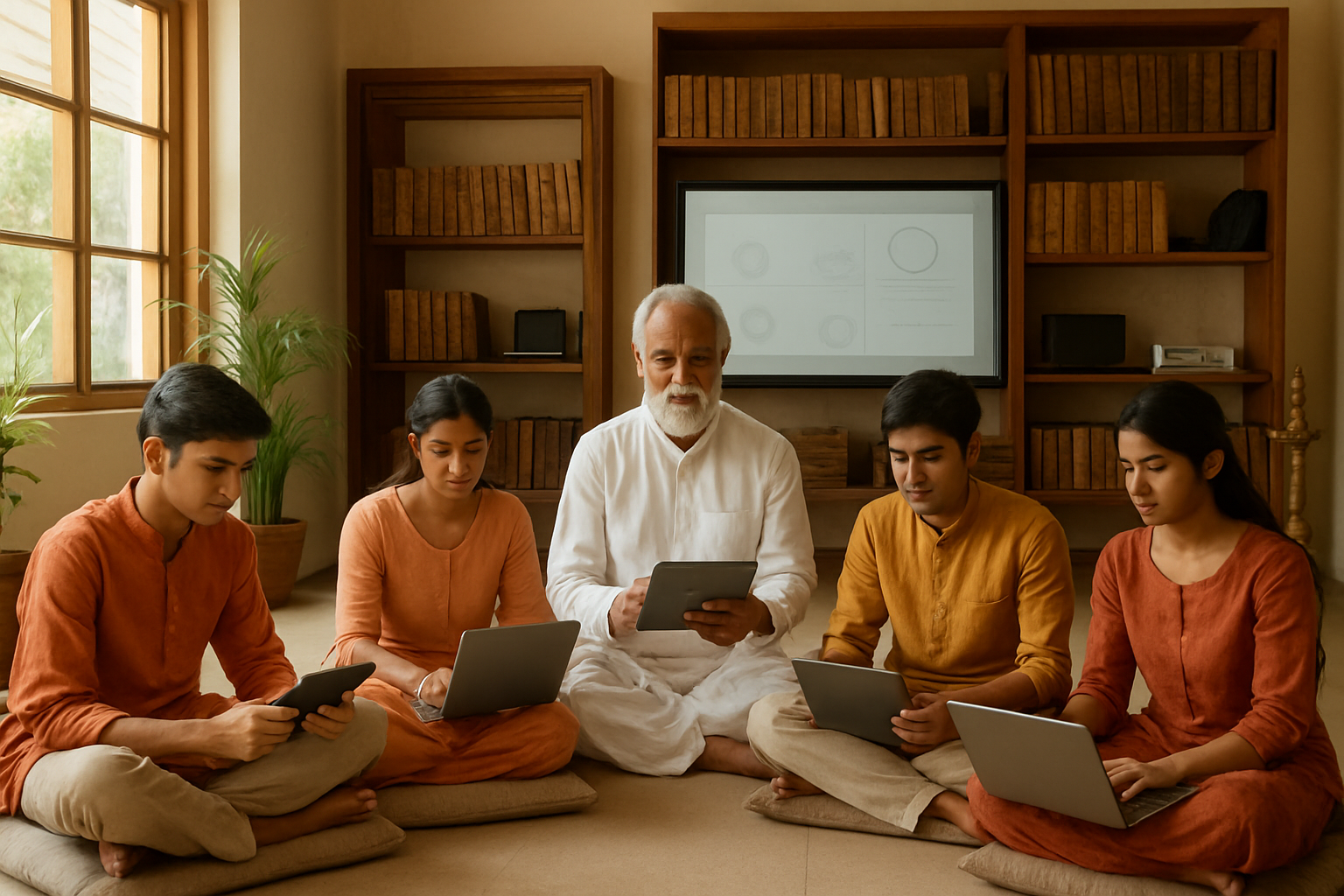
Digital Tools for Enhanced Understanding
The fusion of technology with the ancient Gurukul learning system represents a remarkable evolution that preserves the core values of traditional Indian education methods while embracing modern innovation. Digital tools have transformed how students absorb, process, and retain knowledge within the holistic learning approach that defines contemporary Gurukul education.
Interactive learning platforms now serve as virtual classrooms where students engage with complex concepts through multimedia presentations, animations, and simulations. These platforms recreate the immersive experience traditionally achieved through direct observation and hands-on practice in ancient learning environments. Visual learners benefit from detailed infographics and video demonstrations that break down abstract concepts into digestible components, while auditory learners thrive with podcast-style lectures and interactive audio sessions.
Artificial intelligence-powered adaptive learning systems analyze each student’s learning patterns, strengths, and areas for improvement. These sophisticated algorithms adjust content delivery speed, complexity, and teaching methods based on individual progress. The personalized education system that once relied solely on the guru’s intuitive understanding of each student now receives technological support that tracks micro-learning behaviors and provides data-driven insights.
Virtual reality environments transport students into historical settings, scientific laboratories, and cultural contexts that would be impossible to experience otherwise. Students studying ancient Indian scriptures can virtually walk through historical sites, while those learning mathematics can manipulate three-dimensional geometric shapes in virtual space. These immersive experiences align perfectly with the experiential learning methods that form the backbone of traditional Gurukul education.
Cloud-based knowledge repositories store vast libraries of texts, videos, research papers, and interactive content that students can access anytime. These digital libraries extend far beyond what any physical library could contain, offering resources in multiple languages and formats. Students studying Sanskrit literature can access rare manuscripts with translation tools, while those exploring modern sciences can tap into real-time research databases and simulation software.
Mobile applications designed specifically for Gurukul learning deliver bite-sized lessons, practice exercises, and reflection prompts throughout the day. These apps incorporate principles of spaced repetition and microlearning, ensuring that knowledge gets reinforced consistently without overwhelming students. Push notifications remind students of meditation times, study schedules, and assignment deadlines, maintaining the structured routine essential to character building through education.
Collaborative online whiteboards enable students from different geographical locations to work together on projects, share ideas, and engage in group discussions. These digital spaces simulate the community learning environment of traditional Gurukul settings, where students learned as much from peers as from their guru. Real-time editing capabilities allow multiple students to contribute to documents, presentations, and creative projects simultaneously.
Assessment tools have evolved beyond traditional testing methods to include portfolio-based evaluations, peer review systems, and competency-based progress tracking. Digital rubrics provide clear criteria for evaluation while maintaining the holistic assessment approach valued in Gurukul education. Students can track their growth across multiple dimensions – academic, personal, social, and spiritual – through comprehensive dashboard systems.
Language learning applications incorporate speech recognition technology, pronunciation guides, and conversation simulators that help students master multiple languages. These tools support the multilingual foundation that traditionally characterized Gurukul education, where students often learned Sanskrit, regional languages, and various dialects to access diverse knowledge sources.
Data visualization tools transform complex information into charts, graphs, and interactive diagrams that make abstract concepts more concrete. Students studying economics can see market trends in real-time, while those exploring environmental science can visualize climate data through interactive maps and time-series animations.
Virtual Mentorship Platforms
Virtual mentorship platforms revolutionize the traditional guru-disciple relationship in education by extending mentorship opportunities beyond geographical boundaries while preserving the intimate, personalized guidance that defines authentic Gurukul learning. These sophisticated platforms create digital spaces where experienced educators, industry professionals, and spiritual guides connect with students seeking knowledge and personal growth.
Video conferencing systems equipped with advanced features enable face-to-face interactions that closely mirror in-person mentorship sessions. High-definition video quality, crystal-clear audio, and screen-sharing capabilities ensure that the subtle nuances of communication – facial expressions, tone of voice, and body language – remain intact during virtual sessions. Students receive the same quality of attention and personalized feedback that characterized traditional master-student relationships.
Structured mentorship programs on these platforms match students with mentors based on learning objectives, personality compatibility, career aspirations, and areas of interest. Advanced algorithms consider multiple factors including learning styles, cultural background, and communication preferences to create meaningful mentor-student pairings. This systematic approach ensures that every student finds a guide whose teaching style resonates with their individual needs.
Continuous communication channels through messaging systems, voice notes, and video messages maintain the constant connection between mentor and student that traditional Gurukul education emphasized. Students can reach out to mentors with questions, concerns, or insights at any time, receiving timely responses that keep learning momentum alive. These platforms often include translation features that break down language barriers, allowing students to connect with mentors from diverse linguistic backgrounds.
Progress tracking systems enable mentors to monitor student development across multiple dimensions. Digital portfolios showcase student work, achievements, challenges overcome, and growth trajectories over time. Mentors can provide targeted guidance based on comprehensive data about each student’s journey, ensuring that support remains relevant and effective.
Group mentorship sessions bring together multiple students with shared interests or goals, creating virtual communities that replicate the collaborative learning environment of traditional Gurukul settings. These sessions encourage peer learning, healthy competition, and mutual support among students pursuing similar paths.
Professional development pathways connect students with industry mentors who provide real-world insights, career guidance, and practical knowledge that bridges academic learning with professional application. These relationships expose students to current industry practices, emerging trends, and career opportunities while maintaining the wisdom-based approach that characterizes Gurukul education.
Specialized mentorship tracks cater to different aspects of holistic development – academic excellence, creative expression, spiritual growth, leadership skills, and emotional intelligence. Students can engage with multiple mentors simultaneously, each focusing on specific areas of development while maintaining coordination to ensure cohesive growth.
Cultural exchange programs through virtual platforms connect students with mentors from different countries and backgrounds, broadening perspectives and fostering global understanding. These cross-cultural mentorship relationships expose students to diverse viewpoints while deepening appreciation for their own cultural heritage.
Mentorship analytics provide insights into interaction patterns, engagement levels, and relationship effectiveness. These metrics help platform administrators optimize matching algorithms, improve communication tools, and enhance overall mentorship experiences. Both mentors and students receive feedback about their interactions, enabling continuous improvement in mentorship quality.
Resource sharing capabilities allow mentors to provide students with curated reading lists, research papers, practical exercises, and reflection prompts. Digital libraries integrated into mentorship platforms ensure that recommended resources remain easily accessible to students throughout their learning journey.
Certification and recognition systems acknowledge significant mentorship relationships and milestones achieved through virtual guidance. These credentials validate the depth and impact of mentorship experiences while encouraging long-term commitment to the mentor-student relationship.
Gamification of Learning Processes
Gamification transforms traditional learning activities into engaging, interactive experiences that motivate students through achievement systems, progress visualization, and competitive elements while maintaining the depth and authenticity of modern Gurukul teaching methods. This approach taps into natural human desires for accomplishment, recognition, and growth.
Point-based reward systems assign values to different learning activities, encouraging students to engage with diverse aspects of their education. Reading assignments, completing exercises, participating in discussions, helping peers, and demonstrating character virtues all earn points that accumulate toward various rewards and recognition levels. These systems maintain balance by valuing both academic achievement and personal development equally.
Achievement badges recognize specific accomplishments and milestones in student learning journeys. Badges might celebrate mastery of particular subjects, demonstration of key values, completion of challenging projects, or consistent engagement over time. Visual badge collections create tangible representations of growth that students can share with family and peers while building self-confidence.
Leaderboards foster healthy competition among students while emphasizing collaborative achievement over individual dominance. Multiple leaderboard categories ensure that different strengths and learning styles receive recognition – academic performance, peer collaboration, creative projects, community service, and personal growth all feature prominently. Weekly and monthly rotations prevent any single student from dominating while encouraging consistent effort.
Quest-based learning structures organize curriculum content into adventure-style missions that guide students through interconnected learning objectives. Each quest includes background stories, challenges to overcome, skills to develop, and rewards to earn. Complex topics become approachable when framed as exciting adventures rather than tedious assignments.
Level progression systems allow students to advance through increasingly challenging content at their own pace. Each level represents mastery of specific competencies and unlocks new learning opportunities. This structure accommodates the personalized education system approach by allowing accelerated students to move ahead while ensuring that struggling students receive adequate support at each level.
Virtual economies within learning platforms use digital currencies that students earn through participation, achievement, and positive behavior. These currencies can purchase virtual items, unlock special content, or contribute to group projects. Economic simulation games teach practical skills while reinforcing the values of hard work, wise spending, and generous sharing.
Team-based challenges encourage collaboration and collective problem-solving while building strong relationships among students. Group quests require diverse skills and perspectives to complete successfully, teaching students to appreciate different strengths and work together effectively. Team achievements unlock special privileges and recognition that celebrate collaborative success.
Storytelling elements weave learning content into compelling narratives that capture student imagination and emotional investment. Historical events become interactive stories where students make decisions and observe consequences. Scientific principles emerge through character-driven adventures that demonstrate real-world applications. These narrative approaches align with the technology-enhanced traditional learning philosophy by making abstract concepts personally meaningful.
Progress visualization tools display student advancement through interactive maps, progress bars, and achievement trees. Visual representations help students understand their learning journey, identify areas for improvement, and celebrate growth over time. These tools provide immediate feedback that keeps motivation high and learning goals clear.
Mini-games embedded within larger learning modules break up intensive study sessions with brief, engaging activities that reinforce key concepts. Mathematical puzzles, vocabulary challenges, logic games, and memory exercises provide variety while maintaining educational value. These games offer brain breaks that actually strengthen learning rather than distract from it.
Customizable avatar systems allow students to create digital representations that reflect their personalities and achievements. Avatars can be decorated with items earned through learning accomplishments, encouraging students to take pride in their academic and personal growth. Avatar interactions in virtual learning spaces create social connections that support collaborative learning.
Real-world integration connects virtual achievements with tangible rewards and recognition outside the digital platform. High-performing students might earn field trip opportunities, special privileges, or chances to showcase their work to broader audiences. These connections ensure that gamified learning maintains relevance beyond the virtual environment.
Reflection and journaling components prompt students to think deeply about their learning experiences, challenges overcome, and insights gained. Gamified reflection systems might include writing challenges, creative expression opportunities, or peer sharing activities that encourage metacognitive development alongside academic progress.
Adaptive difficulty systems automatically adjust challenge levels based on student performance and engagement patterns. Students who excel receive more complex tasks and additional challenges, while those struggling receive extra support and modified objectives. This responsiveness ensures that gamification remains motivating rather than frustrating for all learners.
Social features enable students to share achievements, collaborate on challenges, and support each other’s learning journeys. Comment systems, peer recognition tools, and collaborative spaces foster the community spirit essential to authentic Gurukul education. Students learn to celebrate others’ successes while seeking help when needed.
Analytics dashboards provide detailed insights into student engagement patterns, learning preferences, and areas of strength or challenge. Educators use this data to refine gamification elements, adjust difficulty levels, and provide targeted support. Students can also access their own analytics to understand their learning patterns and set improvement goals.
Seasonal events and special challenges maintain long-term engagement by introducing limited-time activities that celebrate holidays, current events, or special themes. These events often feature unique rewards, collaborative projects, and cross-curricular connections that broaden learning perspectives while maintaining excitement about education.
Parent and mentor integration features allow family members and mentors to track student progress, celebrate achievements, and provide encouragement. Notification systems keep stakeholders informed about milestones reached, challenges undertaken, and support needed. This transparency strengthens the support network that surrounds each student’s learning journey.
The gamification approach ensures that technology enhancement never overshadows the fundamental values and relationships that define authentic Gurukul education. Competition remains healthy and supportive rather than cutthroat, achievements celebrate character development alongside academic progress, and community building takes precedence over individual advancement.
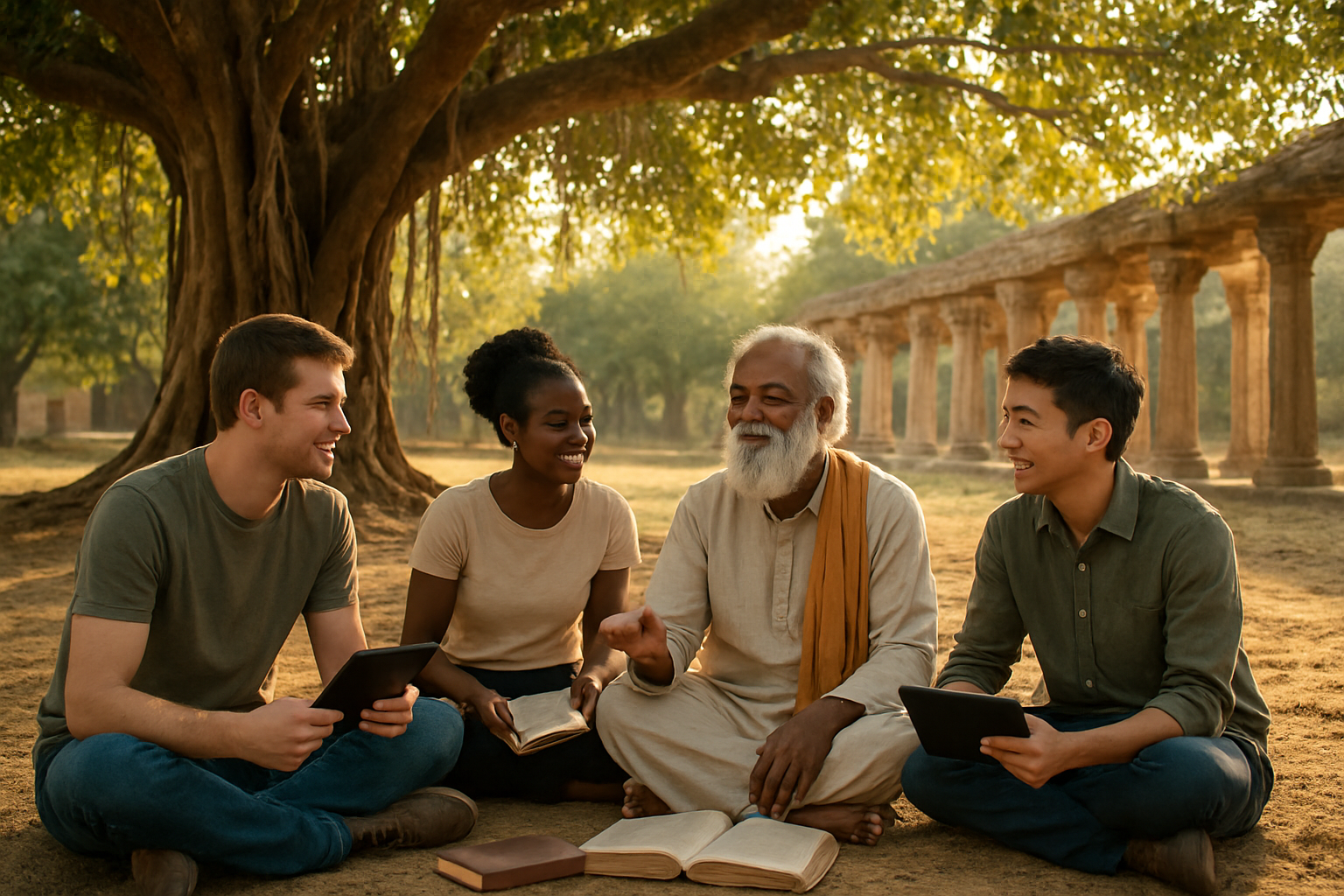
The Gurukul learning system offers a powerful way to transform how we approach education. By combining the time-tested wisdom of traditional mentorship with modern teaching techniques, this method creates an environment where students don’t just memorize facts but truly understand and apply knowledge. The emphasis on building strong foundation skills, using energizing learning techniques, and maintaining close teacher-student relationships gives learners the tools they need to succeed long after they leave the classroom.
What makes this approach even more exciting is how well it adapts to today’s digital world. When you blend the personal touch of Gurukul mentorship with smart technology integration, you get the best of both worlds – deep, meaningful learning experiences that still connect with how students live and learn today. If you’re an educator or parent looking to make learning more engaging and effective, consider exploring Gurukul-inspired methods. Start small by focusing on building stronger relationships with learners and creating hands-on experiences that make knowledge come alive.