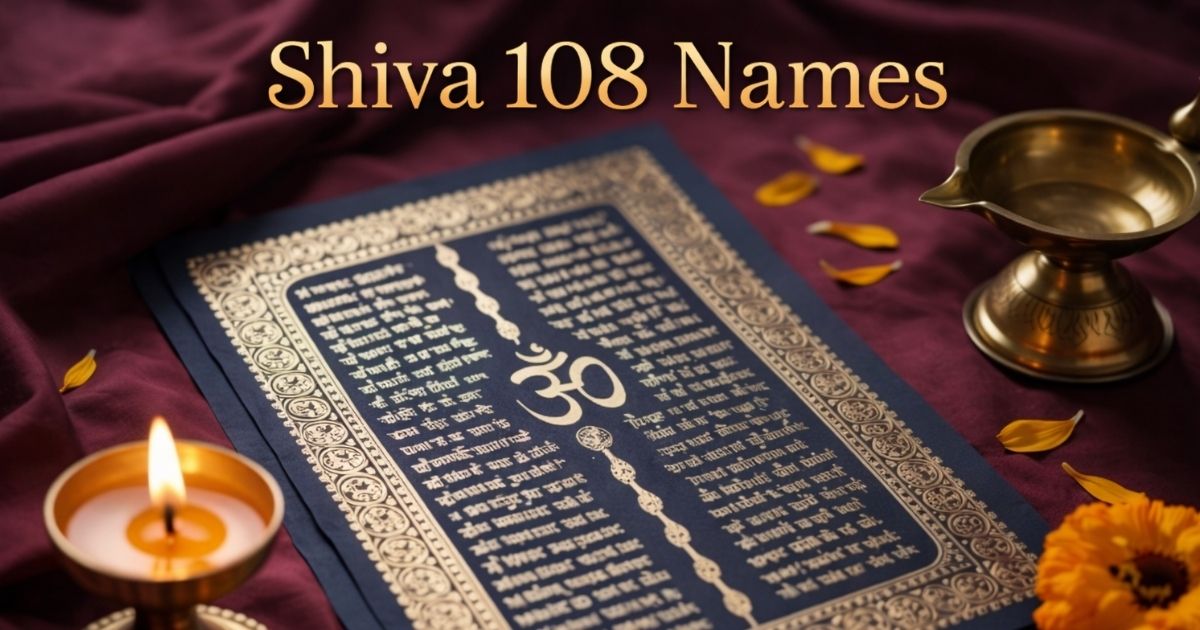
The sacred names of Shiva hold profound spiritual power that millions of devotees have experienced for thousands of years. Each of the 108 names of Mahadev carries unique vibrational energy and meaning that can transform your meditation practice and daily life.
This guide is perfect for spiritual seekers, yoga practitioners, and anyone curious about Hindu mantras Shiva traditions. You’ll discover practical ways to incorporate these Lord Shiva names into your routine, whether you’re new to chanting or deepening an existing practice.
We’ll explore the fascinating science behind why Shiva mantra chanting creates specific effects in your mind and body. You’ll learn how different categories of divine names target various aspects of personal growth and healing. Plus, we’ll share simple techniques for daily recitation that busy people can easily follow, along with real stories of how Shiva devotional practice has changed lives in unexpected ways.
Get ready to unlock the transformational energy that’s been hiding in these ancient Shiva names meaning and discover why spiritual chanting meditation with these sacred syllables continues to captivate hearts across the globe.
Understanding the Sacred Science Behind Shiva’s 108 Names

Ancient Vedic Origins and Mathematical Significance
The sacred practice of reciting the Shiva 108 names traces back to the earliest Vedic scriptures, where ancient sages discovered profound mathematical and spiritual connections embedded in this specific number. When you dive into the origins of these sacred names, you’ll find they weren’t randomly selected but emerged from centuries of deep spiritual inquiry and cosmic understanding.
The Rudram Chamakam, one of the most ancient Vedic hymns found in the Yajurveda, first established the foundational framework for understanding Shiva’s divine attributes through sacred numerical patterns. Ancient Sanskrit texts like the Shiva Purana and Linga Purana meticulously documented these 108 divine appellations, each carrying layers of meaning that connect human consciousness to universal principles.
What makes this number mathematically remarkable becomes clear when you examine its divisibility. The number 108 can be divided by numerous combinations that hold spiritual significance: 1, 2, 3, 4, 6, 9, 12, 18, 27, 36, 54, and 108 itself. This mathematical perfection mirrors the cosmic order that ancient Vedic scholars believed governed all existence.
The calculation 108 = 1² × 2² × 3³ reveals a profound pattern where the powers of the first three natural numbers create this sacred sum. Ancient mathematicians recognized this as representing the three fundamental aspects of creation: generation, operation, and destruction – the very principles that Lord Shiva names embody in their essence.
When you explore the geometric significance, you’ll discover that a circle contains 360 degrees, and 360 divided by the mystical number 3.333 (representing the cosmic trinity) equals approximately 108. This connection between circular perfection and the divine names suggests that chanting these names creates a complete spiritual circuit, encompassing all aspects of cosmic consciousness.
The Sanskrit alphabet contains 54 letters, each with masculine and feminine qualities, totaling 108. This linguistic foundation means that the sacred names of Shiva encompass the entire spectrum of cosmic sound vibrations possible in Sanskrit, making each recitation a complete invocation of universal energy patterns.
Archaeological evidence from ancient temple inscriptions shows that the number 108 was considered sacred across multiple cultures simultaneously developing in the Vedic period. Temple architecture incorporated this number in step counts, pillar arrangements, and prayer bead configurations, suggesting a universal recognition of its spiritual potency.
Connection Between 108 and Cosmic Cycles
The astronomical relationships embedded in the number 108 reveal why ancient sages chose this specific count for Shiva mantra chanting. The distance between Earth and the Sun equals approximately 108 times the Sun’s diameter, while the distance between Earth and the Moon equals about 108 times the Moon’s diameter. This remarkable cosmic coincidence isn’t accidental but reflects the underlying mathematical harmony that governs celestial mechanics.
Vedic astronomers calculated that the Sun’s journey through the zodiac creates cycles that naturally align with multiples of 108. Each astrological sign spans 30 degrees, and the complete zodiacal cycle of 360 degrees contains exactly 108 subdivisions called ‘padas’ or steps, each representing 3.33 degrees of celestial movement.
The human breathing cycle provides another fascinating connection to cosmic rhythms. An average person takes approximately 21,600 breaths per day. When you divide this by 200 (representing the ideal number of breath cycles for deep meditation), you get 108. This physiological pattern suggests that chanting the 108 names of Mahadev aligns human biological rhythms with cosmic breathing patterns.
Ancient texts describe how the Earth’s axial precession cycle of 25,920 years divides into 240 periods of 108 years each. This connection between planetary motion and the sacred number indicates that reciting Shiva’s names creates resonance with the Earth’s own spiritual evolution through cosmic time.
The lunar calendar reveals additional layers of significance. A lunar month contains approximately 29.5 days, and when multiplied by the sacred ratio 3.666, equals 108.07. This near-perfect alignment connects lunar energy cycles with the vibrational patterns encoded in each of Shiva’s divine names.
Solar and lunar eclipse cycles follow patterns based on multiples of 108. The Saros cycle, which predicts eclipse repetition, spans 18 years and 11.33 days – numbers that reduce to combinations involving 108. Ancient astronomers understood that chanting during specific eclipse periods amplified the transformational power of the divine names.
The galactic year, representing the time our solar system takes to complete one orbit around the galactic center, equals approximately 225-250 million Earth years. When expressed in cosmic units used by ancient Vedic astronomers, this period contains cycles based on powers of 108, connecting individual spiritual practice to galactic evolutionary patterns.
How Each Name Carries Specific Vibrational Energy
Every single name within the Shiva devotional practice functions as a precise vibrational formula, designed to activate specific energy centers within human consciousness and the surrounding cosmic field. When you understand how sound vibration works at the quantum level, the mechanism behind these sacred names becomes remarkably clear.
Each Sanskrit syllable in Shiva’s names corresponds to particular frequencies that resonate with different chakra systems and neurological pathways. For example, names beginning with “MA” sounds (like “Mahadev” or “Mahakaal”) activate the heart chakra through vibrations that stimulate the vagus nerve, creating immediate calming effects on the nervous system.
The phonetic structure of names like “Nataraja” creates vibrational patterns that mirror the cosmic dance of creation and destruction. The “Na” sound activates crown chakra frequencies, “Ta” stimulates throat chakra resonance, “Ra” generates solar plexus vibrations, and “Ja” completes the circuit by grounding energy through root chakra activation.
Modern acoustic analysis reveals that Hindu mantras Shiva contain specific frequency combinations that match brainwave patterns associated with deep meditative states. Names containing “OM” variations (like “Omkaar” or “Rudra”) generate frequencies between 7-14 Hz, precisely matching alpha and theta brainwave patterns that facilitate expanded consciousness.
The vibrational energy of each name operates through three distinct mechanisms: literal meaning, phonetic resonance, and energetic intention. When you chant “Shankara” (meaning “bestower of good”), the literal understanding creates positive mental patterns, the phonetic vibration stimulates specific neural pathways, and the focused intention directs energy toward healing and transformation.
Ancient texts describe how different names activate various elemental energies within the body. Names associated with fire elements (like “Agni” variations) increase metabolic energy and digestive strength. Water-element names cool inflammatory conditions and balance emotional turbulence. Earth-element names provide grounding and stability, while air-element names enhance mental clarity and communication abilities.
The Shiva names meaning extends beyond literal translation to encompass vibrational signatures that interact with human bioelectric fields. Each name creates specific electromagnetic patterns that can be measured through modern biofeedback equipment, showing immediate changes in heart rate variability, skin conductance, and neural activity.
Research into cymatics (the study of visible sound vibrations) demonstrates that Sanskrit syllables create geometric patterns in physical matter that mirror sacred geometry found throughout nature. When you chant Shiva’s names, you’re literally restructuring the molecular patterns in your immediate environment, creating harmony between personal energy fields and universal geometric principles.
The sequential arrangement of the 108 names follows specific energetic progressions designed to guide consciousness through complete transformational cycles. Beginning names establish foundation energies, middle names facilitate active transformation, and concluding names integrate and stabilize the achieved spiritual states.
Certain name combinations create synergistic effects that amplify individual vibrational potencies. The Shiva names benefits multiply exponentially when specific sequences are maintained, as each name prepares the energetic ground for the next name’s deeper penetration into consciousness.
The timing of name recitation influences vibrational effectiveness. Dawn hours naturally amplify names associated with creation energies, midday enhances names connected to preservation and maintenance, while evening periods strengthen names linked to transformation and renewal. Night-time recitation of specific names facilitates deep subconscious healing and dream-state spiritual experiences.
Different vocal techniques – whispered recitation, mental repetition, or full-voiced chanting – activate distinct vibrational pathways. Whispered chanting creates intimate personal transformation, mental repetition works directly with thought-form energies, while full-voiced practice generates powerful environmental cleansing and protection effects.
The spiritual chanting meditation approach recognizes that each person’s unique vocal characteristics and energy signature interact differently with specific names. Advanced practitioners often discover particular names that create immediate energy shifts, indicating karmic connections or specific spiritual needs that those vibrational patterns address most effectively.
Decoding the Categories of Divine Attributes

Names Representing Shiva’s Creative Powers
The creative aspect of Lord Shiva emerges through specific names in the collection of 108 names of Mahadev that reveal his role as the ultimate architect of existence. These sacred appellations go beyond mere titles—they represent fundamental cosmic principles that govern the birth and manifestation of all creation.
Pashupati stands as one of the most profound names reflecting Shiva’s creative mastery. As the lord of all living beings, this name encompasses his role in breathing life into matter. When devotees chant this name during Shiva mantra chanting sessions, they connect with the universal life force that animates every creature. The name carries the vibration of primordial creation, where consciousness first merges with matter to form living entities.
Rudra, meaning the one who makes others cry tears of joy or awe, represents the raw creative energy that breaks through limitations to birth new realities. This name embodies the fierce compassion required to shatter old patterns and make way for fresh manifestations. Ancient texts describe Rudra as the cosmic wind that carries the seeds of creation across the universe, making this name particularly powerful for those seeking breakthrough moments in their lives.
Maheshwara reveals Shiva’s supreme lordship over the creative process. This name acknowledges his authority over the fundamental elements—earth, water, fire, air, and space—that combine to form all material creation. Practitioners often find that regular recitation of this name during meditation helps them understand the interconnected nature of all existence and their own role as conscious creators in their personal reality.
The name Vishwanatha, meaning lord of the universe, encompasses Shiva’s role as the supreme consciousness from which all diversity emerges. This name holds the secret of unity within multiplicity, teaching that the countless forms we see in creation are expressions of a single, undifferentiated awareness. When chanted with proper understanding, it helps dissolve the illusion of separation and reveals the creative principle operating within every individual.
Mahadev itself represents the great deity who serves as the source of all divine powers distributed throughout creation. This name captures the essence of Shiva as the original creative force from which all other creative energies derive their power. The name resonates with the frequency of infinite potential, making it especially beneficial for artists, innovators, and anyone engaged in creative pursuits.
Names Symbolizing His Destructive Forces
The destructive aspect of Shiva, far from being negative, represents the essential cosmic function of dissolution that clears space for renewal and transformation. These sacred names of Shiva reveal the profound wisdom embedded in the cycle of destruction and regeneration that governs all existence.
Kala represents Shiva as time itself—the great destroyer that eventually consumes everything. This name teaches that destruction is not random or malicious but follows the perfect timing of cosmic cycles. When practitioners work with this name, they often develop a deeper understanding of impermanence and learn to flow with life’s natural rhythms rather than resist change. The name helps release attachments to temporary forms and reveals the eternal consciousness that remains unchanged through all transformations.
Samhara embodies the act of cosmic dissolution performed with perfect precision and compassion. This name represents the systematic dismantling of outdated structures, beliefs, and patterns that no longer serve growth. Chanting this name helps individuals identify and release limiting beliefs, toxic relationships, and harmful habits that obstruct their spiritual evolution.
Bhairava reveals Shiva’s terrifying form that destroys fear itself. This paradoxical name shows how facing our deepest fears leads to their dissolution. The name carries the power to transform terror into spiritual strength and helps practitioners move through challenging life transitions with courage. Ancient yogis would invoke this name when confronting major life changes or spiritual obstacles that seemed insurmountable.
Nataraja, the cosmic dancer, represents destruction as a beautiful, rhythmic dance rather than a violent force. This name teaches that endings and beginnings flow together in perfect harmony, like movements in an eternal dance. The name helps people find grace and beauty even in difficult circumstances, revealing how destruction serves creation’s higher purpose.
Ugra represents the fierce aspect that removes spiritual ignorance through intense purification. This name embodies the uncomfortable but necessary process of burning away illusions that keep consciousness trapped in limited perspectives. Practitioners working with this name often experience accelerated spiritual growth as layers of conditioning dissolve more rapidly.
The name Rudra appears again in this context, highlighting how the same divine energy that creates also destroys. This dual nature shows that creation and destruction are complementary forces working together to maintain cosmic balance. Understanding this principle helps practitioners embrace change as a natural part of growth rather than something to be feared.
Names Reflecting His Meditative Consciousness
The meditative names of Lord Shiva names reveal him as the supreme yogic consciousness—the eternal witness who remains untouched by the fluctuations of mental activity. These names embody the deepest states of awareness that meditation can reveal.
Yogeshwara represents Shiva as the lord of yoga, the master of union between individual consciousness and cosmic consciousness. This name contains the essence of all meditative practices and serves as a gateway to understanding the true purpose of spiritual discipline. When practitioners meditate on this name, they often experience spontaneous insights into the nature of awareness itself and find their meditation practice naturally deepening.
Dakshinamurti reveals Shiva as the first guru who teaches through silence. This name embodies the transmission of wisdom that occurs beyond words, in the space of pure presence. Advanced practitioners find that contemplating this name opens them to receive teachings directly from the source of all knowledge, bypassing the limitations of conceptual understanding.
Shankar represents the consciousness that brings peace and auspiciousness wherever it touches. This name carries the vibration of deep inner stillness that naturally arises when the mind settles into its essential nature. Regular chanting of this name helps establish a foundation of peace that remains stable even during challenging circumstances.
Nilakantha, the blue-throated one, symbolizes the consciousness that can digest and transform poison into nectar. This name represents the meditative awareness that can witness difficult emotions and experiences without being contaminated by them. Practitioners working with this name often develop resilience and the ability to find benefit even in painful situations.
Mauna reveals Shiva’s nature as pure silence—not the absence of sound but the pregnant stillness from which all sounds emerge and into which they dissolve. This name guides practitioners beyond mental chatter to the space of awareness that underlies all thinking. Extended practice with this name often leads to spontaneous moments of thoughtless awareness.
Akasha represents Shiva’s nature as infinite space—the consciousness that provides room for all experiences to arise and pass away. This name helps practitioners identify with the spacious awareness that observes thoughts and emotions rather than getting caught in their content. The practice gradually shifts identity from temporary mental formations to the permanent witnessing presence.
Names Describing His Role as Universal Protector
The protective aspect of Shiva manifests through names that reveal his compassionate guardianship over all creation. These Shiva names meaning emphasize his role as the benevolent force that maintains cosmic order and shields devotees from harm.
Shiva itself means “auspicious one” or “benevolent,” highlighting his fundamental nature as a protective force working for the highest good of all beings. This name carries the assurance that divine consciousness always supports growth and evolution, even when circumstances appear challenging. The name serves as a reminder that protection comes not from avoiding difficulties but from maintaining connection with the guiding wisdom that turns every experience into an opportunity for growth.
Mangalam represents the auspiciousness that Shiva brings to any situation. This name embodies the protective power that transforms negative circumstances into positive outcomes through the application of spiritual wisdom. Practitioners find that invoking this name during difficult periods helps them maintain faith and discover unexpected solutions to their problems.
Sharanya reveals Shiva as the one who provides refuge to all who seek shelter in divine consciousness. This name represents the ultimate security that comes from knowing one’s true identity as eternal awareness rather than temporary form. The name offers protection at the deepest level by establishing unshakeable confidence in one’s spiritual nature.
Bhava represents Shiva’s compassionate concern for the welfare of all beings caught in the cycle of birth and death. This name embodies the protective love that motivates divine intervention in human affairs. Chanting this name helps develop trust in the benevolent intelligence that guides evolution and ensures that every soul receives exactly what is needed for its development.
Ishwara reveals Shiva as the supreme controller who protects cosmic order through the application of divine law. This name represents protection through alignment with universal principles rather than through avoiding consequences. Understanding this name helps practitioners cooperate with natural law and receive protection through harmonious living.
Dayalu emphasizes Shiva’s compassionate nature that extends protection to all beings without discrimination. This name reveals that divine protection is not earned through worthiness but flows naturally from the compassionate heart of existence itself. Regular contemplation of this name helps practitioners extend the same unconditional care to others that they receive from the divine source.
These protective names work together to create a comprehensive shield of spiritual awareness that guards against both external dangers and internal obstacles to growth. The protection they offer comes not through supernatural intervention but through the natural result of aligning consciousness with the benevolent intelligence that guides all existence.
Unlocking the Healing Properties of Sacred Chanting
Mental Clarity and Stress Relief Through Repetition
When you begin chanting the 108 names of Shiva, your mind enters a unique state of focused awareness that naturally dissolves mental clutter and stress. The repetitive nature of sacred name recitation creates a neurological shift that scientists now recognize as beneficial for cognitive function and emotional regulation.
The practice works by engaging what researchers call the “default mode network” in your brain – the same neural pathways that become overactive during anxiety and racing thoughts. By giving your mind a specific focus through Shiva mantra chanting, you interrupt the cycle of worrisome thinking and create space for mental clarity to emerge.
Each name carries its own vibrational signature that resonates with different aspects of consciousness. Names like “Om Namah Shivaya” or “Mahadev” create distinct neural patterns that promote concentration while simultaneously relaxing the nervous system. This dual action explains why practitioners often report feeling both alert and peaceful after chanting sessions.
The repetitive structure of chanting the 108 names of Mahadev activates the parasympathetic nervous system, which controls your body’s rest-and-digest response. This physiological shift reduces cortisol production, lowers blood pressure, and decreases the fight-or-flight response that characterizes chronic stress. Regular practice literally rewires your brain’s response to stressful situations.
Modern neuroscience reveals that repetitive chanting increases GABA production in the brain, the neurotransmitter responsible for calming neural activity. This natural mechanism explains why even beginners often experience immediate stress relief when they start reciting Lord Shiva names. The practice doesn’t require years of training to produce measurable benefits.
The timing and rhythm of name repetition also play crucial roles in mental clarity. Traditional practitioners recommend specific speeds and patterns that align with natural breathing rhythms and heart rate variability. When you synchronize the chanting with your breath, you create coherent brainwave patterns that enhance focus and reduce mental fog.
Different names produce varying effects on mental states. Names associated with Shiva’s fierce aspects, like “Rudra” or “Bhairava,” can energize and clear mental obstacles, while gentler names like “Shiva” (the auspicious one) or “Shantam” (peaceful) promote calming effects. Understanding these nuances allows you to customize your practice based on your current mental state and needs.
Regular practitioners often develop what spiritual traditions call “effortless concentration” – the ability to maintain focus without strain. This skill transfers beyond meditation sessions into daily activities, improving work performance, memory retention, and decision-making abilities. The sacred names of Shiva become tools for maintaining mental equilibrium throughout challenging situations.
Physical Health Benefits of Vibrational Frequencies
The sound frequencies generated during the chanting of Shiva 108 names create measurable physiological changes that extend far beyond mental benefits. Each Sanskrit syllable produces specific vibrations that resonate with different organs, tissues, and energy centers throughout the body.
Research in vibroacoustic therapy demonstrates how certain frequencies can stimulate cellular repair, improve circulation, and enhance immune function. The ancient practitioners who compiled Shiva’s names understood these principles intuitively, selecting sounds that optimize physical health and vitality.
The deep vowel sounds prevalent in many of Shiva’s names, such as the “A” in “Ardhanarishvara” or the “U” in “Umapati,” create low-frequency vibrations that massage internal organs. These sounds stimulate the vagus nerve, which connects the brain to major organs throughout the body. Vagus nerve stimulation triggers healing responses, including improved digestion, better sleep quality, and enhanced cardiovascular health.
Specific names target different body systems through their unique acoustic properties. Names containing “Ma” sounds, like “Mahadev” or “Maheshwar,” create vibrations that benefit the heart and chest region. Names with “La” sounds support kidney and adrenal function, while “Ra” sounds energize the solar plexus and digestive system.
The practice of Hindu mantras Shiva also produces significant respiratory benefits. The controlled breathing required for proper chanting increases lung capacity, improves oxygen saturation, and strengthens the diaphragm. Long-term practitioners often report better respiratory health and increased physical endurance.
| Frequency Range | Physical Effects | Relevant Shiva Names |
|---|---|---|
| 40-60 Hz | Bone density, muscle tone | Names with “Om” prefix |
| 60-100 Hz | Circulation, heart health | Names containing “Ma” sounds |
| 100-200 Hz | Digestive system | Names with “Ra” syllables |
| 200-400 Hz | Nervous system | Names ending in “Aya” |
The vibrational patterns created during chanting also influence hormone production. Regular practice balances cortisol levels, increases endorphin release, and stabilizes thyroid function. Women practitioners often report improved menstrual health and reduced menopausal symptoms, while men experience better prostate health and increased vitality.
Sleep quality improves dramatically with consistent practice of Shiva devotional practice. The relaxation response triggered by chanting continues for hours after the session ends, promoting deeper, more restorative sleep cycles. Many practitioners find that evening chanting sessions replace the need for sleep medications or supplements.
Pain management represents another significant physical benefit. The endorphin release triggered by chanting creates natural analgesic effects, while the meditative state achieved through name repetition changes pain perception at the neurological level. Chronic pain sufferers often experience substantial relief through regular practice.
The immune system receives powerful support through the stress-reduction and vibrational healing effects of chanting. Lower stress hormones allow immune cells to function more effectively, while specific sound frequencies may directly stimulate lymphatic drainage and cellular regeneration.
Cardiovascular health improvements include reduced blood pressure, improved heart rate variability, and better circulation. The rhythmic nature of chanting acts as a form of gentle cardiovascular exercise, while the relaxation response counteracts the harmful effects of chronic stress on the heart and blood vessels.
Emotional Balance and Inner Peace Cultivation
The emotional transformation that occurs through regular chanting of Shiva names benefits creates profound shifts in how you experience and process feelings. The practice works on multiple levels to establish emotional equilibrium and cultivate lasting inner peace.
Ancient texts describe different emotional qualities associated with each of Shiva’s names. Names like “Shantam” (peaceful) or “Dayalu” (compassionate) naturally evoke those qualities in the practitioner’s emotional landscape. This isn’t merely psychological suggestion – the vibrational frequencies of these names actually influence neurotransmitter production and hormonal balance.
The practice helps you develop emotional resilience by creating a stable internal reference point. When you regularly connect with the peaceful essence embedded in Shiva’s names, you build an inner sanctuary that remains unshaken by external circumstances. This stability doesn’t mean emotional numbness – rather, it provides a foundation from which you can experience the full range of human emotions without being overwhelmed.
Spiritual chanting meditation using Shiva’s names addresses specific emotional challenges through targeted practice. For anger management, names like “Shiva” (the auspicious one) or “Mahadeva” (the great god) help transmute aggressive energy into constructive action. For grief or loss, names such as “Nataraja” (lord of the dance) remind practitioners that destruction and creation are part of natural cycles.
The cumulative effect of regular practice creates what traditions call “chitta shuddhi” – purification of consciousness. This process gradually releases stored emotional trauma and negative mental patterns. Many practitioners report spontaneous healing of old emotional wounds and increased capacity for joy and contentment.
Anxiety and depression often respond remarkably well to consistent name chanting. The practice provides both immediate relief through nervous system regulation and long-term healing through the cultivation of positive emotional states. The repetitive nature of chanting creates safety and predictability for anxious minds, while the uplifting vibrations naturally counteract depressive tendencies.
Relationship patterns also improve through regular practice. As you develop greater emotional stability and self-awareness through chanting, you naturally become more present and compassionate in your interactions with others. The names that emphasize Shiva’s loving aspects, such as “Umapati” (consort of Uma) or “Ardhanarishvara” (half-man, half-woman), specifically support healthy relationship dynamics.
The practice teaches emotional intelligence through direct experience rather than intellectual understanding. As you chant different names and observe their effects on your emotional state, you develop sensitivity to subtle energy changes and greater awareness of emotional triggers and patterns.
Fear-based emotions gradually dissolve through connection with Shiva’s fearless aspects. Names like “Abhayada” (giver of fearlessness) or “Mahakaal” (great time/death) help practitioners face life’s uncertainties with courage and acceptance. This doesn’t happen overnight, but consistent practice builds genuine confidence and emotional courage.
Forgiveness becomes easier as the heart opens through devotional chanting. The unconditional love embodied in names like “Dayalu” (compassionate) or “Karunakara” (source of compassion) awakens similar qualities within the practitioner. This natural flowering of compassion extends first to oneself, then gradually encompasses others and difficult situations.
The emotional purification process sometimes involves temporary intensification of feelings as buried emotions surface for release. Understanding this as part of the healing process helps practitioners navigate these experiences with patience and self-compassion. The names themselves provide comfort and support during these transitional periods.
Joy and contentment emerge naturally as emotional blockages clear and inner peace deepens. This isn’t a forced positivity but rather the revelation of your natural state beneath layers of conditioning and accumulated stress. The blissful aspects of Shiva’s nature, reflected in names like “Anandam” (bliss) or “Satchitananda” (existence-consciousness-bliss), awaken corresponding qualities within.
Regular practice creates emotional freedom – the ability to feel deeply without being controlled by emotions. You develop the capacity to witness your emotional responses with loving awareness while maintaining inner equilibrium. This emotional mastery enables more authentic self-expression and deeper connections with others.
Practical Methods for Daily Name Recitation
Morning Ritual Setup and Sacred Space Creation
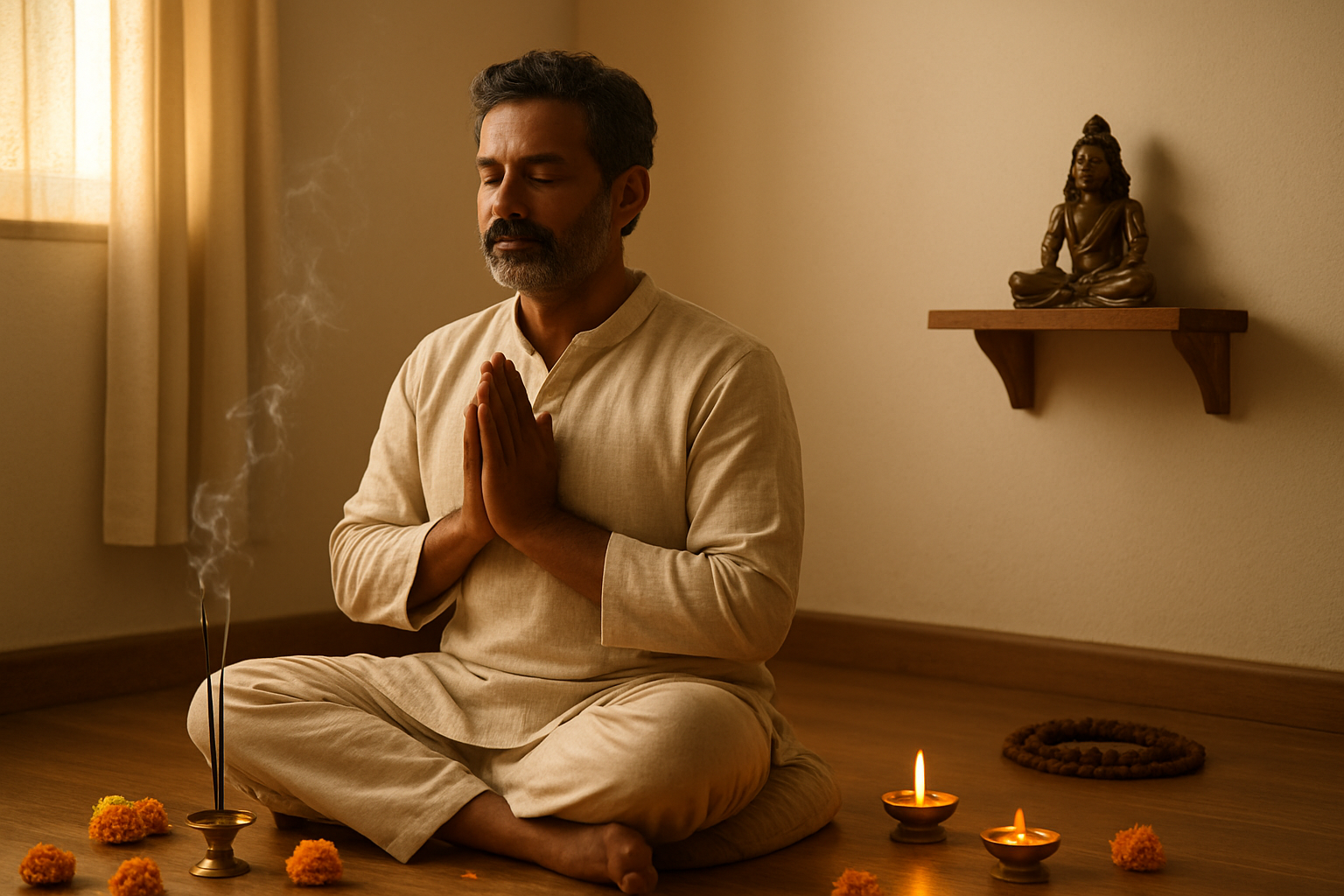
Creating a dedicated space for chanting the Shiva 108 names sets the foundation for a powerful spiritual practice. Your sacred space doesn’t need to be elaborate – even a corner of your bedroom can transform into a divine sanctuary with the right approach.
Start by choosing a quiet location where you won’t be disturbed for at least 30-45 minutes. This consistency helps your mind associate the space with devotional practice, making it easier to slip into a meditative state each time you sit down. Face east or north if possible, as these directions are traditionally considered auspicious for spiritual practices.
Place a small image or murti of Lord Shiva at eye level when seated. This visual focus point helps maintain concentration during the recitation of sacred names of Shiva. Many practitioners find that having Shiva’s image in the Nataraja form (cosmic dancer) or in meditation posture creates a particularly powerful energy in the space.
Essential items for your sacred space include:
- Rudraksha mala: A 108-bead mala specifically for counting the names
- Copper or brass water vessel: For offering water to the Shiva image
- Natural incense: Sandalwood, jasmine, or specialized Shiva incense
- Oil lamp or ghee diya: Creates sacred ambiance and purifies the atmosphere
- Fresh flowers: White flowers, especially bilva leaves, are particularly sacred to Shiva
- Clean cloth or mat: For sitting comfortably during practice
The energetic preparation of your space matters as much as the physical setup. Before beginning your Shiva mantra chanting, sprinkle a few drops of Ganga jal (holy water) around the area while mentally invoking Shiva’s presence. Light the incense and lamp while reciting “Om Namah Shivaya” three times.
Keep this space exclusively for your spiritual practice. Avoid using it for mundane activities like checking emails or eating meals. The accumulated positive vibrations from regular Shiva devotional practice will make the space increasingly powerful over time.
Proper Pronunciation Techniques for Maximum Impact
Accurate pronunciation amplifies the vibrational power of each divine name. Sanskrit sounds carry specific frequencies that resonate with different energy centers in the body, making proper pronunciation essential for receiving the full benefits of Hindu mantras Shiva.
The foundation of Sanskrit pronunciation rests on understanding that each syllable has equal weight and duration. Unlike English, where stressed and unstressed syllables create rhythm, Sanskrit maintains a steady, flowing cadence that helps induce meditative states.
Key pronunciation principles include:
Vowel clarity: Sanskrit vowels are pure sounds without the gliding common in English. “A” sounds like “ah” in “father,” “I” like “ee” in “see,” and “U” like “oo” in “moon.” Practice these fundamental sounds before attempting the full names.
Consonant precision: Many Lord Shiva names contain aspirated consonants (sounds followed by a puff of air) and retroflex sounds (tongue curled back). “Shiva” itself demonstrates proper “Sh” pronunciation – softer than English “sh” but more forceful than “s.”
Nasal resonance: Names like “Gangadhara” and “Chandrashekhara” benefit from proper nasal resonance. Allow the sound to resonate in your nasal cavity and chest, creating deeper vibrations.
Sacred pause technique: Between each name, pause for one breath. This allows the vibrational impact of each name to settle into your consciousness before moving to the next.
Start by learning five names perfectly rather than rushing through all 108 with poor pronunciation. Record yourself reciting these names and compare with authentic Sanskrit recordings available through spiritual organizations or verified YouTube channels.
Practice the following warm-up sequence before beginning your daily recitation:
- Om (15 times) – Opens the energy channels
- Namah Shivaya (21 times) – Aligns with Shiva consciousness
- Om Namah Shivaya (108 times using mala) – Complete preparation
Common mispronunciations to avoid:
| Incorrect | Correct | Meaning |
|---|---|---|
| “Mahesh-WAR” | “Mahesh-vara” | Great Lord |
| “Nata-RAJA” | “Nata-raaja” | Cosmic Dancer |
| “Vishwa-NATH” | “Vishva-naatha” | Lord of Universe |
Timing and Frequency Guidelines
The timing of your Shiva names recitation significantly affects its potency. Ancient texts recommend specific periods when the veil between material and spiritual realms is thinnest, making spiritual practices more effective.
Brahma muhurta (4:00-6:00 AM) represents the most powerful time for divine name recitation. During these pre-dawn hours, the mind naturally tends toward stillness, and atmospheric disturbances are minimal. Your consciousness is fresh from sleep’s purification, making it more receptive to spiritual vibrations.
For those unable to practice during Brahma muhurta, early morning hours (6:00-8:00 AM) offer the second-best option. Avoid practicing immediately after meals, as digestive processes can interfere with the subtle energy movements triggered by sacred names of Shiva.
Evening practice (6:00-8:00 PM) works well for many practitioners, especially when combined with sunset meditation. This timing helps process the day’s experiences through divine consciousness and prepares the mind for restful sleep.
Monday significance: Dedicated to Shiva, Mondays amplify the power of name recitation. Consider extending your practice on Mondays or adding special observances like fasting until sunset.
Frequency guidelines for different levels:
Beginners (First 3 months):
- Daily practice: 21 names with proper pronunciation
- Weekly extended practice: Complete 108 names once
- Focus: Establishing consistency and learning correct pronunciation
Intermediate (3-12 months):
- Daily practice: 54 names (half round)
- Weekly extended practice: Complete 108 names twice
- Monthly intensive: 108 names for 11 consecutive days
- Focus: Deepening understanding and experiencing subtle effects
Advanced practitioners (1+ years):
- Daily practice: Complete 108 names once
- Weekly extended practice: 108 names multiple rounds
- Annual intensive: 108 names for 40 consecutive days (powerful transformation period)
- Focus: Maintaining consistent high-quality practice and sharing benefits with others
Lunar calendar considerations: New moon and full moon days carry special significance. Many practitioners observe silence except for Shiva mantra chanting on these days, finding the lunar energy enhances receptivity to divine vibrations.
Consistency trumps intensity. Daily practice of 21 names with devotion surpasses sporadic longer sessions. Track your practice in a dedicated journal, noting any experiences, dreams, or changes in consciousness.
Combining Meditation with Name Chanting
Integrating meditation with spiritual chanting meditation creates a synergistic effect that amplifies both practices. The systematic repetition of divine names naturally leads to meditative states, while meditation deepens the absorption of each name’s vibrational essence.
Begin each session with five minutes of breath awareness meditation. Sit comfortably with spine erect, close your eyes, and observe your natural breathing rhythm without attempting to change it. This preliminary meditation settles mental fluctuations and creates internal spaciousness for receiving the divine names.
Synchronized breathing technique: Coordinate name recitation with breathing patterns. Inhale while mentally preparing the next name, exhale while speaking it aloud. This rhythm creates a natural meditation that prevents mechanical recitation and maintains conscious participation.
Visualization meditation: While chanting each name, visualize its corresponding aspect of Shiva. For “Chandrashekhara” (moon-crowned), see the crescent moon adorning Shiva’s matted locks. For “Nataraja” (cosmic dancer), envision Shiva’s dynamic dance of creation and destruction. These visualizations engage multiple senses and deepen the meditative experience.
Heart-centered approach: Place attention in the heart center while reciting the names. Feel each divine name resonating in your heart space, creating warmth and expansion. This technique transforms intellectual recitation into devotional meditation.
Silent gaps technique: After completing each set of 27 names (quarter round), sit in complete silence for 2-3 minutes. During these gaps, simply witness whatever arises in consciousness – sensations, emotions, thoughts, or pure awareness. These silent periods allow the accumulated vibrations to integrate and often produce profound meditative experiences.
Walking meditation variation: For practitioners who find sitting meditation challenging, try walking meditation while silently reciting the names. Walk slowly and deliberately, synchronizing footsteps with the rhythm of divine names. This moving meditation works particularly well in natural settings.
Advanced practitioners often experience spontaneous meditation states where the names seem to chant themselves. When this occurs, simply witness the process without trying to control or maintain it. These experiences indicate deepening spiritual maturity.
The Shiva names benefits multiply when regular meditation accompanies the practice. Practitioners report enhanced intuition, emotional stability, improved concentration, and spontaneous moments of spiritual insight. The combination creates a positive feedback loop where meditation improves name recitation quality, while divine names facilitate deeper meditative states.
Create a practice journal to track the interplay between meditation and chanting. Note which names naturally lead to meditative absorption, which breathing patterns feel most natural, and any recurring insights or experiences. This documentation helps refine your personal approach and maintains motivation during challenging periods.
Remember that the goal isn’t to achieve specific experiences but to maintain consistent, sincere practice. The divine names themselves contain the power to transform consciousness when approached with patience, devotion, and proper technique.
Transformational Powers of Specific Name Groups
Names for Overcoming Fear and Obstacles
When life throws curveballs and fear starts creeping in, certain Shiva names carry extraordinary power to break through barriers and dissolve anxieties. These sacred appellations work like spiritual dynamite, blasting away whatever stands between you and your true potential.
Mahadev (The Great God) stands as the primary fortress-destroyer among Shiva’s 108 names. This name doesn’t just acknowledge Shiva’s supremacy – it actively channels the cosmic force that makes impossibilities crumble. Regular chanting of this name builds an unshakeable inner foundation that fear simply cannot penetrate.
Nilkantha (The Blue-Throated One) holds legendary significance. This name recalls how Shiva swallowed the deadly poison during the cosmic churning, preventing universal destruction. When you chant Nilkantha with genuine devotion, you’re invoking the same transformative power that can neutralize toxic situations, harmful relationships, and paralyzing fears in your own life.
Bholenath (The Innocent Lord) works through simplicity and pure intention. This name helps dissolve complex mental knots that create unnecessary obstacles. Many devotees report breakthrough moments when repeatedly chanting Bholenath during challenging decisions or when overthinking blocks their progress.
Digambar (The Naked One) represents complete freedom from all limitations. This powerful name strips away societal conditioning, self-imposed restrictions, and fear-based thinking patterns. Regular Shiva mantra chanting of Digambar particularly helps those struggling with perfectionism, social anxiety, or fear of judgment.
Here’s a practical application table for obstacle-removing names:
| Shiva Name | Primary Function | Best Time to Chant | Duration |
|---|---|---|---|
| Mahadev | General obstacle removal | Early morning | 108 times |
| Nilkantha | Neutralizing negativity | During conflict | 51 times |
| Bholenath | Mental clarity | Before decisions | 27 times |
| Digambar | Breaking limitations | Full moon nights | 216 times |
Rudra (The Fierce One) comes into play when gentle approaches fail. This aspect of Lord Shiva names burns through stubborn patterns and deeply rooted fears with divine intensity. Chanting Rudra requires courage because it often triggers rapid life changes, clearing away what no longer serves your highest good.
Names for Manifesting Abundance and Success
The prosperity-generating sacred names of Shiva operate through aligning personal will with cosmic abundance principles. These names don’t just attract material wealth – they cultivate the consciousness that naturally magnetizes success across all life domains.
Dhanpati (Lord of Wealth) directly connects you to the universal source of abundance. This name works by shifting your relationship with money and resources from scarcity-based thinking to understanding wealth as divine energy meant to flow freely. Successful entrepreneurs often incorporate Dhanpati into their daily spiritual chanting meditation practices.
Jagadguru (Teacher of the World) brings wisdom-based success. This name attracts opportunities that align with your soul’s purpose rather than ego-driven achievements. Those chanting Jagadguru frequently find themselves in leadership positions where they can serve others while achieving their own goals.
Kailashpati (Lord of Mount Kailash) represents mastery over one’s domain. This powerful name helps establish authority and recognition in your chosen field. The energy of Kailashpati builds sustainable success through developing expertise and commanding respect.
Gangadhar (Bearer of the Ganges) symbolizes the flow of divine grace through material channels. This name is particularly effective for those in creative fields or service-oriented businesses, as it ensures that success comes through blessing others.
The abundance-attracting names work best when combined with specific visualization techniques:
- Dhanpati: Visualize golden light filling your workspace
- Jagadguru: See yourself teaching and inspiring others
- Kailashpati: Picture yourself seated confidently in your field of expertise
- Gangadhar: Imagine abundant resources flowing through you to help others
Nataraja (The Cosmic Dancer) brings dynamic success through creative expression and rhythmic action. This name particularly benefits artists, performers, and anyone whose work involves timing and creativity. The Nataraja energy helps you dance with opportunities rather than forcing outcomes.
Shankar (The Benevolent One) attracts success through goodwill and positive relationships. This name builds networks of supportive people who genuinely want to see you succeed. Regular chanting of Shankar often leads to unexpected collaborations and beneficial partnerships.
Names for Spiritual Awakening and Enlightenment
The consciousness-expanding Shiva names work as keys to unlock dormant spiritual potential. These sacred appellations don’t just enhance meditation – they actively catalyze awakening experiences and deepen your connection to ultimate reality.
Shiva (The Auspicious One) itself carries the complete blueprint for spiritual transformation. This primary name contains all other 107 names within its vibrational essence. Advanced practitioners often spend years exploring the infinite depths contained within this single sacred syllable.
Mahakala (The Great Time) dissolves the illusion of linear time during spiritual practice. Chanting this name can trigger profound meditative states where past, present, and future merge into eternal now-awareness. Many seekers report breakthrough experiences when focusing intensely on Mahakala during deep meditation sessions.
Adiyogi (The First Yogi) connects you directly to the source of all yogic wisdom. This name awakens the inner guru and accelerates spiritual learning. Students serious about yoga and meditation often begin their practice by invoking Adiyogi to receive authentic guidance from within.
Sambhu (The Source of Joy) reveals the blissful nature of existence. This name gradually dissolves the seeking mentality by helping you recognize that what you’re looking for already exists within your own being. Regular Shiva devotional practice with Sambhu naturally leads to states of causeless happiness.
Progressive spiritual practices using enlightenment names:
Beginner Level:
- Shiva (21 times daily)
- Focus on breath coordination
- Maintain simple awareness
Intermediate Level:
- Mahakala (108 times)
- Practice time-dissolution meditation
- Observe thoughts without attachment
Advanced Level:
- Adiyogi (216 times)
- Enter deep samadhi states
- Cultivate continuous awareness
Chandrashekar (The Moon-Crested One) balances spiritual intensity with gentle wisdom. This name prevents spiritual bypassing and ensures grounded awakening. The Chandrashekar energy helps integrate mystical experiences into practical daily living.
Gangadhar offers purification through divine grace. This name cleanses subtle energy channels and removes karmic obstacles to enlightenment. Many practitioners use Gangadhar chanting before important spiritual initiations or when feeling energetically blocked.
Vishwanath (Lord of the Universe) expands awareness to cosmic proportions. This name helps transcend limited self-identity and realize universal consciousness. Advanced meditators often report profound unity experiences when deeply absorbed in Vishwanath contemplation.
Names for Protection and Divine Grace
The protective Hindu mantras Shiva create impenetrable shields of divine energy around sincere practitioners. These sacred names don’t just offer psychological comfort – they generate actual energetic barriers against negative influences and harmful situations.
Maheshwar (The Great Lord) provides supreme protection through divine authority. This name establishes you under direct cosmic guardianship, ensuring that no force can harm what is meant for your highest good. Emergency situations often resolve miraculously when Maheshwar is chanted with complete faith.
Bhuteshwar (Lord of Spirits) offers specific protection against negative entities and psychic attacks. This name cleanses spaces and shields sensitive individuals from absorbing others’ negative emotions. Healers and empaths particularly benefit from regular Bhuteshwar recitation.
Kalyaneshwar (Lord of Auspiciousness) transforms negative situations into blessings. This name doesn’t just protect – it actively converts challenges into opportunities for growth and positive change. Life obstacles often become stepping stones when approached through Kalyaneshwar consciousness.
Rudresh (Lord of Rudras) provides fierce protection when gentle methods prove insufficient. This name calls upon the cosmic forces that destroy evil and protect righteousness. Serious threats often dissolve quickly when Rudresh is invoked with unwavering determination.
Protection practice schedules for different situations:
| Situation Type | Recommended Name | Frequency | Additional Practices |
|---|---|---|---|
| General protection | Maheshwar | Daily 108x | Wear rudraksha |
| Psychic cleansing | Bhuteshwar | Weekly 216x | Burn sage/camphor |
| Transforming challenges | Kalyaneshwar | As needed 51x | Gratitude meditation |
| Serious threats | Rudresh | Emergency 324x | Fast and pray |
Trinetra (The Three-Eyed One) offers protection through divine insight and foresight. This name develops intuitive abilities that help you avoid dangerous situations before they manifest. Regular chanting of Trinetra sharpens inner vision and builds trust in spiritual guidance.
Kapardin (The Matted-Haired One) shields through simplicity and detachment. This name protects against material temptations and ego-based decisions that could lead to suffering. The Kapardin energy helps maintain spiritual focus amid worldly distractions.
Shivshankar combines protective power with benevolent grace. This compound name ensures that protection comes through love rather than fear-based energies. Many families chant Shivshankar together to create harmonious, protected home environments.
The Shiva names benefits for protection extend beyond personal safety to include protection of relationships, finances, health, and spiritual progress. These sacred appellations create an integrated field of divine grace that supports all aspects of life aligned with dharmic principles.
Advanced practitioners often create personalized protection mantras by combining multiple names based on their specific needs and spiritual development level. The key lies in consistent practice, pure intention, and unwavering faith in the divine power contained within each sacred name.
Modern Applications and Personal Experiences

Adapting Ancient Practices for Contemporary Life
The digital age has created unique challenges for spiritual practice, yet it has also opened new doors for integrating ancient wisdom into modern living. The Shiva 108 names tradition, once confined to temple walls and formal prayer sessions, now finds expression through smartphone apps, online communities, and innovative meditation techniques that fit seamlessly into busy lifestyles.
Working professionals have discovered that chanting specific Lord Shiva names during commutes transforms stressful travel time into sacred moments. A simple practice involves selecting five names each week and repeating them silently during traffic jams or while waiting for public transportation. The rhythmic nature of Shiva mantra chanting naturally synchronizes with breathing patterns, creating an instant calming effect that many find more accessible than traditional sitting meditation.
Technology has revolutionized how practitioners engage with the sacred names of Shiva. Voice-activated devices can now guide daily recitation sessions, while meditation apps offer customizable chanting sequences that adapt to personal schedules. Some practitioners use smartwatches to receive gentle reminders for brief name repetition sessions throughout the day, integrating the practice so naturally that it becomes as automatic as checking the time.
The workplace environment has also embraced subtle forms of Shiva devotional practice. Silent mental repetition of specific names during challenging meetings or high-stress situations provides an invisible anchor of calm. Many report that invoking names like “Shantaya” (peaceful one) or “Sadashivaya” (eternally auspicious) creates an internal shift that improves decision-making and emotional regulation during professional challenges.
Modern families have created innovative group practices around the 108 names of Mahadev. Weekend morning sessions where family members take turns chanting different names have become bonding rituals that transcend traditional religious boundaries. Children naturally gravitate toward names with appealing sounds or meanings, creating personalized connections that often persist into adulthood.
Fitness enthusiasts have integrated Shiva names meaning into exercise routines, discovering that certain names complement different physical activities. Yoga practitioners often pair specific names with particular asanas, while runners find that rhythmic chanting maintains steady pace and mental focus. The name “Gangadharaya” (bearer of the Ganges) particularly resonates during water-based activities, creating symbolic connections between physical movement and spiritual flow.
Creative professionals have found that Hindu mantras Shiva unlock artistic inspiration and overcome creative blocks. Musicians incorporate the melodic qualities of Sanskrit syllables into compositions, while writers use the contemplative space created by name repetition to access deeper levels of imagination. Visual artists often report that specific names evoke particular color palettes or artistic themes that enhance their creative process.
The flexibility of name practice has made it particularly appealing to those who struggle with formal meditation. Unlike techniques requiring specific postures or extended time commitments, Shiva names benefits can be accessed anywhere, anytime. This adaptability has attracted practitioners who previously found traditional spiritual practices intimidating or inaccessible.
Scientific Research on Mantra Meditation Benefits
Recent neuroscientific research has provided compelling evidence supporting the measurable effects of spiritual chanting meditation on brain structure and function. Studies using functional magnetic resonance imaging (fMRI) have shown that regular mantra practice, including the repetition of sacred names, activates specific neural networks associated with attention regulation, emotional processing, and stress reduction.
A groundbreaking 2019 study published in the Journal of Alternative and Complementary Medicine examined the effects of Sanskrit mantra repetition on brain wave patterns. Researchers found that consistent Shiva mantra chanting produced significant increases in alpha and theta brain waves, states associated with deep relaxation and enhanced cognitive function. Participants showed improved focus and reduced anxiety levels that persisted for hours after practice sessions.
The physiological impacts of chanting practices have been extensively documented through heart rate variability studies. Regular practitioners of Lord Shiva names recitation demonstrate improved autonomic nervous system balance, with enhanced parasympathetic activation leading to lower stress hormone levels and improved immune function. These changes occur remarkably quickly, with measurable improvements visible after just four weeks of consistent practice.
Cortisol regulation represents another significant area of scientific validation. Chronic stress elevates cortisol levels, contributing to numerous health problems including compromised immune function, disrupted sleep patterns, and accelerated aging. Research has consistently shown that mantra-based practices, particularly those involving rhythmic repetition like the 108 names of Mahadev, effectively reduce cortisol production and help restore healthy hormonal balance.
Memory and cognitive enhancement have emerged as unexpected benefits of regular name chanting. The complex Sanskrit pronunciation and meaning contemplation required in Shiva devotional practice appears to strengthen neural pathways associated with language processing and memory formation. Older adults practicing mantra meditation show reduced cognitive decline and improved verbal fluency compared to control groups.
Neuroplasticity research reveals that consistent mantra practice literally reshapes the brain. Areas associated with attention control, emotional regulation, and self-awareness show increased gray matter density in long-term practitioners. These structural changes correlate with reported improvements in emotional stability, increased compassion, and enhanced ability to handle life challenges.
The therapeutic applications of Shiva names benefits extend to clinical settings. Hospitals and rehabilitation centers increasingly incorporate mantra-based interventions into treatment protocols for anxiety, depression, and chronic pain management. The non-invasive nature and absence of side effects make these practices particularly valuable in healthcare environments where pharmaceutical interventions may be limited or contraindicated.
Sleep quality improvements represent another well-documented benefit of regular spiritual chanting meditation. The rhythmic nature of name repetition activates the body’s natural relaxation response, making it easier to transition into restorative sleep states. Many practitioners report that mental repetition of calming sacred names of Shiva before bedtime significantly improves sleep quality and reduces insomnia.
Research on group chanting reveals additional social and psychological benefits. Synchronized chanting activities increase oxytocin production, the hormone associated with social bonding and trust. This finding explains why community-based Hindu mantras Shiva practices often create strong feelings of connection and belonging among participants.
Real-Life Success Stories from Devotees
The transformational power of Shiva 108 names practice becomes most evident through the personal experiences of dedicated practitioners. These authentic accounts demonstrate how ancient wisdom continues to address contemporary challenges and create meaningful life changes across diverse backgrounds and circumstances.
Sarah, a corporate executive from New York, discovered Shiva mantra chanting during a particularly stressful period when work demands threatened her mental health. Initially skeptical about religious practices, she began with five minutes of daily name repetition after learning about the scientific benefits. Within six months, her colleagues noticed significant changes in her communication style and stress management abilities. She credits specific names like “Mahadeva” and “Vishwanatha” with helping her maintain composure during high-pressure negotiations and board meetings.
The practice evolved into a cornerstone of Sarah’s leadership philosophy. She reports that contemplating the Shiva names meaning has deepened her understanding of balanced decision-making and ethical business practices. The name “Nataraja” (cosmic dancer) particularly resonates with her approach to managing organizational change, viewing challenges as opportunities for graceful transformation rather than destructive disruption.
Miguel, a war veteran struggling with post-traumatic stress, found conventional therapy helpful but incomplete until discovering Lord Shiva names practice through a yoga class. The rhythmic nature of chanting provided a safe anchor during anxiety episodes and flashbacks. Specific names became personal tools for emotional regulation – “Shantaya” for calming racing thoughts, “Mahakala” for confronting difficult memories, and “Ardhanariswara” for integrating conflicting aspects of his identity.
The community aspect of group chanting sessions proved equally important for Miguel’s healing journey. Regular participation in spiritual chanting meditation circles created new social connections based on shared practice rather than shared trauma. The non-judgmental environment allowed him to explore vulnerability and express emotions that had been suppressed for years.
Dr. Priya Sharma, a pediatric oncologist, began incorporating sacred names of Shiva into her medical practice after witnessing the stress levels of both patients and families in her care. She discretely uses silent name repetition during difficult procedures and challenging conversations, finding that the practice enhances her emotional stability and compassionate presence. Several colleagues have noticed her remarkable ability to remain centered during crisis situations.
The practice has influenced Dr. Sharma’s approach to patient care in unexpected ways. Contemplating names like “Karunakara” (compassionate one) has deepened her empathy while maintaining appropriate professional boundaries. She reports that the practice has prevented the emotional burnout common among healthcare professionals dealing with pediatric cancer cases.
James, a single father raising three children after his wife’s death, found that Shiva devotional practice provided structure and meaning during overwhelming grief. The 108 names became a framework for processing complex emotions while maintaining stability for his children. Morning chanting sessions created peaceful moments before chaotic school preparations, while evening practice offered reflection time after demanding days.
The children gradually joined their father’s practice, each drawn to different names that resonated with their personalities. His youngest daughter loved the musical qualities of “Gangadharaya,” his teenage son connected with the strength implied in “Maheshwara,” and his middle child found comfort in “Sadashiva” during anxious periods. The shared practice became a family healing ritual that honored their mother’s memory while building new traditions.
Maria, a professional musician, discovered that Hindu mantras Shiva enhanced both her technical abilities and artistic expression. The precise pronunciation required for Sanskrit names improved her vocal control and breath support, while the meditative aspects of practice reduced performance anxiety. She began incorporating the melodic qualities of certain names into her compositions, creating a unique fusion of classical training and sacred sound.
The Shiva names benefits extended beyond musical performance into Maria’s personal relationships and creative process. She describes how contemplating names like “Sadguru” (true teacher) transformed her approach to learning new pieces and working with other musicians. The practice cultivated patience with her own mistakes and genuine appreciation for collaborative artistic creation.
Robert, a retired teacher dealing with age-related memory concerns, began 108 names of Mahadev practice on his doctor’s recommendation after reading about cognitive benefits of mantra meditation. The structured memorization required for name practice provided mental exercise while the meditative aspects reduced anxiety about cognitive decline. After two years of consistent practice, neurological testing showed improved memory function and processing speed compared to baseline measurements.
The social dimensions of practice became equally important for Robert’s well-being. He started a community group for seniors interested in spiritual chanting meditation, creating new friendships and purpose in retirement. Teaching others the correct pronunciation and meanings of various names has kept his mind active while serving his community in meaningful ways.
These stories illustrate how Shiva mantra chanting adapts to individual needs while maintaining its essential transformational power. Practitioners consistently report that the practice grows and evolves with their life circumstances, providing relevant guidance and support through various challenges and transitions. The accessibility and flexibility of name repetition makes it particularly valuable for modern seekers who need practical spirituality that enhances rather than complicates their daily lives.
Shiva’s 108 names aren’t just ancient words – they’re carefully crafted sounds that carry deep meaning and real power. Each name connects to specific qualities like healing, protection, and transformation, giving you different tools for different life situations. When you chant these names regularly, you’re tapping into thousands of years of spiritual wisdom that can actually change how you feel and think.
The beautiful thing about working with these sacred names is that you don’t need to be a scholar or spend hours in meditation. Even five minutes of daily chanting can start shifting your energy and mindset. Pick a few names that speak to your current needs, whether that’s finding peace, building confidence, or healing from difficult times. The ancient masters knew what they were doing when they preserved these specific sounds – now it’s your turn to discover their transformative power in your own life.